
The Molecular Hydrogen Revolution: Comparing Delivery Methods for Optimal Cellular Support
Molecular hydrogen (H₂) has emerged as one of the most compelling wellness molecules in modern research, with over 1,000 peer-reviewed studies documenting its unique biological properties. As interest grows, two primary delivery methods have gained attention: hydrogen-enriched water and direct inhalation via a hydrogen inhalation generator. While both methods introduce H₂ into the body, they differ dramatically in bioavailability, tissue saturation, and practical efficacy. Understanding these differences is essential for anyone seeking to harness hydrogen’s full potential for cellular health, recovery, and longevity.
This article examines the biochemical mechanisms behind molecular hydrogen therapy, compares the physiological outcomes of water consumption versus inhalation, and explains why high-output hydrogen inhalation generators represent the most efficient pathway to systemic tissue saturation and oxidative stress mitigation.
How Molecular Hydrogen Works: Selective Antioxidant Biochemistry
Unlike conventional antioxidants that indiscriminately neutralize all reactive species, molecular hydrogen functions as a selective antioxidant. This specificity is critical for maintaining homeostatic balance. H₂ selectively targets the most cytotoxic reactive oxygen species—particularly hydroxyl radicals (•OH) and peroxynitrite (ONOO⁻)—while preserving beneficial signaling molecules such as hydrogen peroxide (H₂O₂) and nitric oxide (NO).
Hydroxyl radicals are among the most destructive oxidants in biological systems, capable of damaging DNA, lipids, and proteins within nanoseconds of formation. Peroxynitrite, formed when superoxide combines with nitric oxide, similarly wreaks havoc on cellular structures and mitochondrial function. By neutralizing these highly reactive species without disrupting essential redox signaling pathways, molecular hydrogen supports cellular resilience and mitochondrial optimization without the rebound oxidative stress associated with high-dose conventional antioxidants.
This selective mechanism has been documented across numerous tissue types, including the brain, heart, liver, and skeletal muscle. The therapeutic implications extend to inflammation modulation, neuroprotection, metabolic health, and post-exercise recovery—all without interfering with the oxidative signals required for adaptive cellular responses.
Hydrogen Water: Limitations of Oral Delivery
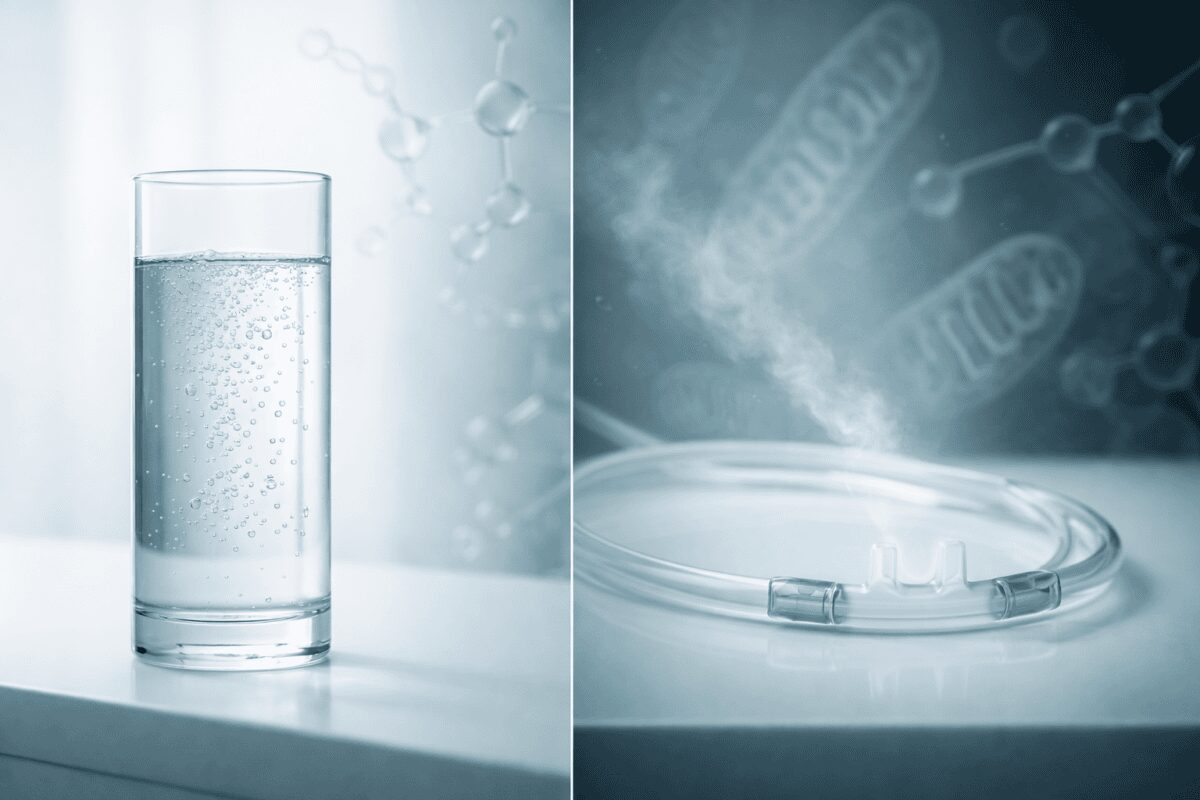
Hydrogen water is produced by dissolving molecular hydrogen gas into water under pressure, typically achieving concentrations between 0.5 and 1.6 parts per million (ppm). When consumed, the H₂-enriched water passes through the gastrointestinal tract, where hydrogen is absorbed primarily via the stomach and small intestine.
While hydrogen water offers convenience and has demonstrated positive outcomes in research settings, several factors limit its efficacy:
- Rapid gas dissipation: Molecular hydrogen is the smallest and lightest molecule in existence, allowing it to escape from solution quickly once a container is opened. Even sealed bottles lose hydrogen concentration over time.
- Gastrointestinal constraints: The stomach can only hold a finite volume of liquid, and absorption is time-dependent. Achieving sustained therapeutic blood concentrations requires consuming large volumes frequently throughout the day.
- First-pass metabolism: Hydrogen absorbed through the digestive tract enters the hepatic portal system before reaching systemic circulation, potentially reducing the amount available for peripheral tissues.
- Concentration ceiling: Physical solubility limits prevent water from holding more than approximately 1.6 ppm of hydrogen at standard atmospheric pressure, restricting the total dose per serving.
These constraints mean that while hydrogen water can contribute to daily H₂ intake, it may not deliver the tissue saturation levels required for profound mitochondrial support, especially during periods of acute oxidative stress, intense training, or recovery protocols.
Hydrogen Inhalation: Superior Bioavailability and Systemic Distribution
In contrast to oral delivery, hydrogen inhalation via a professional-grade generator offers direct pulmonary absorption. When molecular hydrogen is inhaled, it rapidly diffuses across the alveolar-capillary membrane into the bloodstream, bypassing the gastrointestinal tract entirely. This route provides several distinct advantages:
Immediate Systemic Circulation
Inhaled hydrogen enters arterial blood within seconds, achieving peak plasma concentrations far more rapidly than oral consumption. This immediate bioavailability is particularly valuable for acute applications such as post-workout recovery, cognitive optimization sessions, or proactive wellness routines.
Higher Achievable Concentrations
A high-output hydrogen inhalation generator can deliver continuous flow rates exceeding 1,000 ml/min of pure molecular hydrogen. Over a 30- to 60-minute session, this translates to significantly higher cumulative hydrogen exposure than could be achieved through drinking multiple liters of hydrogen water. The continuous, passive delivery ensures sustained tissue saturation throughout the session.
Targeted Tissue Penetration
Due to its extraordinarily small molecular size and lipophilic properties, inhaled hydrogen readily crosses the blood-brain barrier, penetrates mitochondrial membranes, and diffuses into tissues with limited vascular access. This makes inhalation particularly effective for supporting brain health, neuroprotection, and deep tissue recovery.
Dose Consistency and Control
Professional hydrogen inhalation generators allow precise control over session duration and flow rate, ensuring reproducible dosing. Users can tailor sessions to their specific wellness goals—whether a brief 30-minute morning session or an extended 120-minute recovery protocol.
Comparative Clinical and Research Context
While both delivery methods have been studied, inhalation protocols consistently demonstrate more pronounced effects in research contexts requiring high tissue concentrations. Studies examining neuroprotection, ischemia-reperfusion scenarios, and athletic performance have often utilized inhalation due to its superior pharmacokinetics.
That said, hydrogen water remains a valuable complementary tool. Many practitioners and wellness enthusiasts employ a hybrid approach: using a hydrogen inhalation generator for focused sessions while incorporating hydrogen water throughout the day for baseline maintenance. This combination maximizes both convenience and therapeutic depth.
What to Look for in a Hydrogen Inhalation Generator
Not all hydrogen generators are created equal. To achieve meaningful tissue saturation and cellular benefits, a device must meet several critical criteria:
- High hydrogen purity: Therapeutic-grade generators should produce H₂ at ≥99.99% purity, free from contaminants or unwanted byproducts.
- Sufficient flow rate: Output of at least 1,000 ml/min of molecular hydrogen is essential for efficient systemic delivery during inhalation sessions.
- Advanced electrolysis technology: Proton Exchange Membrane (PEM) electrolysis using platinum-coated titanium electrodes and high-grade membranes ensures consistent, safe hydrogen production from distilled water.
- Quality certifications: Look for devices manufactured under ISO 9001 quality systems and carrying CE and RoHS certifications, indicating adherence to international safety and performance standards.
- User-friendly operation: Intuitive controls, programmable session timers, and low-maintenance design enhance consistent daily use.
Devices lacking these features—particularly low-output or poorly constructed units—may deliver insufficient hydrogen concentrations, compromising both safety and efficacy.
Related reading: Hydrogen and Cellular Health · Hydrogen Inhalation vs. Water: Which Works Best?
New to hydrogen inhalation? Download our free Beginner’s Guide to Hydrogen Inhalation for a plain-language primer on what H₂ is, how inhalation works, and how to choose a generator.
Bring This Technology Home
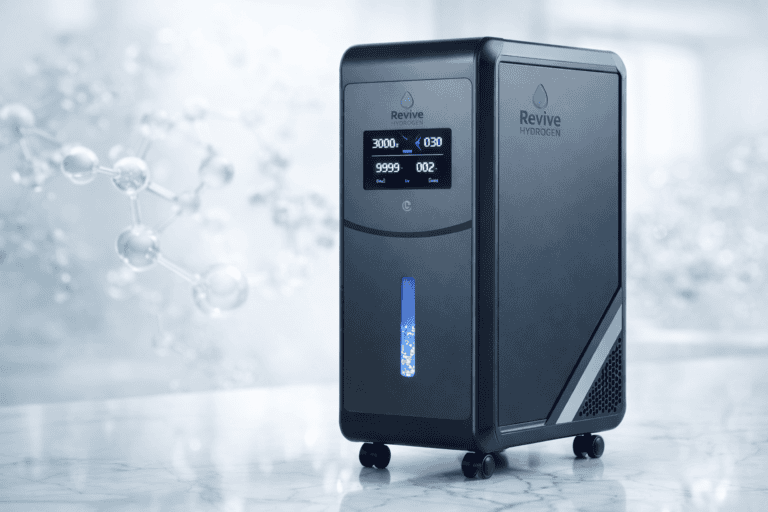
For those ready to access professional-grade hydrogen inhalation technology, Revive Hydrogen offers a solution designed to meet the rigorous standards outlined above. Based in Dry Ridge, Kentucky, Revive Hydrogen manufactures high-flow hydrogen generators utilizing PEM electrolysis with platinum-coated titanium electrodes and DuPont N117 membranes—recognized benchmarks in the hydrogen wellness industry.
The Intelligent High-Flow Hydrogen Generator line is available in three configurations—HYD-1500, HYD-1800, and HYD-3000—each calibrated for different usage intensities. The flagship HYD-3000, for example, delivers up to 2,000 ml/min of molecular hydrogen, sufficient to support dual-user sessions with approximately 1,000 ml/min per person. Hydrogen purity is independently verified at 99.992%, and each unit includes four nasal cannulas, programmable session timers (30–480 minutes), UV-C water disinfection, and the capacity for up to eight hours of continuous operation.
These generators are manufactured to CE and RoHS standards within an ISO 9001-certified quality management system, reflecting a commitment to precision engineering and user safety. The technology produces separated streams of pure molecular hydrogen and oxygen—distinct from diluted hydrogen-air mixtures common in lower-tier devices—enabling high-concentration delivery with every session.
Whether you’re a wellness professional, an athlete seeking advanced recovery tools, or an individual committed to proactive cellular health, a high-output hydrogen inhalation generator represents the most efficient and research-aligned method for achieving systemic H₂ saturation. Explore the full technical specifications and begin your journey toward optimized mitochondrial function and oxidative resilience at Revive Hydrogen.