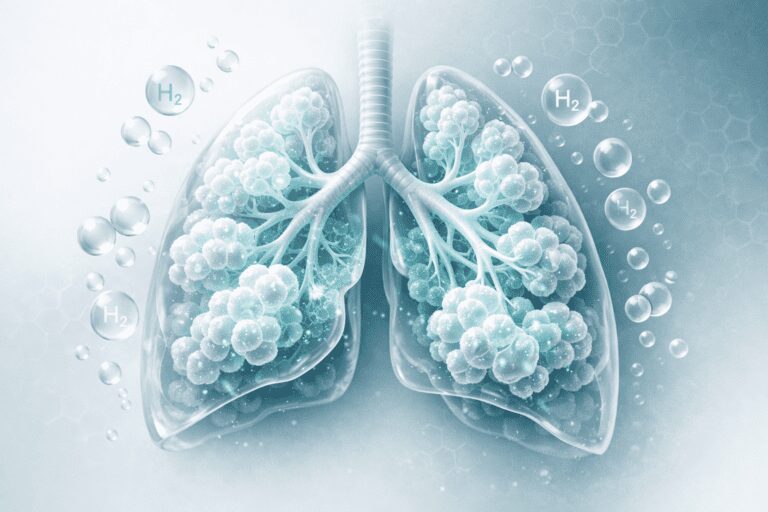

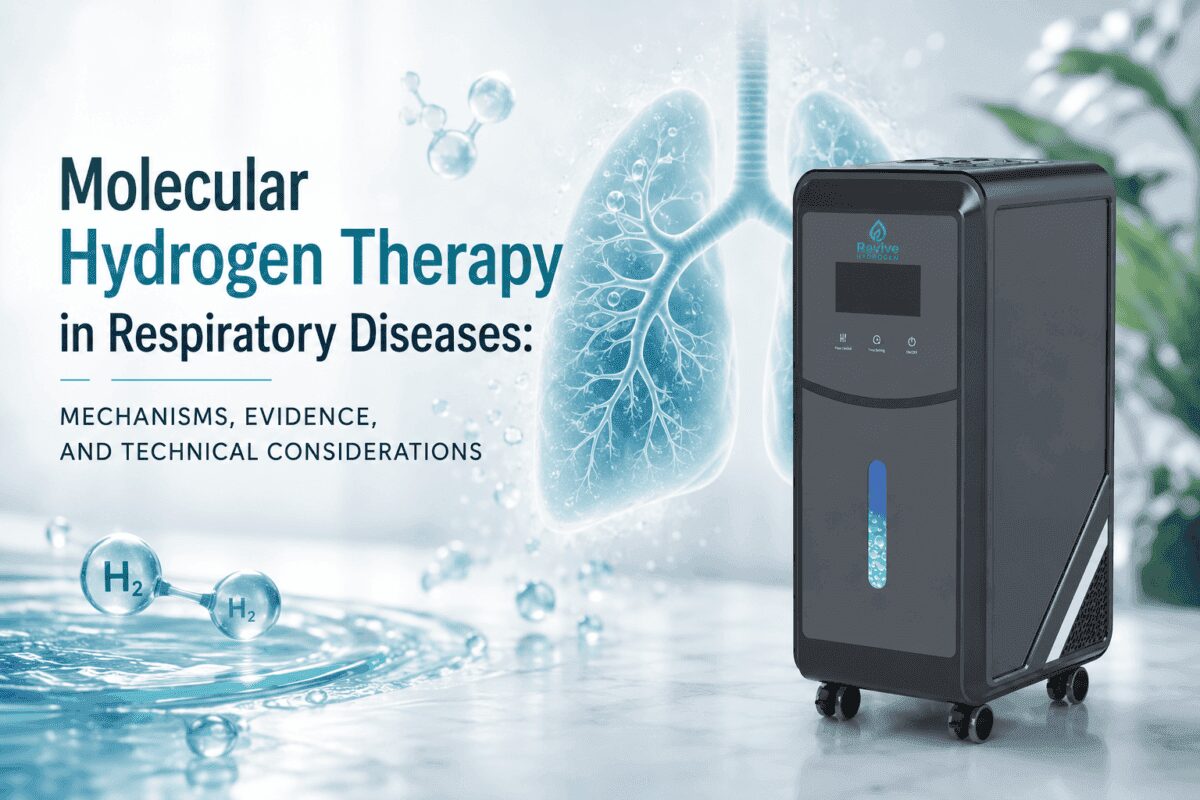
Most people who explore molecular hydrogen therapy come to it through recovery, longevity, or general cellular wellness. Respiratory health is a less talked-about angle — but it may be one of the most compelling areas of emerging H₂ research.
A 2026 narrative review published in the Journal of Inhalation Toxicology (Tandfonline) took a systematic look at molecular hydrogen therapy across the full spectrum of respiratory conditions. Covering literature through June 2025 across MEDLINE, EMBASE, and Google Scholar, the authors examined both the mechanistic evidence and the available clinical data. What they found is worth understanding if you’re serious about hydrogen inhalation as a wellness tool.
Why the Lungs Are a Logical Target for H₂ Therapy
The respiratory system is uniquely exposed to oxidative stress. Every breath pulls in environmental pollutants, particulates, and pathogens — and the lungs respond with inflammatory and oxidative reactions as a first line of defense. Over time, or under chronic insult, this oxidative burden can overwhelm the body’s natural antioxidant defenses and contribute to tissue damage and reduced function.
Molecular hydrogen is well-positioned to address this. Because H₂ is inhaled directly, it reaches pulmonary tissue at high concentrations before entering systemic circulation — giving it particularly direct access to the tissues under stress. Its small molecular size also allows it to diffuse into cells, cross mitochondrial membranes, and reach the sites where oxidative damage actually originates.
What the 2026 Review Found
The review identified several distinct mechanisms through which H₂ may support respiratory health at the cellular level:
- Selective radical scavenging. H₂ selectively neutralizes hydroxyl radicals (•OH) and peroxynitrite (ONOO⁻) — two of the most damaging reactive species in pulmonary tissue — without disrupting beneficial redox signaling.
- Nrf2 pathway activation. H₂ activates Nrf2, the master transcription factor that governs the body’s own antioxidant enzyme production, including superoxide dismutase, catalase, and glutathione peroxidase. This amplifies the lungs’ intrinsic defense capacity.
- NF-κB and inflammasome suppression. H₂ inhibits the NF-κB signaling pathway and inflammasome activation — two key drivers of chronic pulmonary inflammation — helping to modulate inflammatory cascades without broadly suppressing immune function.
- Mitochondrial protection. By reducing oxidative damage to the mitochondrial electron transport chain, H₂ supports efficient cellular energy production in pulmonary tissues.
- Immune cell modulation. The review noted that H₂ may influence immune cell polarization and apoptosis pathways relevant to respiratory disease progression.
Preclinical studies covered in the review consistently demonstrated protective effects in models of COPD, asthma, pulmonary fibrosis, pulmonary hypertension, acute lung injury, lung cancer, and COVID-19.
On the clinical side, early trials and case reports supported improvements in oxygenation, exercise tolerance, and inflammatory markers — alongside what the authors described as a strong safety profile.
What “Strong Safety Profile” Actually Means
This language from a peer-reviewed 2026 review matters more than it might seem. One of the consistent findings across the H₂ literature — and one the review specifically reinforced — is that molecular hydrogen at therapeutic concentrations produces no known toxicity. It does not accumulate, does not interact adversely with tissues, and the byproduct of its reaction with harmful radicals is simply water.
This is particularly relevant for respiratory delivery. Some inhalation therapies carry risks related to the compound itself or to delivery concentrations. Hydrogen’s profile here is unusually clean.
Where the Research Stands — Honestly
The review’s authors are clear that the evidence base is still maturing. Preclinical findings are consistent and mechanistically well-supported. Clinical evidence is promising but largely drawn from early trials and case reports rather than large-scale randomized controlled trials. The authors call for multicenter RCTs, dose-response studies, and improved device standardization as the field’s next priorities.
That’s an honest picture of where things stand — and it’s consistent with how the Molecular Hydrogen Institute characterizes the broader H₂ evidence base: substantial mechanistic support, compelling early clinical signals, and an ongoing research agenda working toward the gold-standard evidence levels that would define H₂’s formal role in respiratory care.
For a wellness context, that distinction matters. Molecular hydrogen inhalation is not a treatment for any respiratory condition. What the research supports is a mechanistically coherent picture of how H₂ interacts with the oxidative and inflammatory processes that are central to pulmonary cellular health — and early clinical data suggesting those interactions may translate to meaningful outcomes in human subjects.
Delivery Method Matters
The 2026 review also noted that recent engineering advances have enabled safe delivery of high-concentration hydrogen, while acknowledging that standardizing dosing protocols remains an open challenge in the field.
This is directly relevant to equipment selection. Inhalation generators vary enormously in hydrogen output — from sub-100 mL/min consumer devices to professional-grade systems producing 1,500 to 3,000 mL/min. Higher flow rates translate to faster tissue saturation and more meaningful hydrogen concentrations reaching pulmonary tissue during a session. Purity matters equally: only PEM (Proton Exchange Membrane) electrolysis technology reliably produces hydrogen at the 99.99%+ purity levels appropriate for inhalation.
The Bottom Line
Respiratory health is an underappreciated dimension of the molecular hydrogen story. The 2026 Tandfonline review adds a substantial piece of evidence to a growing body of research — identifying the specific cellular pathways through which H₂ may support pulmonary function and documenting early clinical signals across a range of respiratory conditions.
It won’t be the last word. But it confirms that researchers working at the intersection of pulmonary medicine and redox biology are taking molecular hydrogen seriously — and that the mechanistic foundation for that interest is well-grounded.
If you’re exploring hydrogen inhalation as part of a respiratory wellness protocol, understanding why it may help at the cellular level is a good place to start.
Related reading: Hydrogen and Pulmonary Support · Hydrogen Inhalation for Respiratory Health
New to hydrogen inhalation? Download our free Beginner’s Guide to Hydrogen Inhalation for a plain-language primer on what H₂ is, how inhalation works, and how to choose a generator.
Explore Revive Hydrogen’s professional-grade inhalation systems →
Source: “Molecular hydrogen therapy in respiratory diseases: mechanisms, evidence, and technical considerations.” Journal of Inhalation Toxicology, Tandfonline, March 2026. DOI: 10.1080/26895293.2026.2643533. This post reflects the review’s findings as of its publication date. Molecular hydrogen inhalation is a wellness tool and is not intended to diagnose, treat, cure, or prevent any disease. Consult your healthcare provider before beginning any new wellness protocol.