
Molecular Hydrogen and the Science of Breathing Well
Your lungs are among the most metabolically active organs in your body, performing over 20,000 breath cycles daily while continuously exposed to environmental oxidants, airborne particulates, and physiological stress. Every breath fuels cellular respiration, yet also generates oxidative byproducts that, left unchecked, can compromise delicate pulmonary tissue and impair respiratory efficiency over time. Emerging research reveals that molecular hydrogen (H₂) — administered through therapeutic inhalation — may offer a precise, biochemically elegant solution to support lung health, enhance mitochondrial function in respiratory tissues, and promote optimal breathing capacity through selective antioxidant activity.
Unlike broad-spectrum antioxidants that indiscriminately neutralize all reactive species, hydrogen gas operates with remarkable selectivity. It targets only the most cytotoxic oxidants — hydroxyl radicals (•OH) and peroxynitrite (ONOO⁻) — while preserving beneficial signaling molecules like hydrogen peroxide (H₂O₂) that regulate essential cellular communication and immune response. This nuanced mechanism positions hydrogen inhalation for wellness as a cutting-edge modality for respiratory support, recovery, and long-term pulmonary resilience.
Why the Lungs Are Uniquely Vulnerable to Oxidative Stress
The respiratory system operates at the frontline of oxidative exposure. Pulmonary epithelial cells, alveolar macrophages, and endothelial tissues in the lung vasculature constantly interface with high oxygen concentrations, environmental pollutants, allergens, and pathogenic agents. This relentless oxidative burden accelerates the production of reactive oxygen species (ROS) and reactive nitrogen species (RNS), creating chronic low-grade inflammation that can degrade structural proteins, impair gas exchange efficiency, and compromise the mucosal barrier integrity of airways.
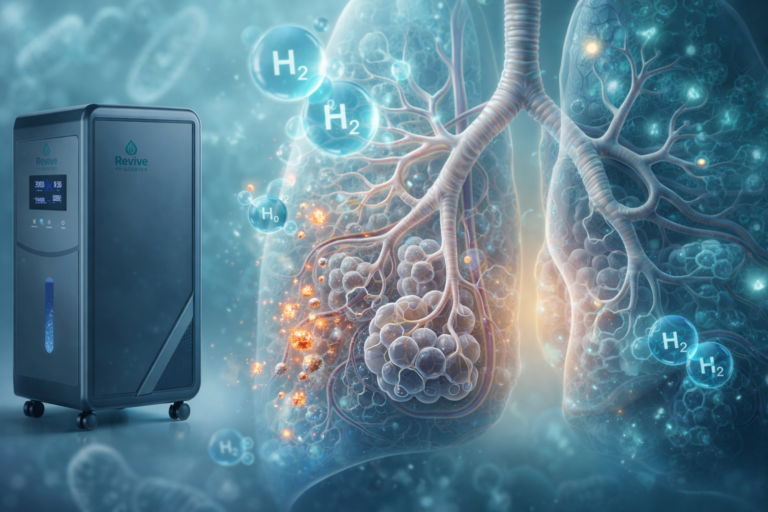
Traditional antioxidant supplementation often fails to address this complexity. Most orally ingested antioxidants have limited bioavailability in pulmonary tissue, poor tissue penetration, and non-selective activity that can inadvertently disrupt beneficial redox signaling. Hydrogen inhalation circumvents these limitations entirely. When H₂ gas is inhaled, it rapidly diffuses across alveolar membranes, enters the bloodstream, and permeates cellular compartments — including mitochondria and nuclei — within minutes. This direct pulmonary delivery enables high local tissue saturation precisely where oxidative stress is most concentrated.
Selective Neutralization: Targeting Only Toxic Radicals
Molecular hydrogen’s therapeutic power lies in its exquisite selectivity. Hydroxyl radicals (•OH) are among the most reactive and damaging oxidants produced in biological systems, capable of indiscriminately oxidizing DNA, lipids, and proteins within nanoseconds of formation. Peroxynitrite (ONOO⁻), formed from the reaction of superoxide and nitric oxide, is equally destructive, contributing to nitrosative stress, mitochondrial dysfunction, and inflammatory cascades in respiratory tissues.
H₂ selectively reacts with these ultra-toxic species, converting them into harmless water (H₂O) without depleting essential antioxidant enzymes or disrupting the carefully regulated redox environment that supports cellular homeostasis. Importantly, hydrogen does not scavenge superoxide (O₂⁻•) or hydrogen peroxide (H₂O₂) — molecules that, at physiological concentrations, serve critical roles in immune signaling, autophagy regulation, and adaptive stress responses. This precision allows the body to retain its natural defenses while mitigating only pathological oxidative damage.
Mechanisms of Action: How Hydrogen Supports Respiratory Wellness
Beyond direct radical scavenging, molecular hydrogen modulates multiple cellular pathways that underpin respiratory health and optimal breathing performance. Research suggests H₂ influences gene expression through the Nrf2-ARE pathway, a master regulator of endogenous antioxidant production. Activation of Nrf2 upregulates enzymes such as superoxide dismutase (SOD), catalase, and glutathione peroxidase — the body’s own frontline defense systems against oxidative injury.
Hydrogen also appears to attenuate pro-inflammatory cytokine cascades, including TNF-α, IL-6, and IL-1β, which are frequently elevated in chronic respiratory conditions and acute inflammatory responses. By dampening excessive inflammation without suppressing necessary immune function, H₂ helps maintain homeostatic balance in pulmonary tissues. Additionally, hydrogen has been shown to support mitochondrial integrity by reducing oxidative damage to the electron transport chain, thereby enhancing cellular ATP production and energy availability in metabolically demanding lung cells.
Key Cellular and Physiological Benefits for Lung Health
- Mitochondrial Optimization: Protects respiratory chain complexes from oxidative degradation, supporting efficient energy metabolism in lung epithelium and smooth muscle.
- Inflammation Modulation: Reduces pro-inflammatory signaling without compromising immune surveillance, promoting tissue repair and recovery.
- Mucosal Barrier Integrity: Supports tight junction protein expression and epithelial cell viability, enhancing airway defense against environmental irritants.
- Gas Exchange Efficiency: Mitigates oxidative stress-induced thickening of alveolar-capillary membranes, potentially improving oxygen diffusion and carbon dioxide clearance.
- Endogenous Antioxidant Upregulation: Activates Nrf2 pathway, stimulating long-term cellular resilience beyond the immediate scavenging effect.
- Enhanced Recovery: Supports post-exertion or post-exposure recovery by accelerating clearance of oxidative byproducts and reducing delayed inflammatory responses.
Inhalation vs. Ingestion: Why Delivery Method Matters
While hydrogen-enriched water has gained popularity as a wellness tool, achieving therapeutically meaningful tissue saturation — especially in deep pulmonary structures — requires more robust delivery. Drinking hydrogen water provides modest systemic exposure, but the dissolved H₂ concentration is inherently limited by solubility constraints, and gastrointestinal absorption introduces delays and variability.
Hydrogen inhalation, by contrast, delivers high concentrations of molecular hydrogen directly to the lungs and bloodstream. Clinical studies typically employ inhalation protocols at concentrations ranging from 1% to 4% H₂ by volume, achieving rapid and sustained tissue saturation throughout the respiratory system, cardiovascular network, and beyond. This method is passive, non-invasive, and allows for extended sessions during rest, sleep, meditation, or recovery periods — making it ideal for wellness optimization and long-term cellular health support.
To achieve these therapeutic benefits, however, requires professional-grade hydrogen generation technology. Consumer-grade devices often produce insufficient flow rates or unreliable output purity, limiting efficacy. High-output electrolysis systems capable of continuous, stable H₂ production are essential for serious wellness applications and clinical-grade support.
Related reading: Hydrogen and Pulmonary Support · Hydrogen Inhalation for Respiratory Health
New to hydrogen inhalation? Download our free Beginner’s Guide to Hydrogen Inhalation for a plain-language primer on what H₂ is, how inhalation works, and how to choose a generator.
Bring This Technology Home
For individuals seeking to integrate molecular hydrogen therapy into a comprehensive wellness or recovery protocol, investing in a high-performance hydrogen inhalation system is essential. The Revive Hydrogen Generator is engineered specifically for this purpose — delivering clinical-grade hydrogen output with precision, safety, and reliability for home or professional use.
Designed with advanced PEM (Proton Exchange Membrane) electrolysis technology, the Revive Hydrogen system produces ultra-pure molecular hydrogen at therapeutic flow rates, ensuring optimal tissue saturation with every session. Whether you’re focused on respiratory wellness, athletic recovery, longevity optimization, or daily cellular health support, this technology brings evidence-based hydrogen inhalation directly into your routine.
Experience the difference that professional-grade hydrogen therapy can make. Support your lungs, protect your mitochondria, and breathe easier with confidence. Explore the Revive Hydrogen Generator today and take the next step in proactive, science-backed wellness.