
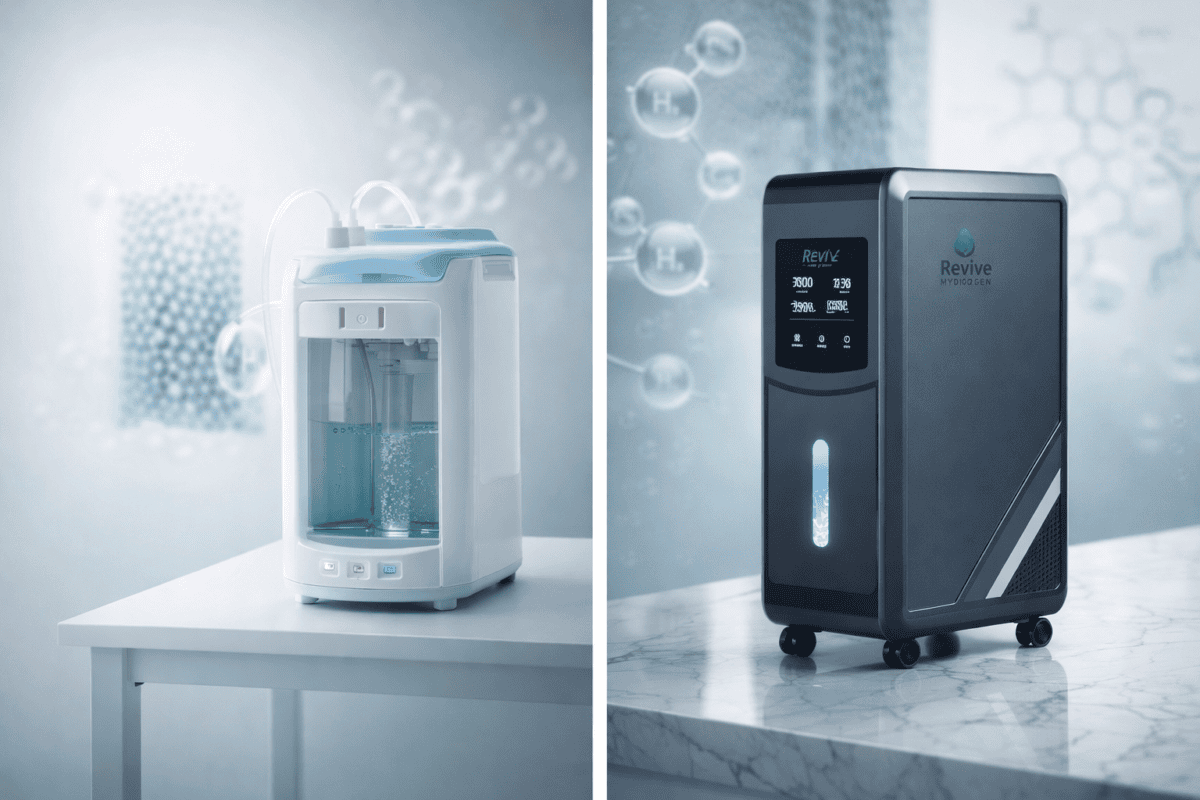
Why the Same Technology Commands Wildly Different Price Tags
Walk into the hydrogen wellness market today and you’ll encounter a bewildering spectrum: sleek tabletop units advertised at $799, mid-tier systems hovering around $2,000, and clinical-grade hydrogen inhalation generators priced north of $4,000. On the surface, they all promise the same thing—molecular hydrogen for wellness—but the engineering, output capacity, material integrity, and long-term reliability separating these tiers are profound. Understanding these differences is not about justifying a higher price; it’s about ensuring you’re investing in technology capable of delivering the therapeutic hydrogen concentrations necessary for meaningful cellular support.
Molecular hydrogen (H₂) has emerged as one of the most selective and elegant modulators of oxidative stress in human physiology. Unlike broad-spectrum antioxidants that indiscriminately scavenge all reactive species, H₂ specifically targets the most destructive radicals—hydroxyl radicals (•OH) and peroxynitrite (ONOO⁻)—while preserving beneficial signaling molecules like hydrogen peroxide. This selective neutralization supports mitochondrial efficiency, reduces systemic inflammation, and promotes homeostatic balance at the cellular level. But here’s the critical detail most consumers miss: achieving therapeutic tissue saturation requires sustained, high-concentration hydrogen delivery. That’s where hardware quality becomes non-negotiable.
The Engineering Reality Behind Hydrogen Output
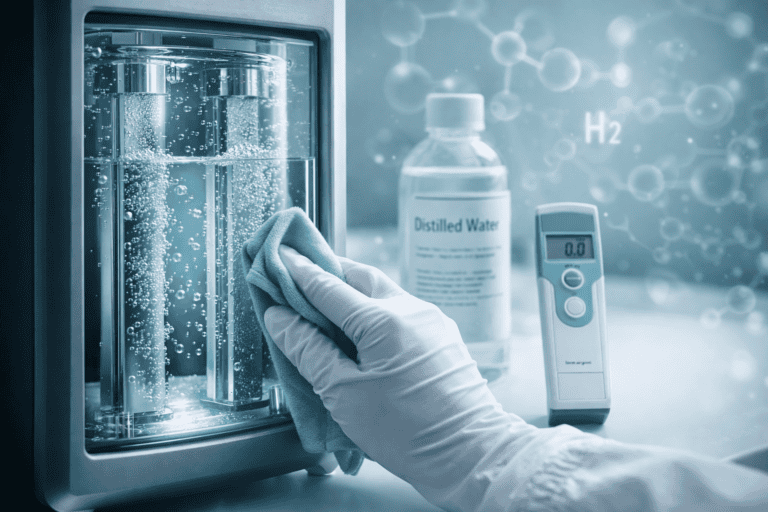
The core of any hydrogen system is its electrolysis cell—the chamber where purified water is split into hydrogen and oxygen. Budget units typically employ rudimentary alkaline electrolysis with generic stainless steel or low-grade titanium electrodes. These configurations suffer from three fundamental weaknesses: limited hydrogen purity (often 95–98%, with trace contaminants including ozone and chlorine byproducts), low flow rates (commonly 150–300 ml/min of mixed gas), and rapid electrode degradation requiring frequent replacement or complete unit failure within 12–24 months.
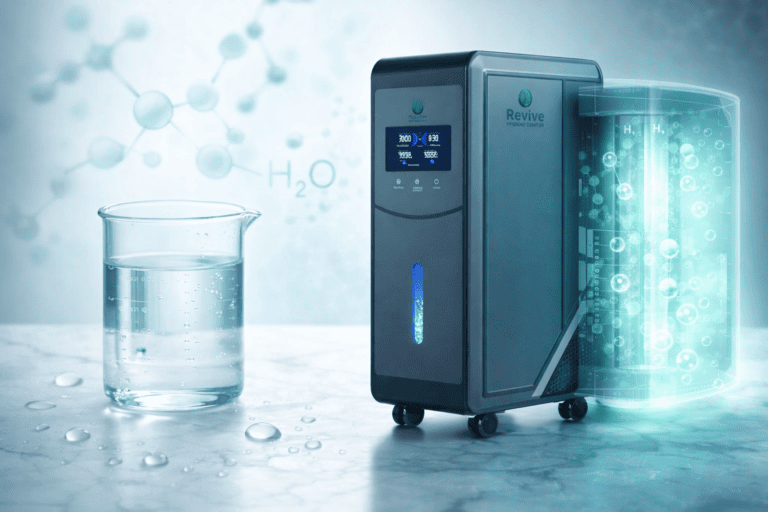
Professional-grade hydrogen inhalation generators utilize Proton Exchange Membrane (PEM) electrolysis—a fundamentally different architecture. PEM systems feature platinum-coated titanium electrodes separated by advanced ion-conducting membranes, such as the DuPont N117 standard. This design produces exceptionally pure molecular hydrogen—99.992% verified purity is achievable with proper engineering—and sustains high output volumes continuously for thousands of hours. The platinum coating is not cosmetic; it acts as a catalyst that dramatically increases electrolysis efficiency and electrode longevity. Quality membranes prevent gas crossover, ensuring that the hydrogen stream remains uncontaminated by oxygen or electrolyte compounds.
Flow Rate: The Metric That Determines Bioavailability
Flow rate is the single most consequential specification when evaluating a hydrogen generator, yet it’s often obscured by marketing. Many entry-level devices advertise “hydrogen output” without clarifying whether they’re measuring pure H₂ or a diluted hydrogen-in-air mixture (typically 1–4% H₂ concentration). A device producing 300 ml/min of 2% hydrogen gas is delivering only 6 ml/min of actual molecular hydrogen—an amount insufficient to saturate tissues beyond superficial mucosal surfaces.
Therapeutic inhalation protocols, informed by research into oxidative stress mitigation and cellular recovery, typically require sustained exposure to 500–1,500 ml/min of molecular hydrogen. Achieving these concentrations demands electrolysis cells capable of splitting substantial water volumes per minute, robust power management systems (often 300–500 watts), and thermal regulation to prevent overheating during extended sessions. These components are costly to engineer and manufacture, but they’re what separate passive hydrogen exposure from biologically meaningful delivery.
Material Integrity and Certification Standards
Component sourcing is where cost disparities become starkest. Budget hydrogen machines frequently use food-grade plastics for gas pathways, generic silicone tubing, and unverified electrode alloys. Over time, these materials can leach trace compounds into the hydrogen stream or degrade when exposed to moisture and electrical current. The result: declining purity, off-gassing odors, and potential exposure to unwanted volatiles.
Premium systems source medical-grade or higher materials: PTFE (Teflon) or PFA tubing that resists chemical interaction, electropolished stainless steel housings, and third-party tested electrodes. Equally important are certifications. CE marking indicates compliance with European health and safety standards. RoHS certification confirms the absence of hazardous substances like lead, mercury, and cadmium. ISO 9001-certified manufacturing ensures consistent quality control processes across production batches. These certifications require rigorous third-party audits and ongoing compliance—expenses that entry-level manufacturers often bypass entirely.
Longevity and Total Cost of Ownership
A $799 hydrogen machine may seem economical until you calculate replacement costs. If the electrolysis cell fails at 18 months, and replacement cells cost $300–500 (when available), you’re approaching the cost of a mid-tier unit with none of the performance advantages. Many budget brands offer limited or no warranty coverage, and customer service infrastructure is minimal or outsourced.
High-end hydrogen inhalation generators typically include 3-year limited warranties covering defects in materials and workmanship, along with accessible technical support and replacement part availability. Electrode stacks in professional PEM systems are engineered for 3,000–5,000 hours of operation before any maintenance, and when service is required, components are modular and replaceable rather than necessitating full unit disposal. Amortized over five years of daily use, the per-session cost of a $4,000 system often falls below that of budget alternatives.
Inhalation vs. Ingestion: Why Delivery Method Defines Outcomes
Hydrogen water has value for localized gastrointestinal support, but as a delivery mechanism for systemic hydrogen therapy, it faces inherent limitations. Dissolved hydrogen concentration in water rarely exceeds 1.6 parts per million at standard temperature and pressure. Even consuming a full liter delivers roughly 1.6 mg of H₂—a fraction of what’s absorbed during a 30-minute inhalation session at therapeutic flow rates.
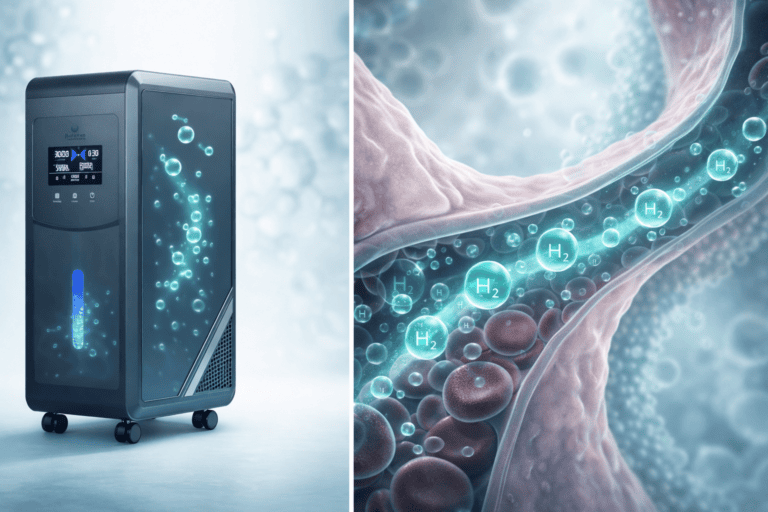
Inhalation bypasses the digestive system entirely, delivering molecular hydrogen directly into the bloodstream via the alveolar-capillary interface in the lungs. This route achieves rapid systemic distribution: hydrogen diffuses across cell membranes within minutes, reaching mitochondria, crossing the blood-brain barrier, and penetrating tissues with poor vascular perfusion. For applications targeting oxidative stress mitigation, mitochondrial optimization, and broad cellular recovery, high-flow hydrogen inhalation generators represent the most efficient and passive delivery method available.
Key Physiological Targets of Molecular Hydrogen
- Selective Radical Scavenging: H₂ neutralizes hydroxyl radicals and peroxynitrite without disrupting beneficial ROS signaling pathways that regulate immune function and cellular adaptation.
- Mitochondrial Efficiency: By reducing oxidative damage to mitochondrial membranes and DNA, hydrogen supports optimal ATP production and reduces metabolic byproduct accumulation.
- Inflammation Modulation: Hydrogen downregulates pro-inflammatory cytokine cascades (TNF-α, IL-6) while supporting anti-inflammatory pathways, promoting systemic homeostatic balance.
- Nrf2 Pathway Activation: H₂ upregulates endogenous antioxidant systems, increasing production of glutathione, superoxide dismutase, and catalase—the body’s own defense mechanisms against oxidative stress.
Evaluating True Value in Hydrogen Technology
The question is not whether you can afford a $4,000 hydrogen generator—it’s whether you can afford to invest in a system incapable of delivering clinically relevant hydrogen concentrations. Budget devices may introduce you to the concept of hydrogen therapy, but they lack the output, purity, and durability necessary for sustained wellness protocols. Mid-tier systems offer compromises that may suffice for occasional use but often underperform in daily, long-term applications.
Professional-grade hydrogen inhalation generators represent a different category entirely: precision-engineered platforms designed for consistent, high-purity, high-flow hydrogen delivery over years of continuous operation. They incorporate advanced PEM electrolysis, medical-grade materials, verified certifications, and comprehensive warranty support. For individuals serious about integrating molecular hydrogen into a comprehensive wellness and longevity strategy, the upfront investment is not a premium—it’s a prerequisite for efficacy.
Bring This Technology Home
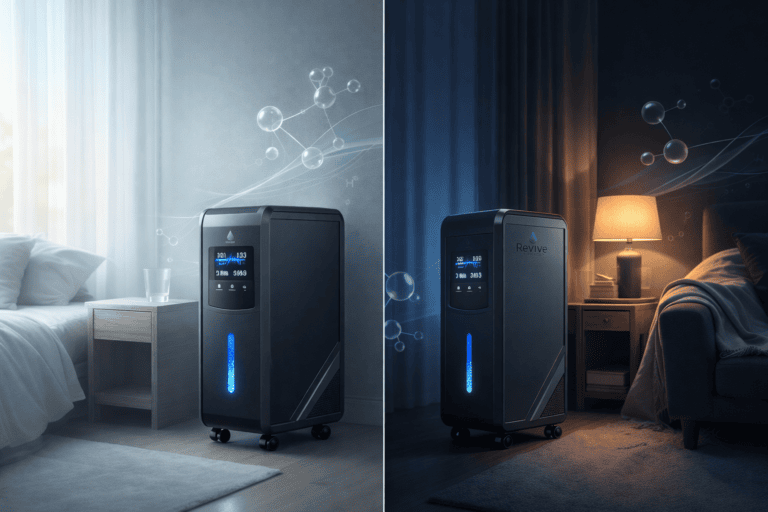
For those committed to evidence-based wellness and cellular optimization, Revive Hydrogen offers the Intelligent High-Flow Hydrogen Generator—a professional-grade system engineered to deliver the purity, flow rates, and reliability that define therapeutic-grade hydrogen technology. Utilizing advanced PEM electrolysis with platinum-coated titanium electrodes and a DuPont N117 membrane, the system achieves 99.992% hydrogen purity, independently verified by accredited third-party laboratories.
Available in three output configurations—HYD-1500 (up to 1,000 ml/min H₂), HYD-1800 (up to 1,200 ml/min H₂), and HYD-3000 (up to 2,000 ml/min H₂)—the Revive Hydrogen Generator is designed for both individual and dual-user applications. Each unit is manufactured to CE and RoHS standards under an ISO 9001-certified quality management system, and backed by a comprehensive 3-year limited warranty covering defects in materials and workmanship.
Molecular hydrogen research continues to expand across domains including oxidative stress, mitochondrial function, and systemic inflammation. While individual results vary and no wellness device diagnoses or treats disease, the Revive Hydrogen Generator provides the engineering foundation necessary for those exploring hydrogen inhalation as part of a holistic approach to long-term health and vitality. Explore the full specifications and learn more at Revive Hydrogen.