
The Endothelium: Your Body’s Most Underrated Cardiovascular Guardian
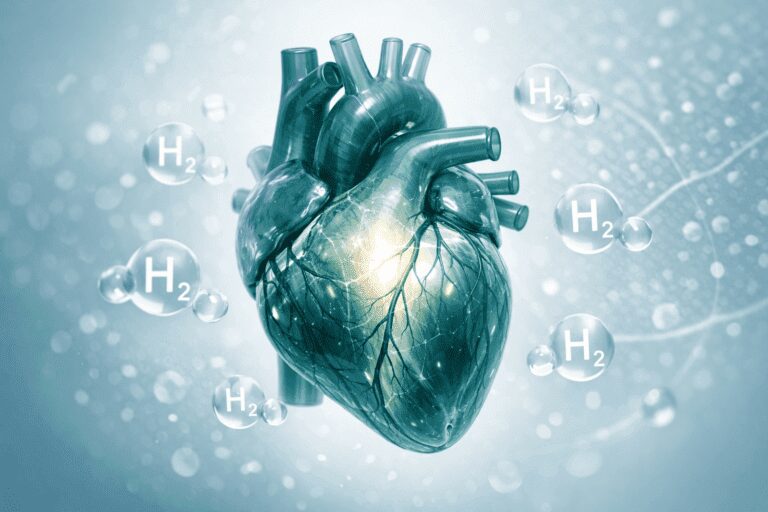
Every heartbeat sends blood surging through nearly 60,000 miles of vessels in your body—a vast, living network lined by a single, gossamer-thin layer of cells called the endothelium. This cellular interface is far more than passive plumbing. It orchestrates vascular tone, regulates inflammation, controls coagulation, and governs nutrient delivery to every organ system. When endothelial function declines—compromised by oxidative stress, metabolic dysfunction, or chronic inflammation—the cascade toward cardiovascular compromise begins. Emerging evidence suggests that molecular hydrogen (H₂), a deceptively simple diatomic gas, may offer a sophisticated biochemical strategy to support endothelial resilience, mitochondrial optimization, and systemic vascular wellness.
Understanding Endothelial Dysfunction: The Silent Cardiovascular Threat
The endothelium functions as a dynamic endocrine organ, secreting nitric oxide (NO), prostacyclin, and other signaling molecules that maintain vascular homeostasis. Endothelial cells mediate vasodilation, prevent platelet aggregation, and inhibit vascular smooth muscle proliferation. When oxidative stress overwhelms endogenous antioxidant defenses, endothelial dysfunction emerges—characterized by reduced NO bioavailability, increased inflammatory signaling, and impaired vascular reactivity.
This deterioration rarely announces itself with symptoms. Instead, it progresses silently, laying the groundwork for hypertension, atherosclerosis, and metabolic syndrome. Traditional risk factors—hyperglycemia, dyslipidemia, smoking, and sedentary behavior—all converge on a common pathway: excessive production of reactive oxygen species (ROS) and reactive nitrogen species (RNS) that damage the delicate endothelial layer.
The Oxidative Stress Cascade
At the molecular level, endothelial dysfunction is driven by an imbalance between ROS generation and antioxidant capacity. Mitochondrial respiration, NADPH oxidases, and uncoupled endothelial nitric oxide synthase (eNOS) produce superoxide radicals. When superoxide reacts with nitric oxide, it forms peroxynitrite (ONOO⁻)—a highly reactive species that nitrates proteins, oxidizes lipids, and directly impairs endothelial NO signaling. Simultaneously, hydroxyl radicals (•OH) generated through Fenton chemistry inflict indiscriminate damage on cellular membranes and DNA.
Conventional antioxidants often fail to address this damage selectively. Broad-spectrum antioxidants can inadvertently quench beneficial ROS like hydrogen peroxide, which serves critical roles in cellular signaling, immune function, and adaptive hormesis. This is where molecular hydrogen’s elegant selectivity becomes biochemically significant.
Molecular Hydrogen Benefits: Selective Antioxidant Action and Endothelial Protection
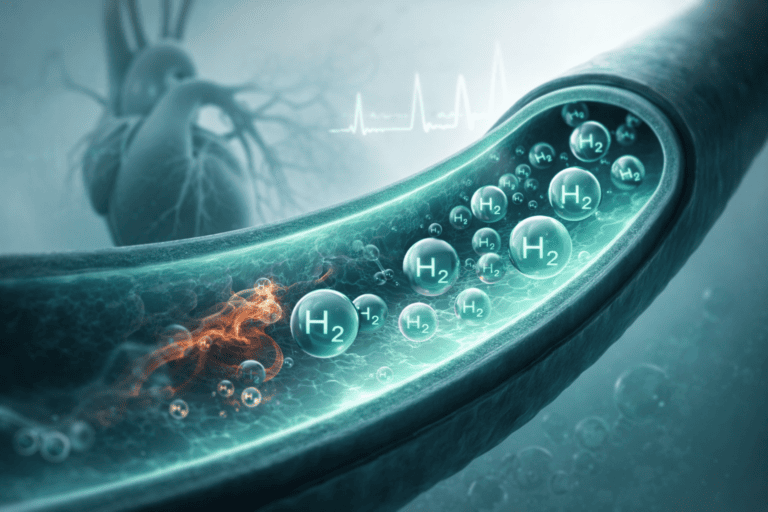
Molecular hydrogen operates through a fundamentally different mechanism than traditional antioxidants. Due to its small size and neutral charge, H₂ diffuses rapidly across cell membranes, penetrating mitochondria, nuclei, and other subcellular compartments with ease. Critically, H₂ exhibits selective reactivity—it preferentially neutralizes the most cytotoxic radicals, specifically hydroxyl radicals and peroxynitrite, while leaving hydrogen peroxide and superoxide largely undisturbed.
This selective antioxidant capacity allows molecular hydrogen to mitigate oxidative damage without disrupting redox-dependent cellular signaling. Research published in journals including Circulation, Free Radical Biology and Medicine, and Medical Gas Research demonstrates that H₂ administration supports:
- Enhanced NO bioavailability: By reducing peroxynitrite formation, H₂ preserves nitric oxide availability, supporting vasodilation and healthy endothelial function.
- Mitochondrial membrane potential stabilization: H₂ reduces oxidative damage to mitochondrial proteins and lipids, supporting efficient ATP synthesis and cellular energy homeostasis.
- Inflammatory signaling modulation: H₂ downregulates pro-inflammatory cytokines including TNF-α, IL-6, and IL-1β, attenuating chronic low-grade inflammation that compromises vascular health.
- Preservation of endothelial tight junctions: By limiting oxidative and nitrosative stress, H₂ helps maintain the structural integrity of endothelial cell-cell contacts, supporting vascular barrier function.
- Apoptotic pathway regulation: H₂ modulates cell death signaling cascades, potentially protecting endothelial cells from oxidative stress-induced apoptosis.
Activation of Cellular Defense Pathways
Beyond direct radical scavenging, molecular hydrogen activates the Nrf2-ARE pathway—a master regulator of endogenous antioxidant enzymes including superoxide dismutase (SOD), catalase, and glutathione peroxidase. This hormetic signaling effect amplifies the body’s intrinsic antioxidant defenses, creating a sustained protective environment rather than relying solely on exogenous scavenging. H₂ also modulates gene expression related to inflammation, apoptosis, and cellular metabolism, positioning it as a pleiotropic signaling molecule with far-reaching cardiovascular implications.
Why Inhalation Matters: Achieving Therapeutic Tissue Saturation
The delivery method for molecular hydrogen profoundly influences its therapeutic potential. While hydrogen-enriched water offers convenience and mild benefit, the dissolved H₂ concentration is limited by solubility constraints—typically reaching only 1.6 ppm at saturation under standard conditions. Oral ingestion also introduces gastrointestinal transit time, enzymatic degradation, and variable absorption, all of which reduce systemic bioavailability.
In contrast, high-output hydrogen inhalation delivers H₂ directly to the pulmonary capillaries, where rapid gas exchange enables immediate systemic distribution. Professional-grade hydrogen generators—capable of producing 200–600 mL/min or more of pure H₂—facilitate passive, continuous exposure. This approach achieves clinically relevant blood and tissue concentrations without metabolic processing, allowing for sustained mitochondrial penetration and consistent antioxidant activity throughout the cardiovascular system.
Research protocols investigating cardiovascular and metabolic outcomes consistently employ inhalation at concentrations of 2–4% H₂ by volume for 30–90 minutes per session. This method ensures that molecular hydrogen reaches therapeutic thresholds in endothelial cells, cardiomyocytes, and vascular smooth muscle—target tissues where oxidative stress exerts its most profound damage.
Integrating Molecular Hydrogen into a Comprehensive Wellness Strategy
Molecular hydrogen therapy is not a replacement for foundational cardiovascular wellness practices—regular physical activity, nutrient-dense nutrition, stress management, and restorative sleep remain essential. Rather, H₂ inhalation functions as an advanced adjunct, addressing oxidative and inflammatory pathways at the cellular level to support vascular resilience and longevity.
Individuals seeking to optimize endothelial health may consider incorporating molecular hydrogen alongside evidence-based interventions such as:
- Regular aerobic and resistance exercise to enhance endothelial shear stress and NO production
- Polyphenol-rich nutrition (berries, dark leafy greens, green tea) to support endogenous antioxidant pathways
- Omega-3 fatty acid supplementation to modulate inflammatory eicosanoid metabolism
- Sleep optimization to facilitate autonomic balance and circadian mitochondrial repair
- Stress reduction practices to minimize cortisol-driven endothelial activation
When combined with these lifestyle pillars, molecular hydrogen offers a biochemically targeted approach to mitigating oxidative stress—the common denominator linking metabolic syndrome, hypertension, and accelerated vascular aging.
Related reading: Hydrogen and Cardiovascular Support · Hydrogen Inhalation for Wellness & Heart Health
New to hydrogen inhalation? Download our free Beginner’s Guide to Hydrogen Inhalation for a plain-language primer on what H₂ is, how inhalation works, and how to choose a generator.
Bring This Technology Home
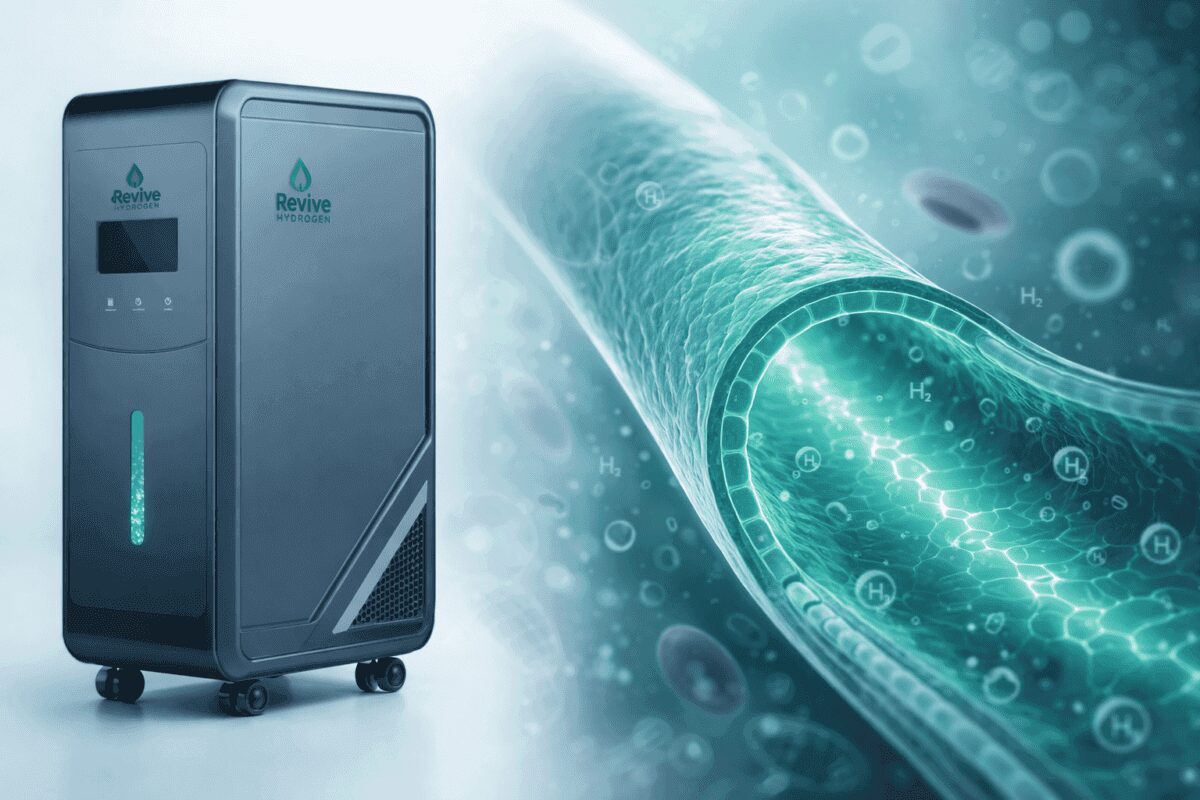
Achieving therapeutic molecular hydrogen exposure requires more than hydrogen-infused beverages or low-output wellness gadgets. Professional-grade inhalation systems capable of sustained, high-concentration H₂ delivery are essential for meaningful cardiovascular and cellular benefit. The Revive Hydrogen Generator is engineered to meet clinical-grade standards, delivering consistent, high-purity molecular hydrogen in a refined, user-friendly platform designed for home and professional use.
Whether you’re a wellness enthusiast seeking to optimize vascular function, an athlete prioritizing recovery and mitochondrial efficiency, or a clinician exploring adjunct therapies for metabolic and cardiovascular wellness, the Revive Hydrogen system provides the output, reliability, and precision necessary to harness the full molecular hydrogen benefits. Invest in endothelial resilience. Support mitochondrial health. Elevate your approach to longevity and cardiovascular vitality.