
Can Hydrogen Inhalation Support Heart Health and Circulation?
Your cardiovascular system operates under relentless oxidative pressure. Every heartbeat, every vessel contraction, every cellular energy transaction generates reactive oxygen species as metabolic byproducts. While some of these molecules serve essential signaling functions, others—particularly hydroxyl radicals and peroxynitrite—inflict cumulative damage on vascular endothelium, cardiac mitochondria, and circulation-regulating tissues. Molecular hydrogen (H₂) has emerged as a selective antioxidant uniquely capable of mitigating this oxidative burden without disrupting beneficial cellular signaling. For those seeking evidence-based wellness tools to support cardiovascular resilience and systemic circulation, hydrogen inhalation represents a scientifically grounded modality worthy of serious consideration.
The Cardiovascular Oxidative Stress Challenge
The heart and vascular network comprise one of the most metabolically active systems in the human body. Cardiac myocytes contain among the highest mitochondrial densities of any tissue, reflecting their extraordinary energy demands. This constant ATP production generates superoxide anions, hydrogen peroxide, and under pathological conditions, highly reactive hydroxyl radicals and peroxynitrite.
Not all reactive oxygen species are problematic. Hydrogen peroxide, for instance, participates in vital vasodilation signaling and immune function. The challenge lies in selectively neutralizing the most damaging oxidants while preserving beneficial redox signaling—a biochemical balancing act that conventional broad-spectrum antioxidants often fail to achieve. Many antioxidant supplements quench both harmful and helpful reactive species indiscriminately, potentially disrupting homeostatic balance and cellular communication pathways.
Why the Cardiovascular System Needs Selective Protection
Vascular endothelial cells line every blood vessel, regulating vascular tone, inflammation, and permeability. These cells are exceptionally vulnerable to oxidative assault from hydroxyl radicals and peroxynitrite, which damage endothelial nitric oxide synthase (eNOS) function—the enzyme responsible for producing nitric oxide, a master regulator of blood pressure and circulation.
When oxidative stress overwhelms endothelial defenses, nitric oxide bioavailability declines, vascular stiffness increases, and inflammatory signaling cascades activate. Over time, this oxidative imbalance contributes to endothelial dysfunction, a hallmark precursor to broader cardiovascular concerns. Supporting the body’s ability to neutralize the most toxic oxidants while maintaining physiological signaling represents a sophisticated approach to cardiovascular wellness.
Molecular Hydrogen as a Selective Antioxidant
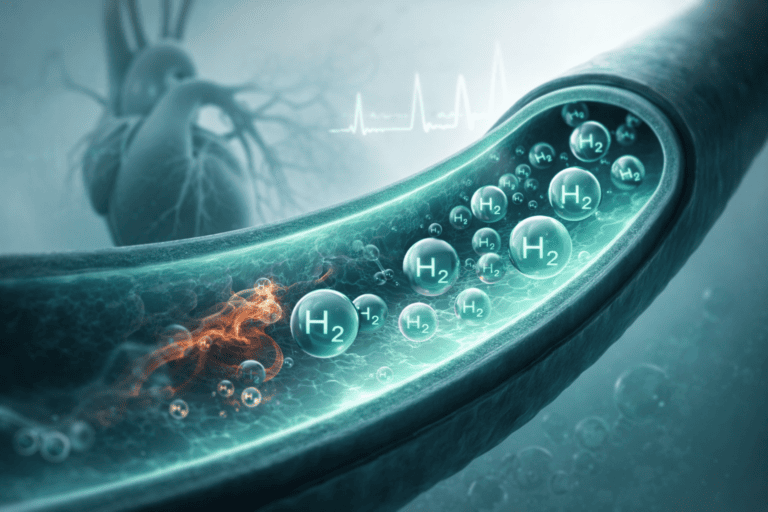
Molecular hydrogen operates through a fundamentally different mechanism than conventional antioxidants. Due to its small size and neutral charge, H₂ diffuses rapidly across cell membranes, the blood-brain barrier, and into subcellular compartments including mitochondria—the primary sites of oxidative stress generation.
Critically, research indicates that molecular hydrogen selectively reacts with hydroxyl radicals (•OH) and peroxynitrite (ONOO⁻), the most cytotoxic reactive species, while sparing hydrogen peroxide and superoxide that function in beneficial cellular signaling. This selectivity preserves the oxidative signaling required for normal immune function, cellular adaptation, and vascular homeostasis.
Mechanisms Supporting Cardiovascular Wellness
Beyond direct antioxidant activity, molecular hydrogen appears to activate endogenous protective pathways. Studies suggest H₂ upregulates Nrf2, a master transcription factor that coordinates the expression of antioxidant enzymes including superoxide dismutase, catalase, and glutathione peroxidase. This creates an amplified, sustained antioxidant response rather than a single-pass scavenging effect.
Additionally, molecular hydrogen has demonstrated anti-inflammatory properties in cardiovascular contexts, modulating pro-inflammatory cytokines and supporting mitochondrial membrane potential—key factors in maintaining cardiac energetics and endothelial function. These combined effects position hydrogen therapy as a multi-dimensional tool for cardiovascular optimization.
- Selective neutralization of hydroxyl radicals and peroxynitrite without disrupting beneficial reactive oxygen species signaling
- Support for endothelial nitric oxide synthase function and vascular nitric oxide bioavailability
- Activation of Nrf2-mediated antioxidant gene expression for sustained cellular protection
- Mitochondrial membrane stabilization supporting cardiac energy metabolism and ATP production
- Modulation of inflammatory cytokines relevant to vascular health and systemic circulation
- Rapid tissue penetration including crossing the blood-brain barrier for central nervous system vascular support
Why Inhalation Delivers Superior Systemic Saturation
While hydrogen-enriched water offers entry-level exposure to molecular hydrogen, achieving therapeutic tissue concentrations requires significantly higher delivery volumes. Drinking hydrogen water typically provides 1-3 mg of dissolved H₂ per liter—a modest dose limited by solubility constraints and gastric transit time.
Hydrogen inhalation bypasses these limitations entirely. When inhaled, molecular hydrogen enters the bloodstream directly through the pulmonary alveoli, achieving rapid systemic distribution and tissue saturation at concentrations far exceeding what oral consumption can deliver. This method enables passive, continuous exposure during rest, work, or recovery—a practical advantage for individuals seeking consistent cardiovascular support.
The Clinical-Grade Equipment Standard
Achieving meaningful hydrogen concentrations for wellness applications demands high-output electrolysis technology capable of sustained, pure hydrogen generation. Consumer-grade devices often produce insufficient volumes or introduce impurities that compromise safety and efficacy.
Professional-grade hydrogen generators utilize advanced PEM (proton exchange membrane) or alkaline electrolysis systems, producing medical-grade hydrogen at flow rates sufficient for therapeutic inhalation protocols. These systems incorporate safety features, humidity control, and precision engineering essential for reliable long-term use. For cardiovascular wellness applications where consistent exposure matters, equipment quality becomes non-negotiable.
Integrating Hydrogen Therapy into Cardiovascular Wellness Protocols
Molecular hydrogen therapy should be understood as a complementary wellness modality rather than a standalone intervention. It integrates naturally into comprehensive cardiovascular health strategies that include appropriate nutrition, regular physical activity, stress management, and medical oversight.
Typical inhalation protocols involve sessions ranging from 30 to 120 minutes, with some practitioners recommending daily use for sustained oxidative stress mitigation. The passive nature of inhalation therapy allows for concurrent activities—reading, working, or simply resting—making adherence practical for busy individuals prioritizing longevity and wellness.
For those monitoring cardiovascular biomarkers, hydrogen therapy may complement existing wellness routines by supporting endothelial function, vascular flexibility, and mitochondrial health—foundational elements of long-term cardiovascular resilience.
Related reading: Hydrogen and Cardiovascular Support · Molecular Hydrogen Benefits for Endothelial Health
New to hydrogen inhalation? Download our free Beginner’s Guide to Hydrogen Inhalation for a plain-language primer on what H₂ is, how inhalation works, and how to choose a generator.
Bring This Technology Home
The cardiovascular benefits of molecular hydrogen depend entirely on achieving therapeutic tissue concentrations through consistent, high-volume delivery. This requires professional-grade equipment engineered for safety, purity, and sustained output.
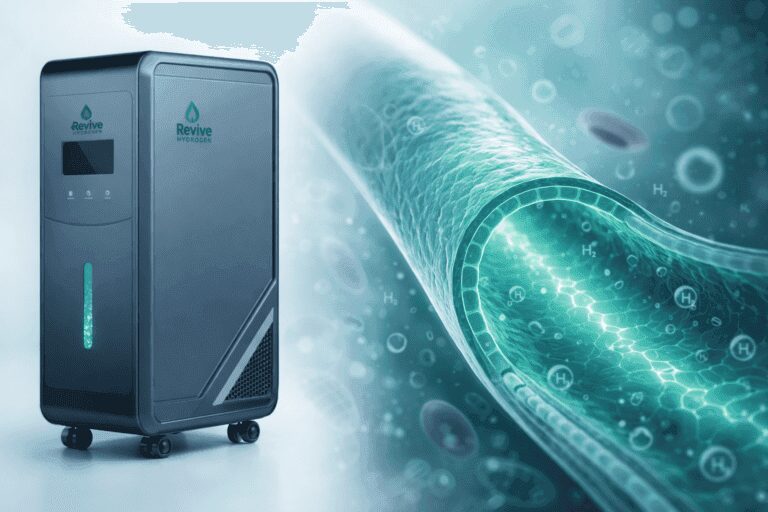
Revive Hydrogen offers clinical-quality hydrogen generators designed for home and professional use, delivering the flow rates and purity standards necessary for meaningful cardiovascular wellness applications. Built with advanced electrolysis technology and comprehensive safety protocols, these systems enable daily hydrogen inhalation protocols that support oxidative stress mitigation, endothelial health, and mitochondrial optimization.
Whether you’re a longevity-focused individual, a wellness practitioner, or someone committed to evidence-based cardiovascular support, investing in reliable hydrogen generation technology represents a forward-thinking approach to cellular health. Explore how professional-grade hydrogen therapy can integrate into your wellness routine and support your cardiovascular resilience for years to come.