
Blood Pressure, Oxidative Stress, and Vascular Health
Elevated blood pressure affects nearly half of American adults, and while lifestyle interventions remain foundational, emerging science points to a cellular-level mechanism that may underlie many cardiovascular challenges: oxidative stress and endothelial dysfunction. Molecular hydrogen (H₂)—the smallest molecule in the universe—has emerged in peer-reviewed research as a selective antioxidant with unique properties that support vascular homeostasis, nitric oxide bioavailability, and healthy blood pressure regulation. Understanding how hydrogen and blood pressure interact at the cellular level reveals why high-output hydrogen inhalation is gaining traction among longevity-focused clinicians and wellness practitioners.
Blood pressure regulation is a complex interplay of vascular tone, endothelial function, autonomic nervous system balance, and oxidative-redox signaling. When chronic oxidative stress disrupts these systems—particularly through the accumulation of highly reactive hydroxyl radicals and peroxynitrite—endothelial cells lose their ability to produce adequate nitric oxide (NO), the master vasodilator. Without sufficient NO, blood vessels constrict, arterial stiffness increases, and blood pressure climbs. This is where molecular hydrogen’s selective antioxidant properties become particularly relevant.
How Molecular Hydrogen Acts as a Selective Antioxidant
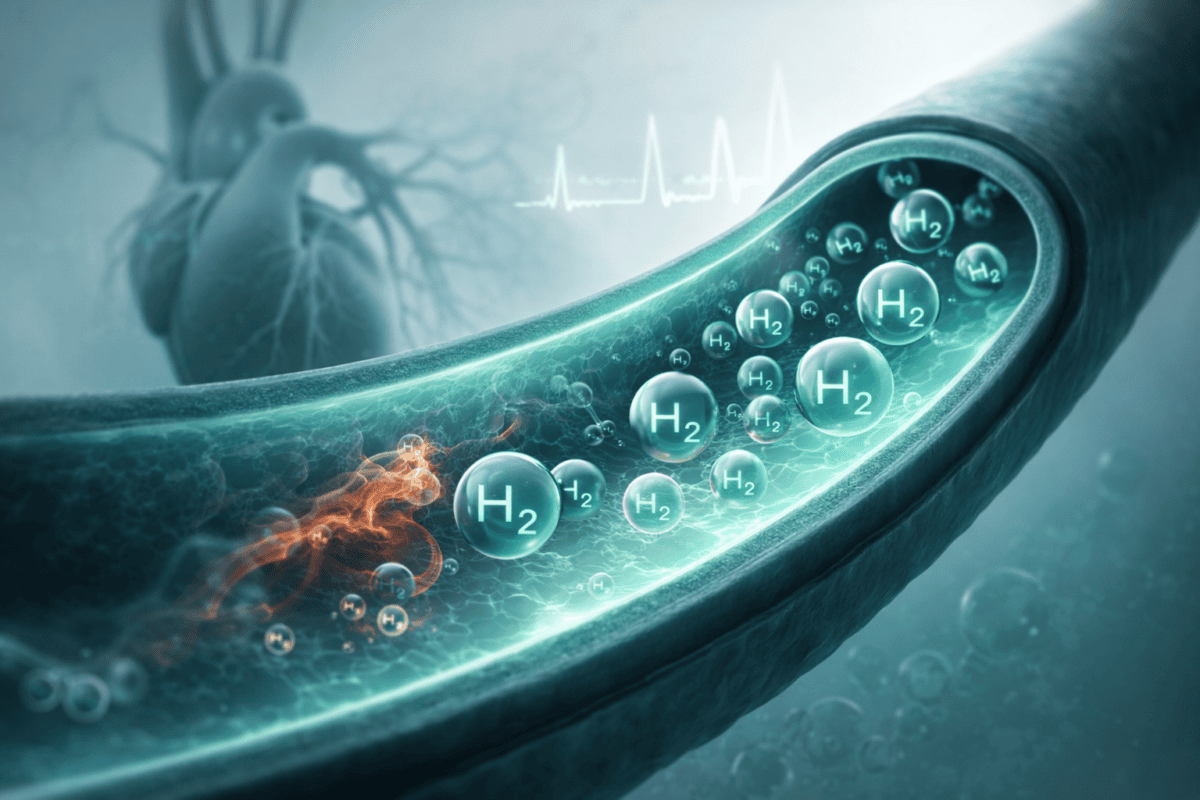
Unlike broad-spectrum antioxidants that indiscriminately neutralize all reactive oxygen species—including those essential for cell signaling—molecular hydrogen operates with elegant specificity. H₂ selectively reduces only the most cytotoxic oxidants: hydroxyl radicals (•OH) and peroxynitrite (ONOO⁻). These are the oxidative species most directly implicated in endothelial damage, inflammation, and disrupted nitric oxide metabolism.
Crucially, hydrogen leaves beneficial signaling molecules like hydrogen peroxide (H₂O₂) and superoxide (O₂⁻) intact. This selectivity allows cells to maintain normal redox signaling pathways—critical for immune function, mitochondrial biogenesis, and adaptive stress responses—while removing only the oxidants that cause direct cellular harm. This distinction is biochemically significant: traditional antioxidants can paradoxically blunt beneficial hormetic stress responses, while molecular hydrogen preserves them.
In the context of vascular health, this selective action protects endothelial nitric oxide synthase (eNOS) from oxidative inactivation, preserves tetrahydrobiopterin (BH₄, an essential eNOS cofactor), and prevents peroxynitrite-mediated nitric oxide depletion. The result is improved endothelial function, enhanced vasodilation, and better arterial compliance—all foundational to healthy blood pressure homeostasis.
The Hydroxyl Radical–Peroxynitrite Connection
Hydroxyl radicals are generated through the Fenton reaction when superoxide and hydrogen peroxide interact with free iron. Peroxynitrite forms when superoxide reacts with nitric oxide, simultaneously destroying NO and creating a potent oxidant. Both species damage lipid membranes, oxidize proteins, and fragment DNA. In vascular tissue, they specifically:
- Uncouple endothelial nitric oxide synthase (eNOS): Causing it to produce superoxide instead of nitric oxide, creating a vicious cycle of oxidative stress and vasoconstriction
- Deplete tetrahydrobiopterin (BH₄): A critical cofactor for NO production, leading to further eNOS uncoupling and reduced vasodilation
- Oxidize low-density lipoproteins (LDL): Promoting foam cell formation, arterial stiffness, and inflammation
- Activate pro-inflammatory transcription factors: Including NF-κB, which amplifies endothelial dysfunction and vascular remodeling
- Impair mitochondrial function: Reducing cellular ATP production and disrupting smooth muscle cell relaxation
By selectively neutralizing these two oxidants, molecular hydrogen addresses root-cause mechanisms of endothelial dysfunction without suppressing the oxidative signaling required for vascular adaptation and repair.
Evidence Linking Hydrogen and Blood Pressure Regulation
Multiple preclinical and clinical studies have examined the relationship between molecular hydrogen administration and blood pressure parameters. Research in animal models of hypertension demonstrates that hydrogen-rich water and hydrogen gas inhalation significantly reduce systolic and diastolic blood pressure, improve endothelial-dependent vasodilation, and decrease arterial stiffness markers.
Human clinical trials, while still emerging, show promising trends. Studies involving metabolic syndrome patients—a population characterized by oxidative stress, insulin resistance, and elevated blood pressure—found that daily hydrogen water consumption improved flow-mediated dilation (FMD), a gold-standard measure of endothelial function. Improvements in FMD correlate strongly with reduced cardiovascular risk and better blood pressure control.
Mechanistic research reveals that H₂ upregulates endogenous antioxidant enzymes through the Nrf2-Keap1 pathway, enhances mitochondrial membrane potential, reduces inflammatory cytokines (IL-6, TNF-α), and modulates the autonomic nervous system toward parasympathetic dominance—all factors that collectively support healthy blood pressure homeostasis.
Why Inhalation Achieves Superior Tissue Saturation
While hydrogen-enriched water offers convenience and mild benefit, achieving therapeutic tissue saturation—particularly in vascular endothelium and deep tissues—requires substantially higher molecular hydrogen concentrations than oral ingestion can deliver. Hydrogen water typically provides 1–3 mg of dissolved H₂ per liter, and gastrointestinal absorption is limited by intestinal surface area, transit time, and first-pass metabolism.
High-output hydrogen inhalation, by contrast, delivers molecular hydrogen directly into the bloodstream via the alveolar-capillary interface in the lungs. This route bypasses digestive limitations, achieves rapid systemic distribution, and produces measurably higher blood and tissue H₂ concentrations. Inhalation is passive, requires no digestive processing, and allows sustained exposure during rest, work, or recovery—making it ideal for mitochondrial optimization, oxidative stress mitigation, and vascular support.
For individuals focused on cardiovascular wellness, endothelial health, and blood pressure homeostasis, professional-grade hydrogen generators capable of delivering 1000–2000 ml/min of pure hydrogen represent the most efficient method to achieve biologically meaningful hydrogen exposure.
Integrating Molecular Hydrogen Into a Cardiovascular Wellness Protocol
Molecular hydrogen is not a standalone intervention, but rather a synergistic tool within a comprehensive approach to cardiovascular health. Its selective antioxidant properties complement—rather than replace—evidence-based lifestyle strategies including:
- Whole-food, plant-forward nutrition: Emphasizing polyphenols, nitrates, omega-3 fatty acids, and fiber to support endothelial function and reduce systemic inflammation
- Regular aerobic and resistance exercise: Stimulating eNOS expression, improving arterial compliance, and enhancing mitochondrial density
- Stress management and sleep optimization: Reducing sympathetic nervous system overdrive and cortisol-mediated vascular damage
- Targeted supplementation: Including magnesium, CoQ10, citrulline, and vitamin K2 to support nitric oxide metabolism and arterial health
Hydrogen inhalation sessions of 30–90 minutes daily provide a passive, systemically acting adjunct that addresses oxidative and inflammatory drivers of endothelial dysfunction. This approach aligns with precision longevity medicine: targeting upstream cellular mechanisms rather than merely suppressing downstream symptoms.
Bring This Technology Home
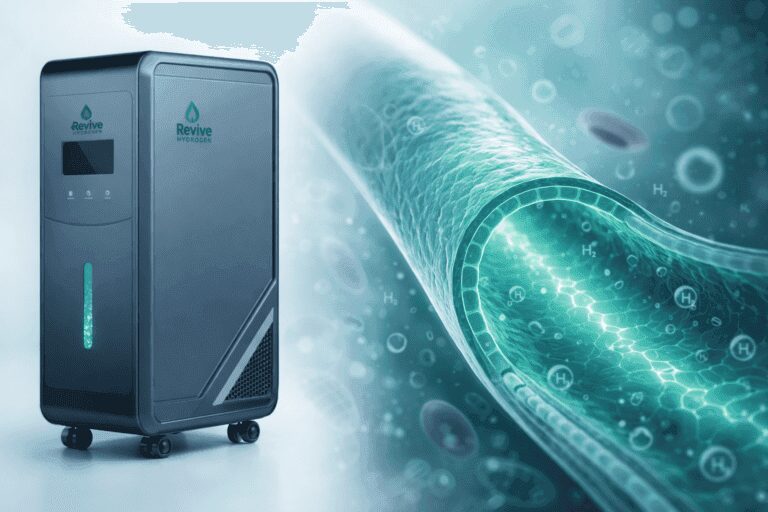
For clinicians, biohackers, and health-focused individuals seeking to integrate molecular hydrogen into a cardiovascular wellness protocol, the quality and output capacity of the hydrogen generator are paramount. Revive Hydrogen offers professional-grade systems engineered for clinical performance and home accessibility.
The Intelligent High-Flow Hydrogen Generator lineup—HYD-1500, HYD-1800, and HYD-3000—utilizes PEM (Proton Exchange Membrane) electrolysis with platinum-coated titanium electrodes and DuPont N117 membranes to produce hydrogen at 99.992% purity, verified by independent third-party laboratory analysis. These systems generate pure molecular hydrogen and oxygen separately—not diluted hydrogen-air mixtures—with flow rates from 1500 to 3000 ml/min total output, enabling deep tissue saturation and dual-user capability.
Research into molecular hydrogen and cardiovascular function continues to expand, examining mechanisms related to oxidative stress, endothelial health, and vascular tone. Revive Hydrogen systems are designed for individuals committed to evidence-based wellness technology, providing the output capacity and purity necessary for serious exploration of hydrogen’s potential. Manufactured to CE and RoHS standards within an ISO 9001-certified quality system, each unit includes a 3-year limited warranty, session timer, UV-C water disinfection, and four nasal cannulas—everything required for professional-grade hydrogen wellness at home.