
The Silent War Within: How Aging Fuels Oxidative Stress at the Cellular Level
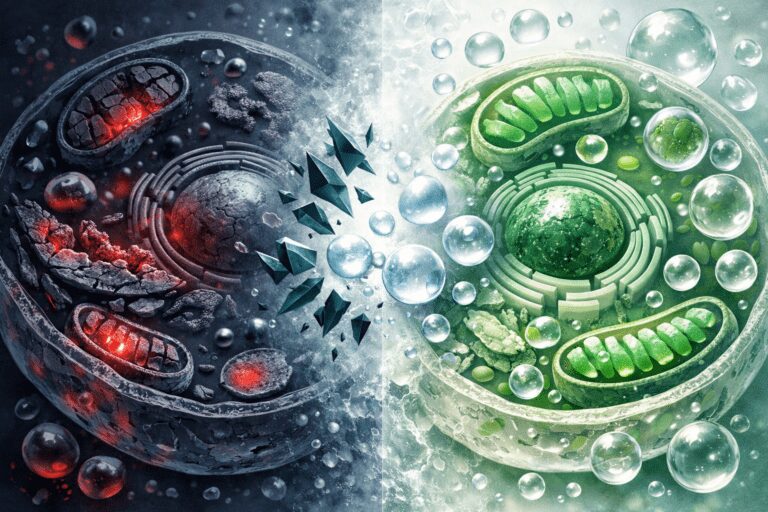
Every second of every day, your cells are engaged in a biochemical arms race. As we age, this battle becomes increasingly one-sided — and combatting oxidative stress emerges as one of the most critical priorities in modern longevity science. At the center of this cellular conflict is a class of unstable molecules known as reactive oxygen species (ROS), and among them, certain radicals are devastatingly destructive. Molecular hydrogen (H2) has emerged from decades of peer-reviewed research as a remarkably precise and elegant tool for restoring cellular homeostatic balance — not by eliminating all oxidative activity, but by selectively targeting the most dangerous offenders while preserving the body’s own protective signaling chemistry.
Understanding the Enemy: What Oxidative Stress Actually Does to Your Cells
Oxidative stress is not simply “having too many free radicals.” It is the measurable imbalance between the production of reactive oxygen species and your body’s capacity to neutralize them through endogenous antioxidant defense systems. Youthful cells maintain a dynamic equilibrium — oxidative activity is not only tolerated but essential for cellular signaling, immune function, and metabolic regulation. The problem intensifies with age.
As mitochondrial efficiency declines over decades, electron leakage during ATP synthesis increases. This leakage generates a flood of reactive species, and two in particular stand out for their sheer destructive potential: the hydroxyl radical (•OH) and peroxynitrite (ONOO-). The hydroxyl radical is arguably the most reactive and damaging molecule produced in biological systems. It attacks lipid membranes, oxidizes proteins, and directly fragments DNA strands with no specificity or discrimination. Peroxynitrite, formed from the reaction of superoxide with nitric oxide, similarly damages mitochondrial membranes, inactivates enzymes, and drives chronic inflammatory cascades.
What makes combatting oxidative stress at this level so difficult is that conventional antioxidant supplements — high-dose vitamin C, vitamin E, and others — are blunt instruments. They indiscriminately neutralize all ROS, including hydrogen peroxide (H2O2), which the body uses as a vital intracellular messenger for regulating growth, immune activation, and cellular repair signaling. Eliminating beneficial oxidants disrupts homeostatic balance and can paradoxically impair cellular resilience over time.
Molecular Hydrogen: The World’s Most Selective Antioxidant
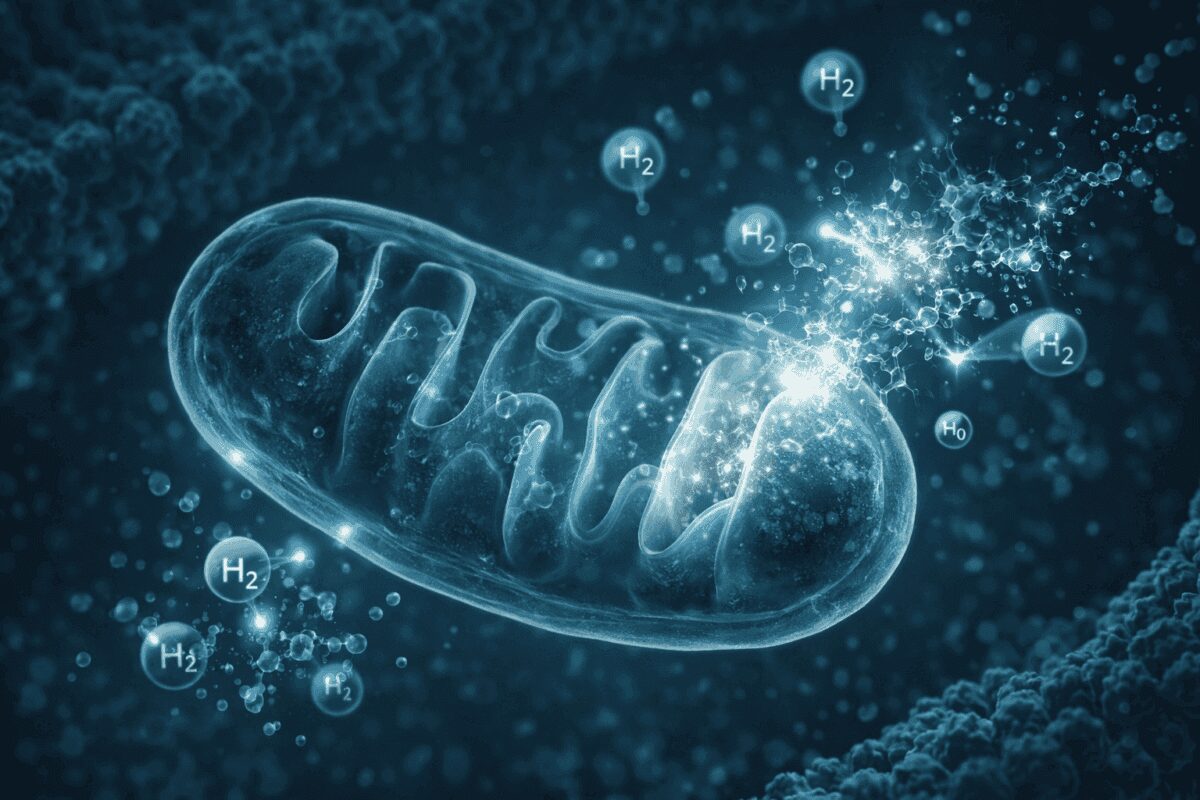
This is precisely where molecular hydrogen’s biological elegance becomes evident. H2 is the smallest molecule in the universe, which grants it unmatched bioavailability — it diffuses freely across cell membranes, crosses the blood-brain barrier, and penetrates mitochondrial compartments where oxidative damage originates and accumulates most aggressively.
Critically, molecular hydrogen does not react with functional ROS. It does not neutralize hydrogen peroxide, superoxide at physiological concentrations, or other oxidants that serve essential regulatory roles. Instead, H2 demonstrates a highly selective reactivity with only the most cytotoxic species:
- Hydroxyl Radical (•OH) Neutralization: H2 reacts directly with •OH, the most destructive ROS in the human body, converting it harmlessly into water — producing zero toxic byproducts in the process.
- Peroxynitrite (ONOO-) Scavenging: H2 suppresses peroxynitrite-mediated nitrosative stress, protecting mitochondrial membranes and vascular endothelial integrity from one of aging’s most insidious biochemical aggressors.
- Mitochondrial Optimization: By reducing oxidative load within mitochondria, H2 supports sustained ATP production efficiency, helping to preserve the cellular energy output that declines steadily with age.
- Nrf2 Pathway Activation: Evidence suggests H2 upregulates the Nrf2 transcription factor — the master regulator of the body’s endogenous antioxidant response — amplifying production of glutathione, catalase, and superoxide dismutase.
- Anti-Inflammatory Gene Expression: H2 has been shown in multiple studies to downregulate pro-inflammatory cytokines, including TNF-α and IL-6, which are central drivers of the chronic low-grade inflammation associated with biological aging.
- DNA Oxidative Damage Reduction: By eliminating hydroxyl radicals before they can attack nuclear and mitochondrial DNA, H2 inhalation has been associated with measurable reductions in 8-OHdG — a biomarker of oxidative DNA damage widely used in aging research.
- Cellular Redox Homeostasis: Unlike indiscriminate antioxidants, H2 preserves the body’s natural oxidative signaling architecture, supporting the precise redox balance that governs cellular repair, metabolism, and immune competence.
The Delivery Imperative: Why Inhalation Achieves What Hydrogen Water Cannot
Understanding the biochemistry of molecular hydrogen is only half of the equation. The other half is delivery — and this distinction matters enormously for anyone serious about oxidative stress mitigation at a therapeutic level.
Hydrogen-infused water has genuine merit and has been the subject of meaningful research. However, it presents a fundamental physiological ceiling. The concentration of dissolved H2 in water is inherently limited by Henry’s Law — the solubility of gas in liquid at atmospheric pressure. A typical glass of hydrogen water delivers a finite, modest dose of H2 that is largely absorbed through the gastrointestinal tract and metabolized before achieving consistent systemic tissue saturation.
Inhalation of molecular hydrogen gas, by contrast, operates through a profoundly different mechanism. When inhaled, H2 enters the pulmonary circulation directly, achieving rapid, high-concentration distribution through the bloodstream to all tissues simultaneously — including the brain, liver, kidneys, heart muscle, and skeletal tissue. Sustained inhalation sessions allow for continuous, passive replenishment of circulating H2, maintaining therapeutic concentrations at the mitochondrial level where age-related oxidative damage is most pronounced.
This is not a matter of preference — it is a matter of pharmacokinetics. Research protocols investigating H2 therapy’s most significant outcomes in cognitive function, metabolic health, exercise recovery, and inflammatory modulation consistently employ inhalation as the delivery modality. Achieving genuine, whole-body oxidative stress mitigation requires a method capable of reaching every tissue system in parallel — and only high-output inhalation technology makes that physiologically possible.
Professional-grade hydrogen inhalation generators are designed specifically to produce medical-quality H2 at flow rates sufficient to achieve and maintain these systemic tissue concentrations. Consumer hydrogen water products and low-output devices simply cannot replicate this depth of cellular exposure. For those committed to using molecular hydrogen as a serious longevity and recovery tool, the hardware used to deliver it is not a secondary consideration — it is the foundation of the entire therapeutic strategy.
Related reading: Hydrogen and Healthy Aging · Combatting Oxidative Stress & Aging
New to hydrogen inhalation? Download our free Beginner’s Guide to Hydrogen Inhalation for a plain-language primer on what H₂ is, how inhalation works, and how to choose a generator.
Bring This Technology Home
The science is compelling, the mechanism is sound, and the research trajectory continues to build. If you are committed to combatting oxidative stress at its cellular root — preserving mitochondrial function, protecting DNA integrity, and maintaining the biological resilience that separates graceful aging from accelerated cellular decline — then the delivery system you choose defines your results.
Revive Hydrogen has engineered a professional-grade molecular hydrogen inhalation generator built specifically for serious home wellness practitioners and clinical environments. Designed to produce high-purity H2 at therapeutic flow rates, it represents the current standard for achieving the systemic tissue saturation that peer-reviewed research supports. Whether your focus is longevity optimization, post-exercise cellular recovery, neuroprotection, or whole-body oxidative stress mitigation, this is the technology that bridges laboratory evidence and real-world results. Invest in the tool your cells have been waiting for.