
Why Standard Antioxidant Supplements Fall Short
The global market for antioxidant supplements is saturated with polyphenols, vitamins C and E, and exotic botanical extracts—all marketed as keys to longevity and cellular vitality. Yet despite decades of widespread supplementation, the evidence for dramatic health span extension remains equivocal at best. The reason lies not in the concept itself, but in the biological execution: most conventional antioxidants act as indiscriminate scavengers, neutralizing not only harmful oxidative species but also beneficial signaling molecules that orchestrate essential cellular adaptations. Emerging research into molecular hydrogen (H₂) reveals a fundamentally different mechanism—one that selectively targets the most destructive free radicals while preserving the redox signaling pathways critical for healthy aging.
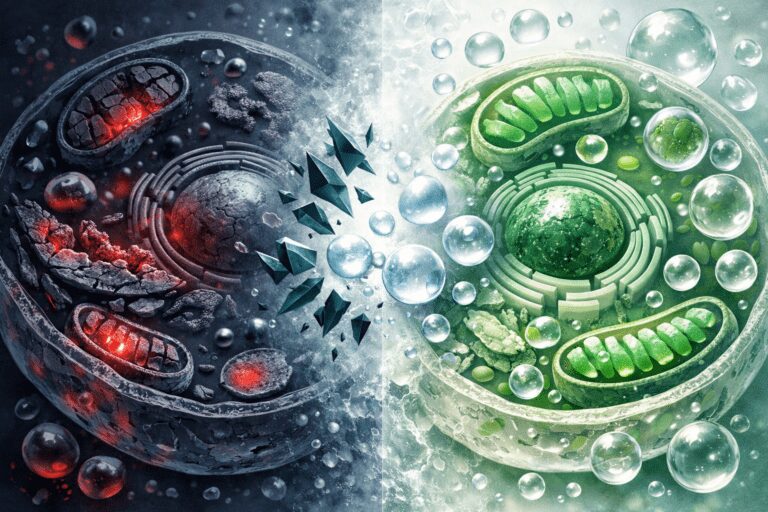
As we age, the balance between oxidative stress and antioxidant defense deteriorates progressively, contributing to mitochondrial dysfunction, chronic inflammation, and accelerated cellular senescence. Molecular hydrogen offers a scientifically grounded approach to restoring homeostatic balance at the subcellular level, positioning it as one of the most promising healthy aging supplements in contemporary longevity science.
The Science of Selective Antioxidant Action
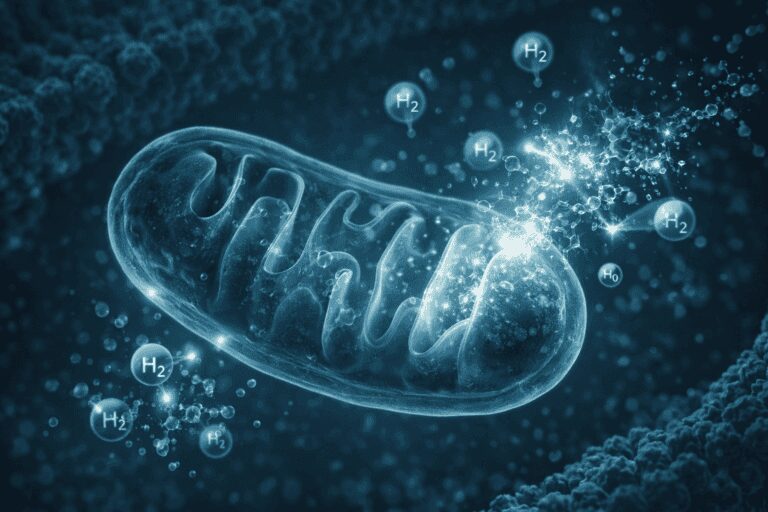
What distinguishes molecular hydrogen from conventional antioxidant therapies is its remarkable biochemical selectivity. H₂ is the smallest and most bioavailable molecule in existence, capable of rapidly diffusing across cell membranes, penetrating mitochondrial compartments, and even crossing the blood-brain barrier without requiring specialized transport mechanisms.
Targeting the Most Dangerous Oxidative Species
Molecular hydrogen exhibits preferential reactivity with hydroxyl radicals (•OH) and peroxynitrite (ONOO⁻)—two of the most cytotoxic reactive species implicated in aging pathology. Hydroxyl radicals are exceptionally damaging because they react indiscriminately with DNA, proteins, and lipid membranes at diffusion-controlled rates, leaving cells virtually no time to mount protective responses. Peroxynitrite, formed from the reaction of nitric oxide with superoxide, inflicts oxidative and nitrosative damage that disrupts mitochondrial respiration and triggers inflammatory cascades.
Critically, molecular hydrogen does not interfere with hydrogen peroxide (H₂O₂), superoxide (O₂⁻), or nitric oxide (NO)—reactive oxygen and nitrogen species that serve essential roles in immune signaling, vascular regulation, and hormetic stress adaptation. This selective neutralization preserves the beneficial aspects of redox biology while mitigating the pathological extremes that accumulate with age.
Beyond Free Radical Scavenging: Cytoprotective Gene Expression
Recent mechanistic studies reveal that molecular hydrogen functions not merely as a passive antioxidant, but as an active modulator of cytoprotective gene expression. H₂ upregulates the Nrf2-ARE (nuclear factor erythroid 2-related factor 2–antioxidant response element) pathway, a master regulator of endogenous antioxidant enzymes including superoxide dismutase, catalase, and glutathione peroxidase. This cascade effect amplifies cellular resilience far beyond what direct radical scavenging alone could achieve.
Additionally, molecular hydrogen downregulates pro-inflammatory cytokines such as IL-6, TNF-α, and IL-1β, which are chronically elevated in aged tissues and contribute to the systemic low-grade inflammation termed “inflammaging.” By modulating both oxidative stress and inflammatory signaling, H₂ addresses two of the most fundamental drivers of biological aging.
Cellular and Systemic Benefits for Longevity
The physiological impact of molecular hydrogen extends across multiple organ systems and metabolic pathways relevant to healthy aging:
- Mitochondrial optimization: H₂ preserves mitochondrial membrane potential and ATP synthesis capacity, countering the energetic decline that characterizes cellular senescence and age-related frailty.
- DNA integrity: By neutralizing hydroxyl radicals before they inflict genomic damage, molecular hydrogen reduces the accumulation of mutations and epigenetic alterations that drive aging phenotypes.
- Protein homeostasis: H₂ supports proteostasis by reducing oxidative protein modifications that lead to misfolding, aggregation, and the formation of toxic protein deposits seen in neurodegenerative conditions.
- Vascular health: Molecular hydrogen preserves endothelial function by protecting nitric oxide bioavailability, maintaining arterial compliance, and reducing atherogenic oxidative modifications of LDL cholesterol.
- Cellular senescence modulation: Emerging evidence suggests H₂ may influence senescent cell burden and the senescence-associated secretory phenotype (SASP), though this remains an active area of investigation.
Delivery Method Matters: Why Inhalation Outperforms Ingestion
While hydrogen-rich water has received considerable attention in wellness circles, the concentration achievable through oral ingestion is fundamentally limited by the saturation point of H₂ in aqueous solution—approximately 1.6 parts per million at standard temperature and pressure. This translates to a relatively modest systemic dose, particularly when accounting for gastrointestinal losses and first-pass metabolism.
High-flow hydrogen inhalation represents a paradigm shift in delivery efficiency. When molecular hydrogen is inhaled via nasal cannula, it enters the bloodstream directly through the pulmonary capillary bed, bypassing digestive limitations and achieving therapeutic tissue saturation within minutes. Sustained inhalation sessions of 30 to 90 minutes enable cumulative dosing that far exceeds what water consumption can provide, making it the preferred method for addressing systemic oxidative stress and supporting whole-body longevity pathways.
Achieving clinically relevant tissue concentrations requires professional-grade hydrogen generation technology. Low-output consumer devices and diluted hydrogen-air mixtures—common in the broader market—deliver insufficient quantities to replicate the protocols used in published research. Therapeutic application demands high-purity molecular hydrogen at flow rates sufficient for passive, sustained inhalation during rest, work, or recovery activities.
Integrating Molecular Hydrogen into a Longevity Protocol
Molecular hydrogen should be viewed not as a standalone intervention, but as a foundational element within a comprehensive longevity strategy. It synergizes with lifestyle practices known to promote healthy aging: caloric restriction or time-restricted eating, regular physical activity, restorative sleep, and stress management. Where these modalities enhance cellular resilience through hormetic stress and metabolic flexibility, H₂ provides a complementary layer of cytoprotection that mitigates the oxidative cost of living.
For individuals seeking to optimize healthspan and delay functional decline, molecular hydrogen represents one of the most scientifically substantiated healthy aging supplements available today. Its unique mechanism—selective neutralization of toxic radicals without disrupting beneficial signaling—positions it as a biologically intelligent tool for maintaining homeostatic balance in an aging organism.
Bring This Technology Home
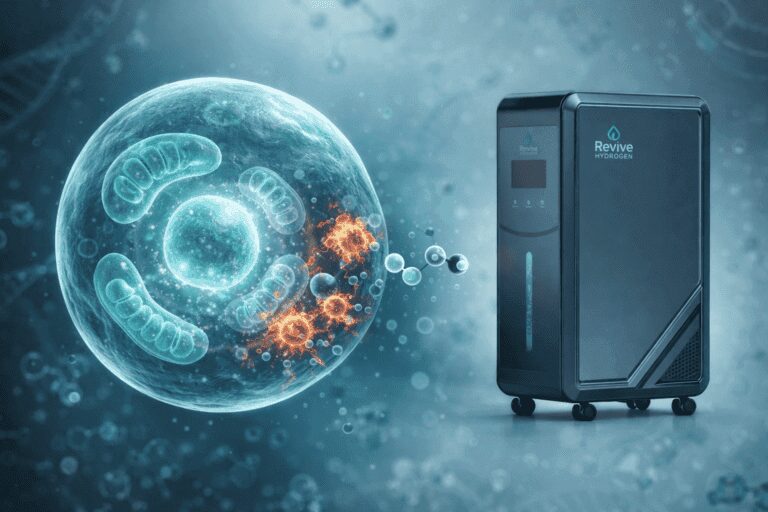
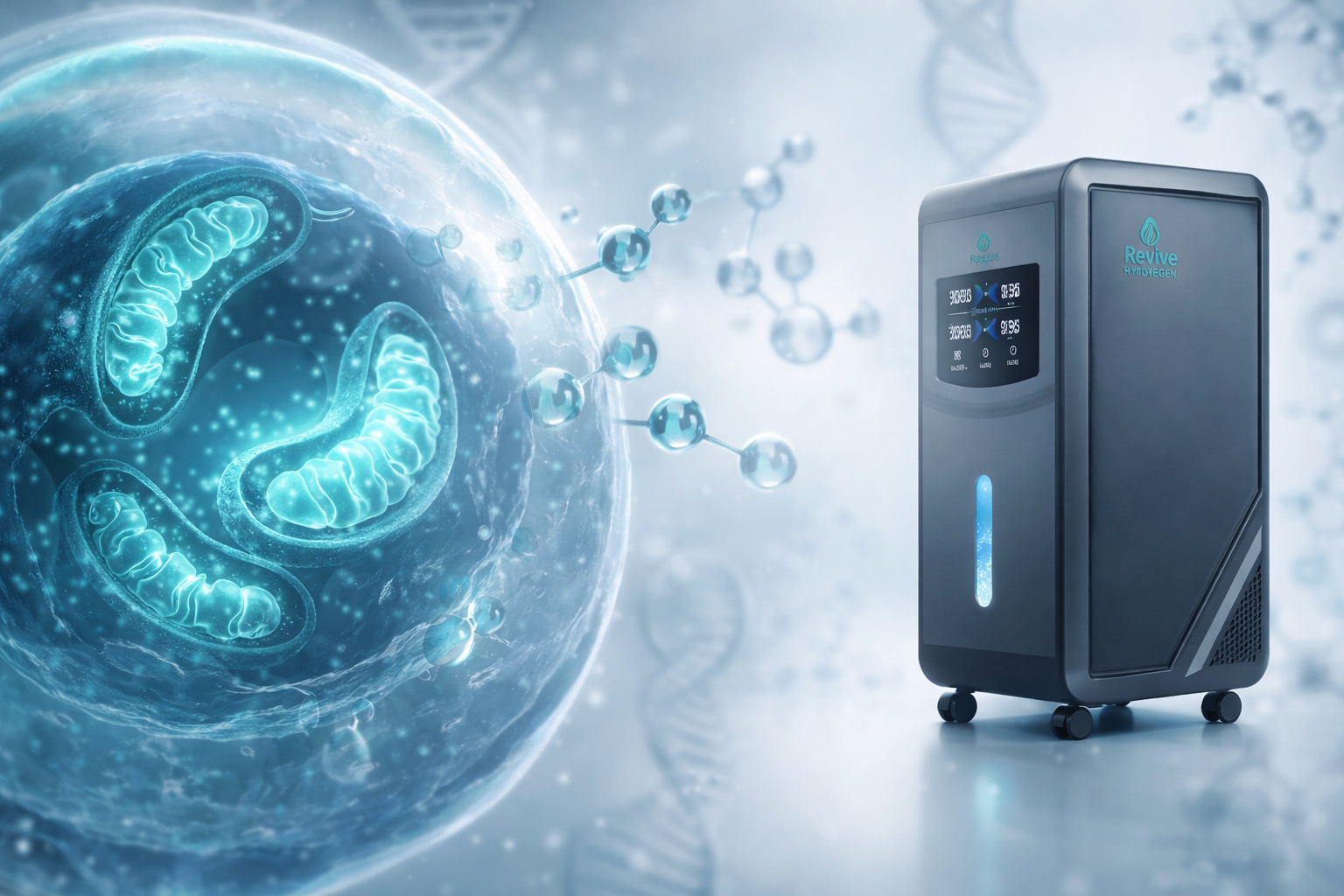
The transition of molecular hydrogen from laboratory research to clinical and home wellness applications has been enabled by advances in hydrogen generation technology. Revive Hydrogen manufactures high-output hydrogen generators engineered specifically for passive inhalation and sustained use. Utilizing PEM (Proton Exchange Membrane) electrolysis with platinum-coated titanium electrodes and DuPont N117 membranes, the system produces molecular hydrogen at a verified purity of 99.992%—independently confirmed by accredited third-party laboratory analysis.
The Intelligent High-Flow Hydrogen Generator is available in three output tiers to accommodate individual and dual-user applications: the HYD-1500 delivers up to 1500 ml/min total output (1000 ml/min H₂ and 500 ml/min O₂), the HYD-1800 up to 1800 ml/min (1200 H₂ and 600 O₂), and the HYD-3000 up to 3000 ml/min (2000 H₂ and 1000 O₂). Each unit includes four nasal cannulas, programmable session timers from 30 to 480 minutes, UV-C water disinfection, and continuous-run capability up to eight hours. Manufactured to CE and RoHS standards within an ISO 9001-certified quality management system, all units are backed by a three-year limited warranty covering defects in materials and workmanship.
Research into molecular hydrogen encompasses areas including oxidative stress mitigation, mitochondrial function, inflammatory modulation, and cellular resilience—fields central to the biology of aging. Revive Hydrogen provides the technology to bring this science into daily practice, supporting individuals committed to evidence-based approaches to longevity and healthspan optimization.