
Can Two People Use a Hydrogen Generator at the Same Time?
For households investing in molecular hydrogen technology, or for clinical practices looking to optimize patient throughput, one question emerges repeatedly: can a single hydrogen generator serve two users simultaneously? The short answer is yes—but only if the unit delivers sufficient output to maintain therapeutic saturation for both individuals. Understanding the technical requirements for a dual user hydrogen machine requires examining both the biochemistry of hydrogen therapy and the engineering specifications that separate consumer-grade devices from professional-grade systems.
Molecular hydrogen (H₂) has gained recognition as a selective antioxidant capable of penetrating cellular membranes, mitochondria, and even the blood-brain barrier. Unlike broad-spectrum antioxidants that can interfere with beneficial signaling pathways, H₂ specifically targets the most destructive reactive oxygen species—hydroxyl radicals (•OH) and peroxynitrite (ONOO⁻)—while preserving hydrogen peroxide and other molecules essential for immune function and cellular communication. This selectivity makes hydrogen inhalation an increasingly studied modality for oxidative stress mitigation, cellular recovery, and homeostatic balance.
But achieving meaningful tissue saturation demands high concentrations delivered continuously. This is where hardware capacity becomes paramount, and why dual-user capability is not a feature of every hydrogen generator on the market.
The Science Behind Effective Hydrogen Dosing
To understand whether two people can share a hydrogen generator, we must first establish what constitutes an effective dose. Research into molecular hydrogen typically references flow rates measured in milliliters per minute (ml/min) and inhalation durations ranging from 30 to 120 minutes per session. While individual protocols vary, studies exploring hydrogen’s effects on oxidative stress, inflammation modulation, and mitochondrial optimization generally employ hydrogen flow rates between 500 and 1,000 ml/min per person.
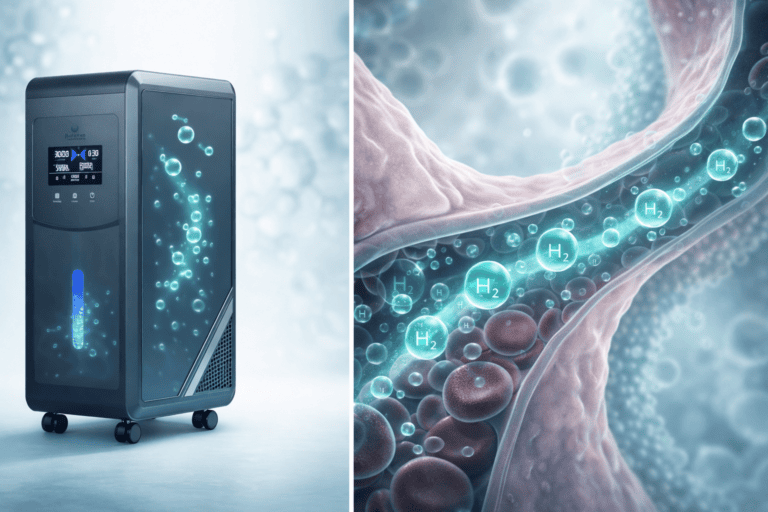
When hydrogen is inhaled via nasal cannula, it diffuses rapidly through the alveolar membrane into the bloodstream, where it circulates systemically. From there, it crosses cellular and subcellular membranes to reach sites of oxidative damage. The kinetics of this process depend on concentration gradients: higher hydrogen flow rates establish steeper gradients, accelerating tissue saturation and enhancing the neutralization of hydroxyl radicals and peroxynitrite.
For a single user, a generator producing 1,000 ml/min of pure hydrogen provides robust therapeutic exposure. But when two users share the output, each receives only half—500 ml/min. While this remains within the lower bounds of effective dosing, it leaves no margin for optimization. This is why dual-user hydrogen machines must generate significantly more hydrogen than entry-level or consumer-focused units.
Why Inhalation Outperforms Water Ingestion for Dual Use
Hydrogen-rich water has its place in daily wellness routines, but when two people seek simultaneous hydrogen exposure, inhalation becomes the only practical method. Hydrogen water typically delivers concentrations between 1 and 3 parts per million (ppm), requiring large volumes to achieve meaningful systemic levels. Producing enough hydrogen-saturated water for two people in real time demands either two separate water units or a cumbersome batching process.
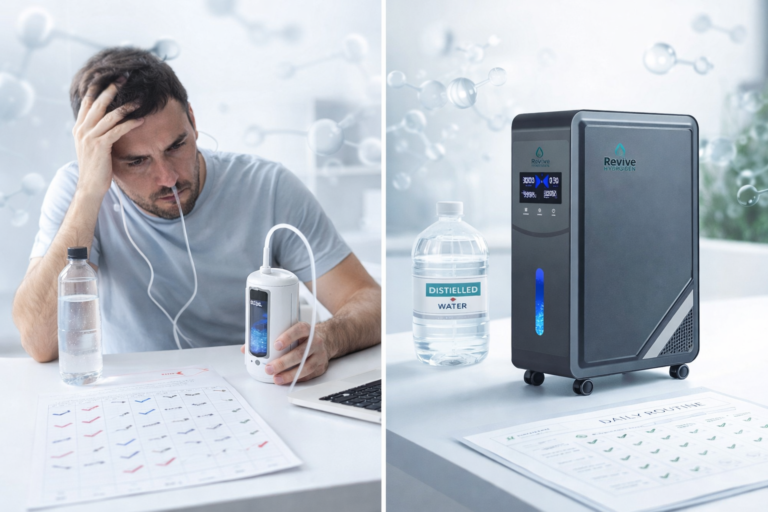
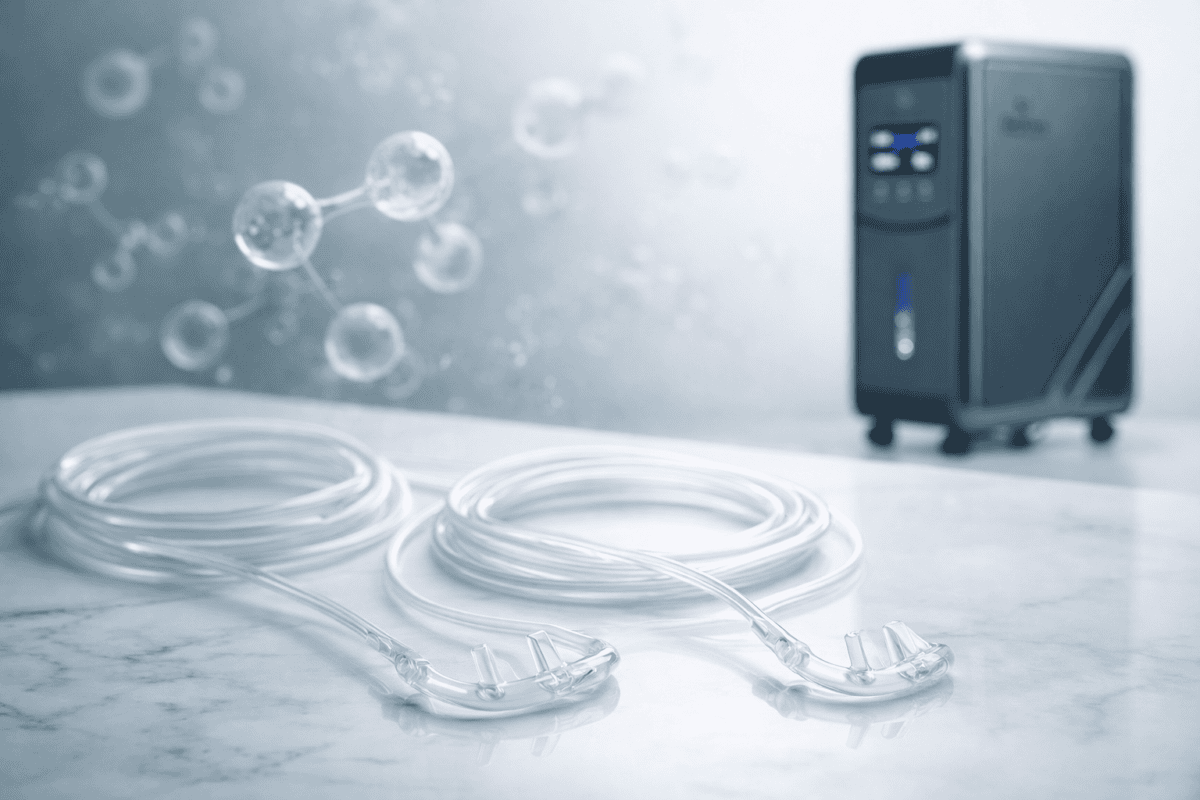
Inhalation, by contrast, delivers molecular hydrogen directly to the bloodstream in seconds. A high-output generator can split its flow via dual nasal cannulas, allowing two users to receive continuous, passive exposure during rest, work, or recovery sessions. This method is efficient, scalable, and conducive to longer session durations—critical for maximizing hydrogen’s selective antioxidant effects.
What Makes a Hydrogen Generator Dual-User Capable?
Not all hydrogen generators are engineered for dual use. The determining factor is total hydrogen output. A true dual user hydrogen machine must produce at least 2,000 ml/min of combined hydrogen and oxygen gas to deliver approximately 1,000 ml/min of pure H₂ per user when split evenly. Devices that generate only 500–1,000 ml/min total output are designed for single users and will underdeliver when shared.
Key Technical Specifications
- Proton Exchange Membrane (PEM) Electrolysis: The gold standard for producing high-purity hydrogen from distilled water. PEM systems separate hydrogen and oxygen at the molecular level, ensuring output purity above 99.9%.
- Platinum-Coated Titanium Electrodes: These materials resist corrosion and maintain electrode efficiency over thousands of hours of operation, ensuring consistent gas production.
- High Flow Rate Capacity: Dual-user systems must produce a minimum of 1,800–3,000 ml/min combined output to maintain effective per-person dosing when split.
- Continuous Run Time: Sessions lasting 60–120 minutes are common. Dual-user generators must sustain high output without overheating, requiring robust thermal management and extended duty cycles.
- Dual Cannula Ports: Physical infrastructure to split the gas stream evenly, typically via Y-adapters or integrated dual-port outlets.
Consumer-grade devices often lack one or more of these features. They may produce hydrogen diluted with ambient air (resulting in 1–4% H₂ concentrations), rely on lower-grade electrolysis methods, or simply lack the power supply and electrode surface area to generate sufficient volume. These limitations make them unsuitable for dual use, regardless of marketing claims.
Clinical and Household Applications of Dual-User Systems
The ability to serve two users simultaneously unlocks practical advantages across multiple settings. In clinical environments—integrative medicine practices, wellness centers, athletic recovery facilities—dual-user hydrogen machines improve patient throughput without requiring duplicate equipment investments. Two patients can undergo hydrogen inhalation sessions side by side, optimizing both space and capital expenditure.
In household settings, dual-user capability transforms hydrogen therapy from an individual practice into a shared wellness routine. Partners, family members, or cohabitants can engage in sessions together, making the technology more accessible and integrated into daily life. This shared experience also improves adherence: when two people commit to a wellness protocol together, consistency improves.
Passive Wellness and Recovery
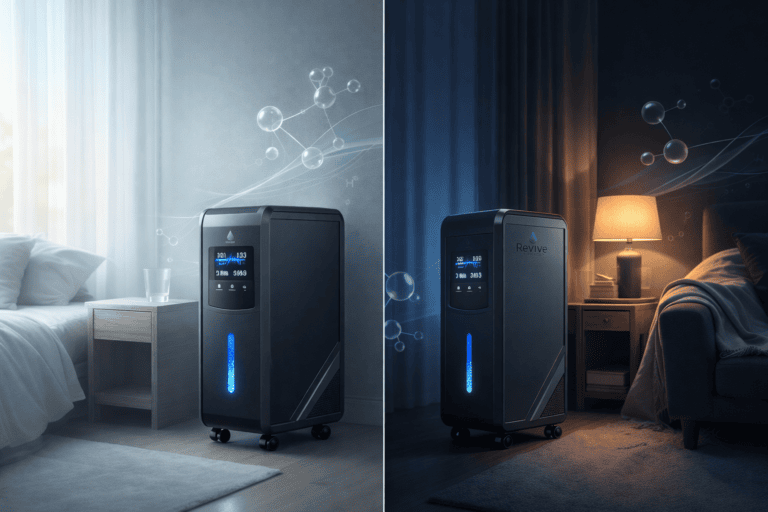
One of hydrogen inhalation’s most compelling attributes is its passivity. Unlike active interventions—exercise, breathwork, cold exposure—hydrogen therapy requires no effort. Users simply breathe normally while the generator delivers a continuous stream of molecular hydrogen. This makes it ideal for evening relaxation, meditation, reading, or even sleep preparation. For two users, the experience becomes a shared ritual, reinforcing commitment to oxidative stress mitigation and cellular health.
Choosing the Right Dual User Hydrogen Machine
When evaluating hydrogen generators for dual use, prioritize verified output specifications over marketing language. Request third-party lab certification of hydrogen purity and flow rate. Confirm that the device uses PEM electrolysis, not lower-grade alkaline or SPE (solid polymer electrolyte) methods that may produce contaminants or inconsistent output.
Examine the duty cycle: can the unit run continuously for 2–4 hours without thermal shutdown? Does it include safety features like automatic water level monitoring, UV-C disinfection to prevent microbial growth in the water reservoir, and overheat protection?
Finally, assess the user interface. Dual-user systems should offer programmable session timers, intuitive flow rate adjustments, and clear visual indicators for water level, system status, and maintenance intervals. Professional-grade equipment should feel intuitive, not intimidating.
Bring This Technology Home
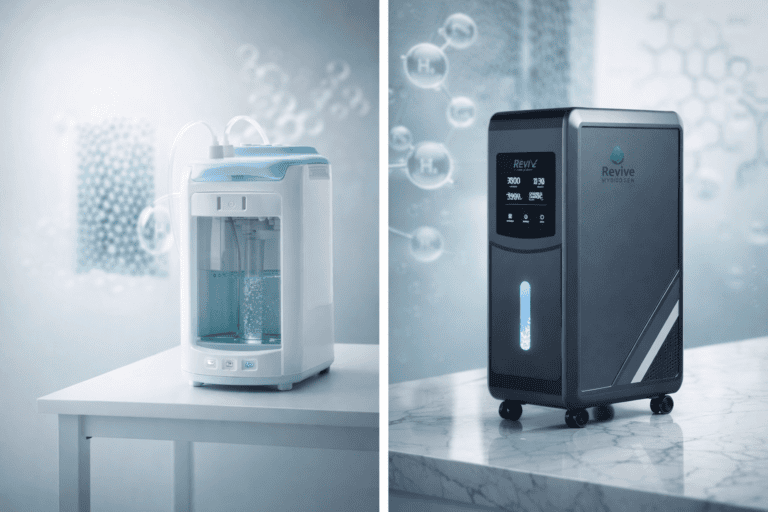
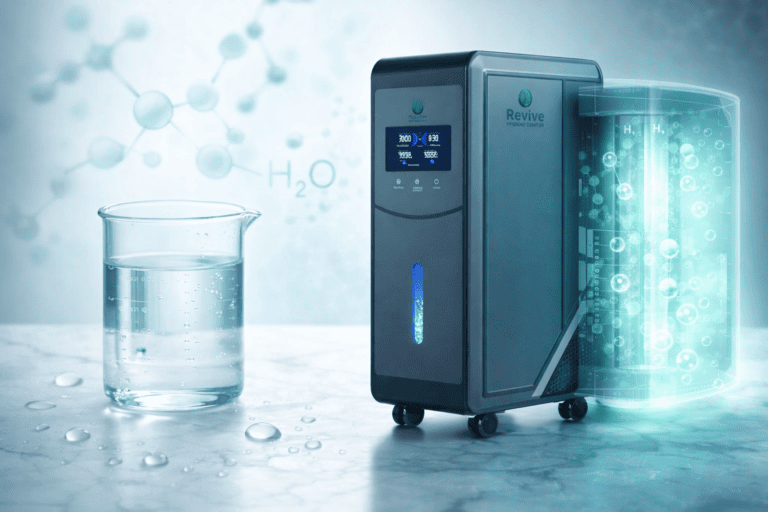
For those seeking a dual user hydrogen machine that meets rigorous scientific and engineering standards, the Revive Hydrogen Intelligent High-Flow Hydrogen Generator offers three output tiers engineered specifically for shared use. The HYD-1500 produces up to 1,500 ml/min combined output (1,000 ml/min H₂ and 500 ml/min O₂), the HYD-1800 delivers 1,800 ml/min (1,200 ml/min H₂ and 600 ml/min O₂), and the HYD-3000 generates 3,000 ml/min (2,000 ml/min H₂ and 1,000 ml/min O₂)—making all three models capable of serving two users simultaneously with therapeutic-grade hydrogen flow per person.
Manufactured to CE, RoHS, and ISO 9001 quality standards, each unit employs PEM electrolysis with platinum-coated titanium electrodes and a DuPont N117 membrane to produce hydrogen at 99.992% purity, independently verified by accredited third-party laboratory analysis. The systems include four nasal cannulas, programmable session timers from 30 to 480 minutes, UV-C water disinfection, and support continuous operation for up to eight hours. Backed by a three-year limited warranty covering defects in materials and workmanship, these generators represent professional-grade hydrogen technology designed for clinical and home wellness environments.
Molecular hydrogen research continues to explore its role in oxidative stress modulation, mitochondrial function, and cellular resilience. As this body of evidence grows, dual-user hydrogen generators offer a practical, efficient pathway for households and practitioners to integrate this emerging wellness modality into daily life—together.