

How Does Molecular Hydrogen Really Work? A Groundbreaking 2025 Study May Have the Answer
For nearly two decades, scientists have known that molecular hydrogen (H₂) can reduce oxidative stress, calm inflammation, and support healthy cellular function. Hundreds of laboratory and clinical studies have reported benefits across a wide range of conditions—from athletic recovery and metabolic health to neurological disorders and healthy aging.
But one important question has remained:
How can such a small, chemically stable molecule produce such profound biological effects?
The traditional explanation has been that hydrogen acts as a selective antioxidant, directly neutralizing the highly destructive hydroxyl radical while leaving beneficial reactive oxygen species (ROS) untouched. That idea, first proposed in a landmark 2007 Nature Medicine paper, launched an entirely new field of hydrogen medicine.
Yet many researchers suspected there was more to the story.
In 2025, a groundbreaking study published in Redox Biology by Shuto Negishi and colleagues may have provided the clearest explanation yet. Rather than functioning primarily as a conventional antioxidant, molecular hydrogen appears to work as a cellular signaling molecule, triggering the body’s own protective systems at their source: the mitochondria.
Let’s take a closer look at what the researchers discovered.
The Problem with the “Direct Antioxidant” Theory
Most antioxidants work through straightforward chemistry. Vitamin C, glutathione, and similar compounds donate electrons to neutralize reactive oxygen species before they can damage cells.
Hydrogen is different.
The H₂ molecule is remarkably stable. It consists of two hydrogen atoms joined by one of the strongest covalent bonds found in nature. It has no electrical charge, no polarity, and very little tendency to react with other molecules under normal physiological conditions.
This raised an important question.
If hydrogen is so chemically inert, how could relatively small amounts produce such wide-ranging biological effects?
Even more puzzling, many studies showed benefits that lasted far longer than hydrogen itself remained in the body. Researchers also observed changes in the activity of hundreds of genes related to antioxidant defense, inflammation, metabolism, and cellular repair.
These findings suggested that hydrogen wasn’t simply “mopping up” free radicals. Instead, it appeared to be telling cells to protect themselves.
Looking Inside the Mitochondria
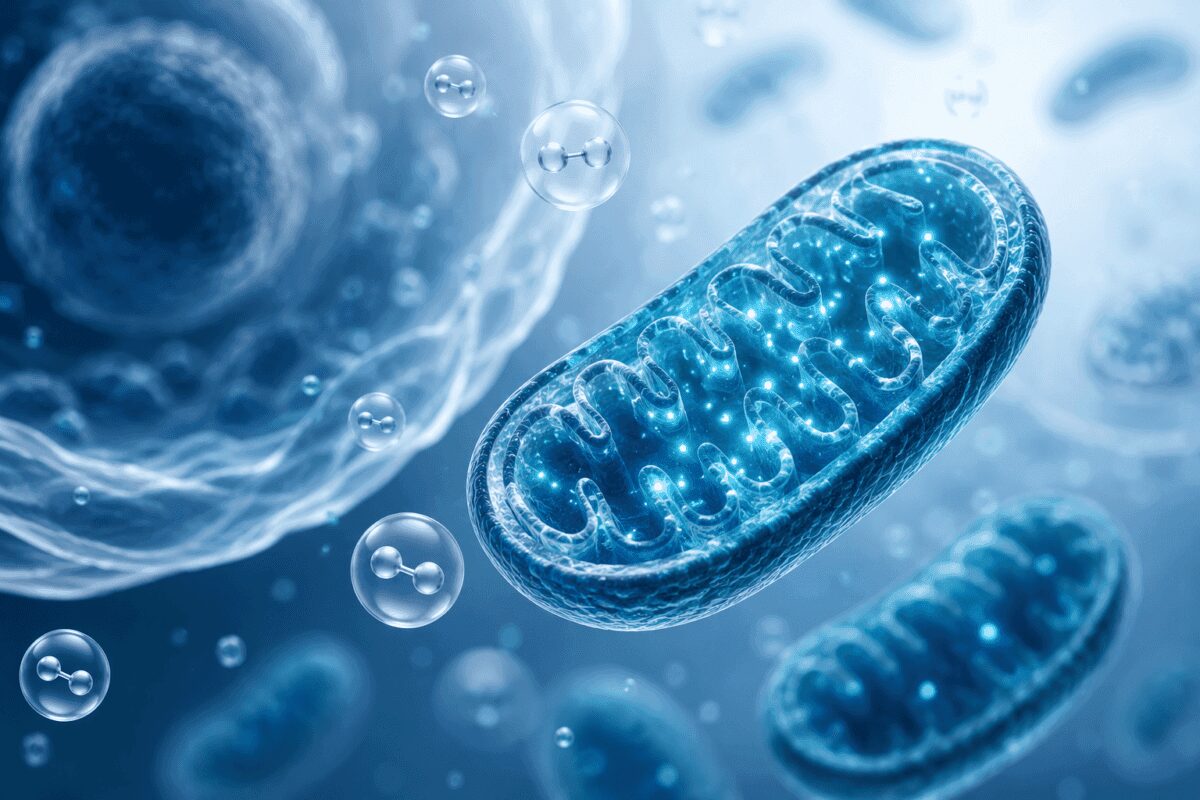
The new study focused on the mitochondria—the tiny structures inside nearly every cell responsible for producing ATP, the energy that powers virtually every biological process.
As mitochondria generate energy, electrons travel through a series of protein complexes known collectively as the electron transport chain.
One of these proteins, located within Complex III, is called the Rieske iron-sulfur protein (RISP).
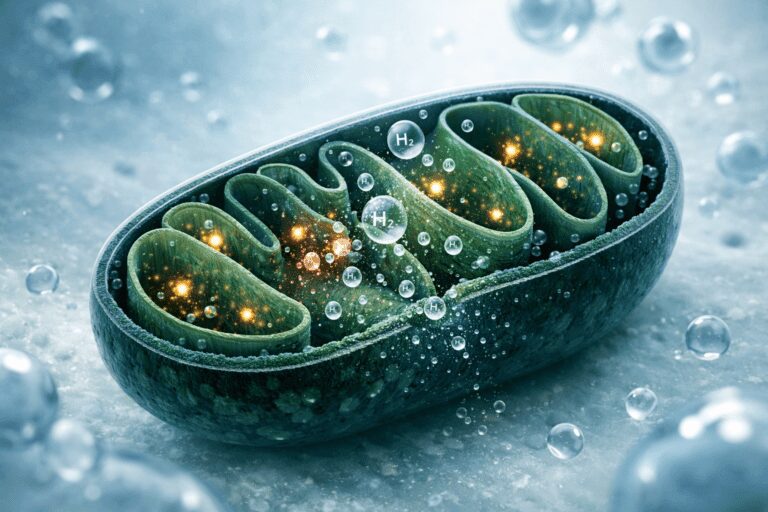
The researchers discovered that this protein appears to be one of the primary molecular targets of hydrogen.
This is significant because Complex III plays a central role in both energy production and the generation of reactive oxygen species. Even subtle changes in its activity can influence how cells respond to stress.
A Temporary Adjustment—Not Cellular Damage
One of the study’s most surprising findings was how rapidly hydrogen affected mitochondrial function.
Within just a few minutes of exposure, the activity of Complex III decreased modestly. Rather than shutting down energy production, hydrogen appeared to temporarily “dial back” one small part of the electron transport chain.
The researchers also observed that hydrogen promoted the controlled degradation of the Rieske protein through a naturally occurring mitochondrial quality-control enzyme called LONP1.
At first glance, this might sound harmful. In reality, it’s quite the opposite.
Our cells constantly remove and replace damaged or aging proteins. This process is essential for maintaining healthy mitochondrial function. Hydrogen appears to gently stimulate this natural maintenance system.
Meet Mitohormesis: Why a Little Stress Can Be Good
The most important concept to emerge from this research is something called mitohormesis. Hormesis refers to the phenomenon in which a small, controlled stress stimulates the body to become stronger and more resilient.
You’ve already experienced hormesis if you’ve ever:
- exercised vigorously,
- spent time in a sauna,
- taken a cold plunge,
- or practiced intermittent fasting.
Each of these activities briefly challenges the body. In response, your cells activate repair mechanisms that leave you healthier than before. The researchers believe hydrogen works in a remarkably similar way.
By causing a very mild and temporary adjustment within the mitochondria, hydrogen activates a powerful repair program known as the mitochondrial unfolded protein response (UPRmt).
Rather than indicating damage, this response tells the cell: “Let’s strengthen our defenses.”
Your Cells Respond by Protecting Themselves
Once activated, the mitochondrial unfolded protein response increases production of many of the body’s own protective systems.
These include:
- antioxidant enzymes such as superoxide dismutase (SOD), catalase, and glutathione peroxidase,
- proteins that repair damaged mitochondria,
- molecular chaperones that help proteins fold correctly,
- improved mitochondrial quality control,
- and enhanced resistance to future oxidative stress.
This may explain one of hydrogen’s greatest mysteries. Instead of acting as an antioxidant itself, hydrogen encourages your own cells to become better antioxidants.
It’s similar to the difference between hiring someone to put out a fire versus installing a state-of-the-art fire prevention system throughout the building. The latter provides much broader and longer-lasting protection.
Why This Matters
This new understanding helps explain why molecular hydrogen has been studied across such a wide range of health conditions. Healthy mitochondrial function influences nearly every organ system in the body.
When mitochondria operate more efficiently, researchers have observed improvements in markers related to:
- oxidative stress,
- inflammation,
- recovery after exercise,
- metabolic health,
- cardiovascular function,
- neurological health,
- and healthy aging.
Rather than requiring a separate mechanism for each benefit, hydrogen may be acting upstream by supporting one of the body’s most fundamental systems: mitochondrial resilience.
Is Hydrogen Still an Antioxidant?
Yes—but perhaps not in the way scientists originally believed.
Earlier research demonstrated that hydrogen can directly neutralize the highly reactive hydroxyl radical under certain conditions. That mechanism may still contribute to its biological effects.
However, this new study suggests that hydrogen’s much broader antioxidant benefits are likely indirect.
Instead of chemically reacting with large numbers of free radicals, hydrogen appears to activate the body’s own defense systems, allowing cells to better manage oxidative stress themselves.
Many researchers now describe molecular hydrogen not simply as an antioxidant, but as a redox signaling molecule or redox modulator—one that helps restore healthy cellular balance rather than indiscriminately eliminating reactive oxygen species.
While additional research will continue to refine our understanding, this represents one of the most compelling mechanistic explanations yet for the remarkable breadth of hydrogen’s reported biological effects.
Related reading: Hydrogen and Cellular Health · Molecular Hydrogen Therapy for Mitochondria
New to hydrogen inhalation? Download our free Beginner’s Guide to Hydrogen Inhalation for a plain-language primer on what H₂ is, how inhalation works, and how to choose a generator.
Bring This Technology Home
As the science behind molecular hydrogen continues to advance, one thing is becoming increasingly clear: the quality of the hydrogen you breathe matters.
Whether you’re a physician incorporating hydrogen therapy into your practice, a wellness clinic seeking professional-grade equipment, an athlete focused on recovery, or simply someone who wants to support long-term cellular health, choosing a high-quality hydrogen generator is essential.
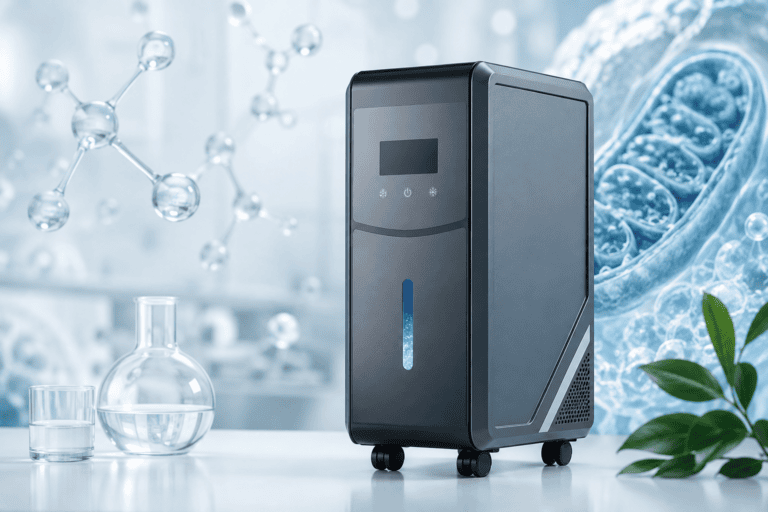
The Revive Hydrogen Generator was designed to deliver clinical-grade performance in both professional and home settings.
Key features include:
- 2,000 mL/min of high-purity hydrogen with a 1,000 mL/min oxygen output
- 99.992% independently laboratory-verified hydrogen purity
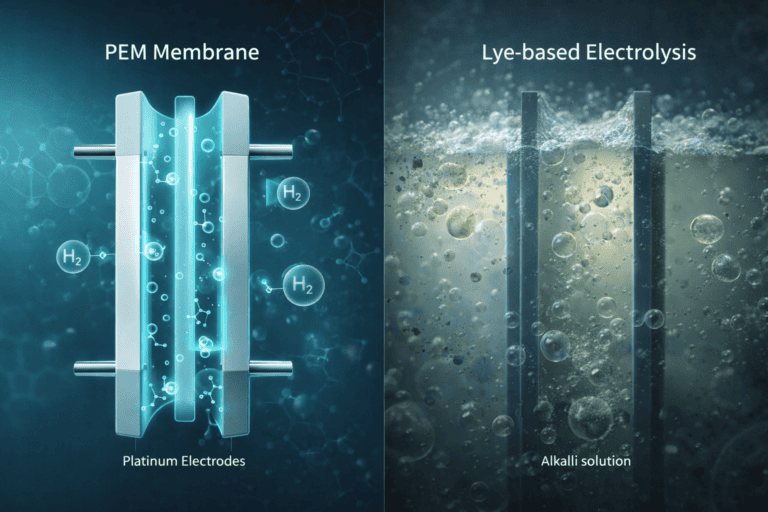
- DuPont™ N117 proton exchange membrane (PEM) technology
- Platinum-coated titanium electrodes for long-term performance
- Simple one-button operation
- Dual-user capability
- Up to eight hours of continuous operation
- Comfortable nasal cannula delivery, making daily use simple and convenient
As research continues to reveal hydrogen’s role in supporting mitochondrial health, cellular resilience, and the body’s own antioxidant systems, professional-quality delivery becomes increasingly important.
If you’re ready to experience the next generation of molecular hydrogen technology, the Revive Hydrogen Generator offers a premium solution engineered for reliability, purity, and performance.
Discover how professional-grade molecular hydrogen can become part of your daily wellness routine by visiting ReviveHydrogen.com.



One Comment