
Your Cells Are Under Attack — Here’s the Evidence-Based Answer
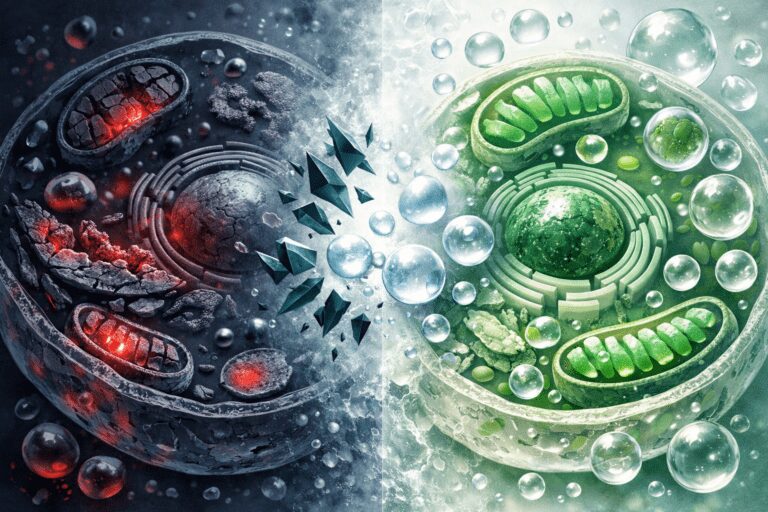
Every second of every day, your cells wage a quiet biochemical war. Free radicals — unstable, electron-hungry molecules — assault your DNA, mitochondrial membranes, and proteins in a process known as oxidative stress. Left unchecked, this relentless molecular assault accelerates aging, impairs cellular recovery, and erodes the homeostatic balance your body works tirelessly to maintain. Combatting oxidative stress is no longer a fringe wellness concept; it is one of the most rigorously studied frontiers in longevity and preventive medicine. And at the center of a growing body of peer-reviewed research stands one of the simplest molecules in the universe: molecular hydrogen (H₂).
Understanding Oxidative Stress at the Cellular Level
To appreciate why molecular hydrogen matters, you first need to understand the enemy. Reactive oxygen species (ROS) are natural byproducts of cellular metabolism — particularly mitochondrial energy production. In controlled quantities, certain ROS like hydrogen peroxide (H₂O₂) serve as critical intracellular signaling molecules. They regulate immune responses, govern cellular repair cascades, and modulate gene expression. Your body needs them.
The problem arises when ROS production outpaces your body’s natural antioxidant defenses. Environmental toxins, chronic stress, poor nutrition, intense exercise, and the simple passage of time all tip this balance toward excess. The result is oxidative stress: a state in which destructive free radicals overwhelm your protective systems and begin degrading healthy tissue.
The most dangerous offender in this cascade is the hydroxyl radical (•OH). Unlike other ROS, the hydroxyl radical has no known enzymatic defense mechanism in the human body. It reacts indiscriminately and instantaneously with whatever biological molecule it encounters first — lipid membranes, DNA strands, mitochondrial proteins. Close behind it is peroxynitrite (ONOO⁻), a highly reactive nitrogen species formed when superoxide combines with nitric oxide. Peroxynitrite is strongly implicated in neuroinflammation, cardiovascular damage, and accelerated cellular senescence.
This is precisely where conventional antioxidant strategies begin to fall short. Broad-spectrum antioxidants like high-dose Vitamin C or Vitamin E neutralize ROS indiscriminately — including the beneficial signaling species your body requires for proper cellular function. The result can be a disruption of the very homeostatic balance these supplements are meant to protect.
Molecular Hydrogen: The Selective Antioxidant Advantage
Molecular hydrogen (H₂) operates by an entirely different biochemical logic — and that selectivity is its defining strength. Research published in journals including Nature Medicine, Free Radical Biology and Medicine, and Medical Gas Research has demonstrated that H₂ selectively targets and neutralizes the most cytotoxic reactive species — specifically the hydroxyl radical and peroxynitrite — while leaving beneficial ROS like hydrogen peroxide fully intact.
This selectivity is not arbitrary. It is governed by thermodynamics. Molecular hydrogen reacts preferentially with the most thermodynamically reactive species — those with the highest oxidation potential. The hydroxyl radical, with a reduction potential of +2.31V, sits at the extreme end of this spectrum, making it both the most destructive and, conveniently, the most chemically accessible target for H₂. Hydrogen peroxide, by contrast, has a much lower reduction potential and remains largely unaffected, preserving its essential role in cellular signaling.
The practical implication of this selectivity is profound: H₂ offers precision oxidative stress mitigation rather than a biochemical blunt instrument. It removes what harms you without disturbing what your body needs to regulate itself — a distinction that sets it apart from virtually every conventional antioxidant supplement on the market.
Beyond direct radical scavenging, emerging research suggests that molecular hydrogen also activates the Nrf2 transcription pathway — the master regulator of your body’s own endogenous antioxidant defense system. This means H₂ does not merely neutralize free radicals; it may upregulate your cellular machinery to produce more of your own protective enzymes, including superoxide dismutase (SOD) and catalase.
The Physiological Benefits: What the Research Suggests
The breadth of systems influenced by effective oxidative stress mitigation through H₂ therapy is striking. Because oxidative damage is a root-level mechanism underlying so many conditions, the downstream benefits touch virtually every organ system. Evidence-based research and clinical investigations point to the following potential benefits for wellness, longevity, and recovery:
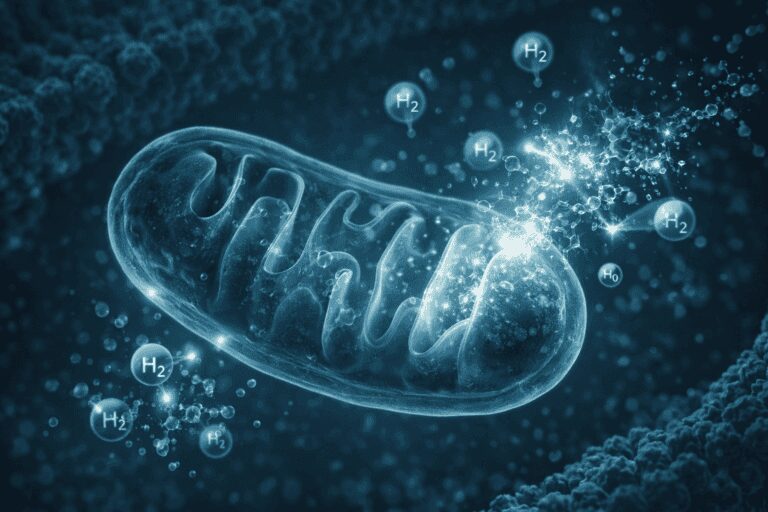
- Mitochondrial Optimization: H₂ appears to protect mitochondrial membrane integrity and support ATP synthesis efficiency, directly addressing the energy deficits associated with oxidative damage at the cellular power center.
- Neurological Protection: The blood-brain barrier — famously restrictive — is readily permeable to molecular hydrogen due to its extremely small molecular size. This allows H₂ to address oxidative and nitrosative stress in neural tissue, an area of intense ongoing research.
- Inflammatory Modulation: By neutralizing peroxynitrite and attenuating NF-κB signaling pathways, H₂ may help regulate the chronic low-grade inflammation increasingly recognized as a driver of accelerated biological aging.
- Athletic and Physical Recovery: Studies involving exercise-induced oxidative stress have shown H₂ supplementation may reduce markers of muscle fatigue and oxidative damage, supporting faster physiological recovery.
- Cardiovascular Cellular Health: Oxidative stress is a primary driver of endothelial dysfunction. Research suggests H₂ may help maintain vascular cellular integrity by reducing lipid peroxidation and oxidative modifications to LDL cholesterol.
- Skin and Dermal Longevity: Oxidative degradation of collagen and elastin is a primary mechanism of skin aging. By addressing systemic oxidative burden, H₂ therapy represents a cellular-level approach to dermal resilience and anti-aging.
- Immune System Homeostasis: By preserving the signaling function of beneficial ROS while eliminating cytotoxic species, H₂ supports a more balanced and responsive immune environment.
Delivery Method Matters: Why Inhalation Achieves Superior Systemic Saturation
Not all hydrogen delivery is created equal. Hydrogen-enriched water — while a valid and studied modality — delivers H₂ in quantities that are inherently limited by water’s saturation capacity (typically 1.6 mg/L at standard pressure). The hydrogen dissolved in a single serving is consumed and largely expelled before achieving meaningful systemic tissue saturation. For casual daily wellness support, hydrogen water has merit. But for individuals seeking therapeutic-level oxidative stress mitigation and comprehensive cellular recovery, the delivery ceiling of water ingestion is a genuine limitation.
Hydrogen inhalation via a professional-grade generator operates in an entirely different performance tier. When H₂ gas is inhaled at therapeutic concentrations — typically in the 2–4% range mixed with ambient air — it enters the bloodstream through the pulmonary alveoli with remarkable speed and efficiency. From there, molecular hydrogen is distributed systemically via circulation, crossing cell membranes and mitochondrial walls with ease due to its exceptionally small molecular size and non-polar nature. This passive, systemic distribution achieves tissue saturation levels that oral ingestion simply cannot replicate.
High-output generators capable of producing medical-grade purity H₂ at consistent, controlled flow rates are therefore not merely a premium convenience — they are a functional prerequisite for achieving the concentrations at which the most compelling research has been conducted. The distinction between consumer-grade devices and professional clinical-grade generators is not cosmetic; it is biochemically meaningful.
Related reading: Hydrogen and Healthy Aging · Combatting Oxidative Stress & Aging
New to hydrogen inhalation? Download our free Beginner’s Guide to Hydrogen Inhalation for a plain-language primer on what H₂ is, how inhalation works, and how to choose a generator.
Bring This Technology Home
The science of molecular hydrogen is no longer speculative. With hundreds of peer-reviewed studies, a clear mechanistic rationale, and an exceptional safety profile established across decades of research, H₂ therapy represents one of the most evidence-aligned tools available for combatting oxidative stress and supporting long-term cellular vitality. The remaining variable — and the most important one — is access to a generator capable of delivering hydrogen at the concentrations and purity levels that make the science actionable.
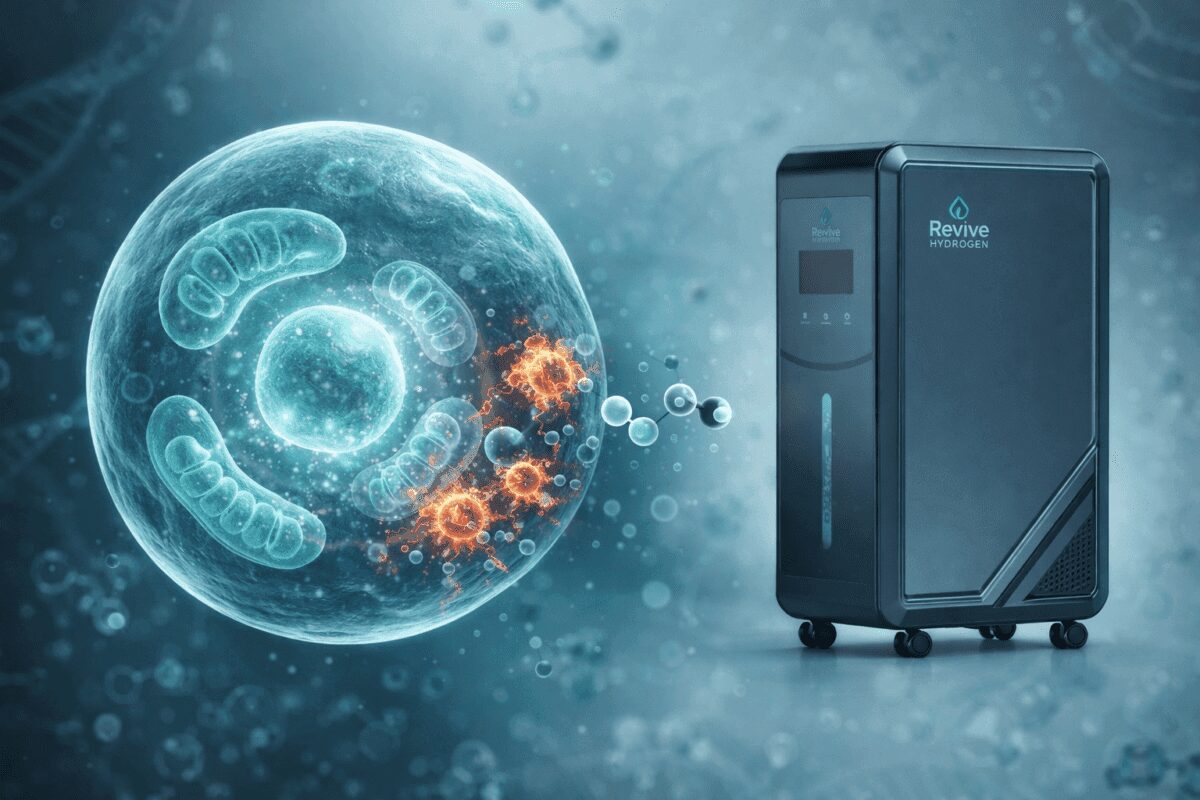
Revive Hydrogen was engineered precisely for this purpose. Built to professional and clinical specifications, the Revive Hydrogen Generator delivers high-output, pharmaceutical-grade molecular hydrogen with the consistency and purity required for genuine mitochondrial optimization and systemic oxidative stress mitigation. Whether you are pursuing longevity, accelerating recovery, or simply investing in the foundational health of your cells, this is the technology that bridges the gap between compelling research and real-world results. Your cellular environment is shaped by the choices you make every day — make the one that the science supports.