
The Promise and the Pitfall: Why Most New Users Don’t Get the Results They Expect
Molecular hydrogen inhalation is rapidly gaining recognition as one of the most promising tools in mitochondrial optimization and oxidative stress mitigation. Yet for every user who experiences measurable improvements in cellular recovery, energy metabolism, and resilience, there are several who abandon the practice prematurely—not because the science is flawed, but because foundational missteps sabotage their results before they begin. Understanding these common errors and implementing proper hydrogen inhalation tips can mean the difference between disappointment and profound transformation in your wellness journey.
At the cellular level, molecular hydrogen (H₂) functions as a selective antioxidant, specifically targeting the most destructive reactive oxygen species—hydroxyl radicals (•OH) and peroxynitrite (ONOO⁻)—while deliberately preserving beneficial signaling molecules like hydrogen peroxide that your cells require for homeostatic balance. This selectivity is what makes H₂ fundamentally different from broad-spectrum antioxidants, which can inadvertently disrupt essential cellular communication pathways. However, achieving therapeutic tissue saturation requires precision in both delivery method and equipment quality, areas where newcomers frequently stumble.
Mistake #1: Relying Exclusively on Hydrogen Water When Systemic Saturation Is the Goal
Perhaps the most prevalent misconception among new users is the assumption that hydrogen-enriched water alone can deliver the systemic cellular exposure needed for comprehensive oxidative stress management. While hydrogen water offers legitimate value for gastrointestinal health and localized antioxidant activity in the digestive tract, the bioavailability limitations are significant.
When you consume hydrogen water, the dissolved H₂ molecules must survive the acidic gastric environment, cross the intestinal barrier, and then distribute systemically through circulation—a journey that substantially reduces the concentration reaching distant tissues like the brain, heart, and skeletal muscle. Gastric outgassing alone can eliminate a meaningful portion of the dissolved hydrogen before absorption even begins.
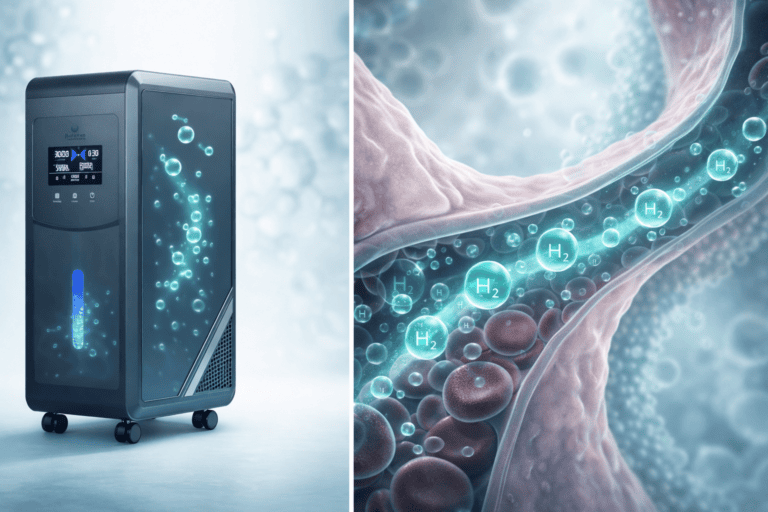
In contrast, hydrogen inhalation delivers molecular hydrogen directly to the bloodstream via pulmonary gas exchange, achieving rapid, high-concentration distribution to all tissues simultaneously. The alveolar-capillary interface provides an exceptionally efficient pathway for H₂ molecules to bypass digestive limitations entirely, enabling passive, continuous cellular exposure throughout the duration of your session.
The evidence-based approach: For users seeking comprehensive mitochondrial support, neurological resilience, athletic recovery, or systemic anti-inflammatory benefits, inhalation should form the foundation of your protocol. Hydrogen water can serve as a valuable adjunct, but it should not be your sole delivery mechanism when deep tissue saturation is the objective.
Mistake #2: Using Low-Output or Diluted Hydrogen Delivery Systems
Not all hydrogen generators are created equal, and this reality becomes painfully apparent when users invest in consumer-grade devices that produce diluted hydrogen-air mixtures in the 1–4% concentration range. These systems—often marketed as portable or budget-friendly alternatives—simply cannot deliver the hydrogen volume necessary for meaningful physiological impact.
The critical specification to understand is actual hydrogen output measured in milliliters per minute (ml/min), not total gas flow. Many entry-level devices advertise impressive-sounding total flow rates, but when the actual H₂ concentration is calculated, the therapeutic dose falls dramatically short. A device producing 500 ml/min of a 2% hydrogen mixture is delivering only 10 ml/min of actual molecular hydrogen—a concentration unlikely to achieve the tissue saturation levels observed in clinical research.
Professional-grade systems utilize PEM (Proton Exchange Membrane) electrolysis with platinum-coated titanium electrodes to generate pure, separated hydrogen and oxygen streams. This technology ensures hydrogen purity levels exceeding 99.9%, with output volumes measured in hundreds or thousands of milliliters per minute of actual H₂—not diluted mixtures.
Essential Hydrogen Inhalation Tips for Equipment Selection
- Verify hydrogen purity: Demand third-party laboratory verification of purity levels, ideally exceeding 99.99%. Contamination with nitrogen oxides or other byproducts can counteract hydrogen’s antioxidant benefits.
- Prioritize actual H₂ output: Look for systems producing a minimum of 500–1000 ml/min of pure molecular hydrogen for single-user applications, not total gas flow of diluted mixtures.
- Confirm PEM technology: Proton Exchange Membrane electrolysis with platinum-coated electrodes and established membrane materials (such as DuPont N117) represents the current gold standard for purity and reliability.
- Assess session flexibility: Therapeutic protocols often require 30–90 minute sessions. Ensure your system supports extended continuous operation without overheating or performance degradation.
Mistake #3: Inconsistent Session Frequency and Inadequate Duration
Molecular hydrogen does not accumulate in tissues; it diffuses rapidly and is exhaled primarily through respiration within hours of exposure. This pharmacokinetic reality means that sporadic, infrequent sessions—even with high-quality equipment—will not produce the sustained cellular adaptations that drive observable benefits.
The research literature consistently demonstrates that consistent exposure patterns yield superior outcomes compared to irregular, high-dose approaches. Daily sessions of 30–60 minutes appear more effective than weekly sessions of several hours, likely because regular exposure maintains baseline activation of cytoprotective pathways including Nrf2-mediated antioxidant response elements and inflammatory modulation through NF-κB pathway regulation.
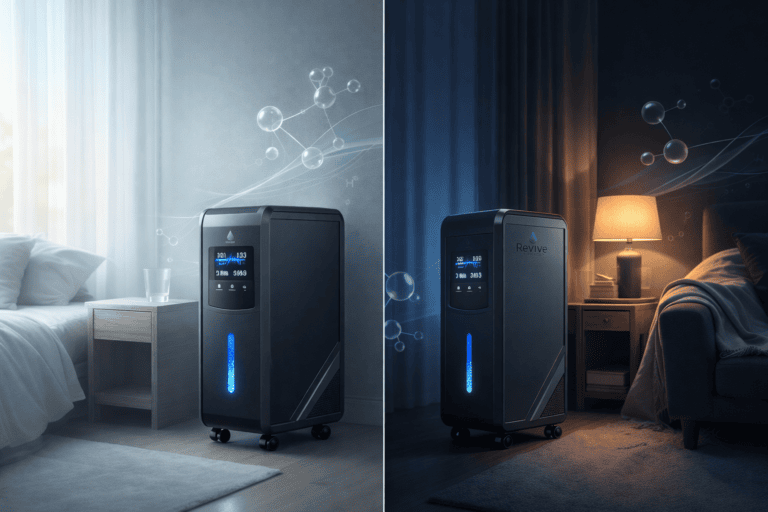
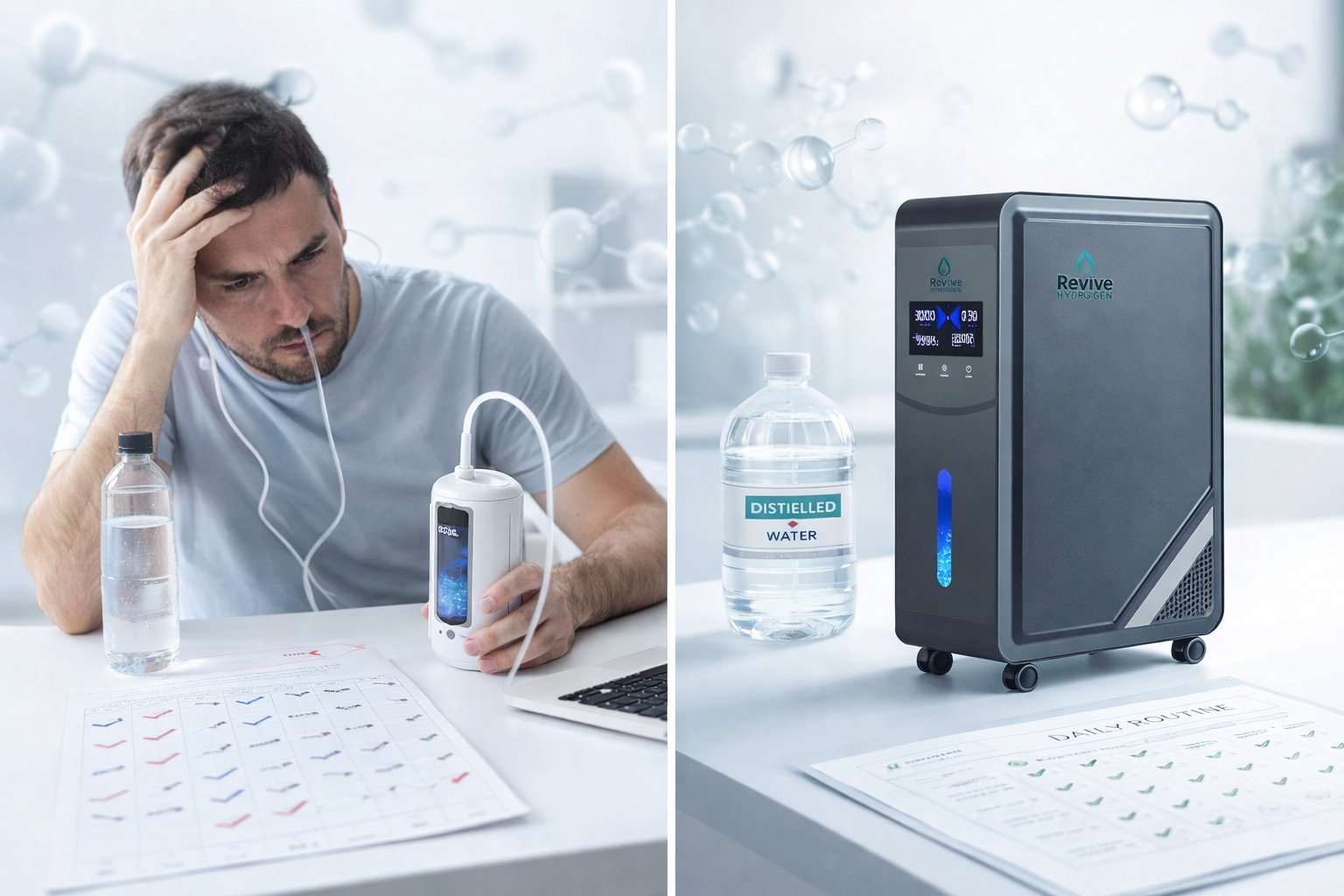
Implementation strategy: Establish hydrogen inhalation as a non-negotiable component of your daily routine, similar to sleep or nutrition. Morning sessions can support daytime metabolic efficiency and cognitive function, while evening sessions may enhance recovery and sleep quality. The key is consistency—your mitochondria respond to sustained signaling, not sporadic intervention.
Mistake #4: Neglecting Water Quality and System Maintenance
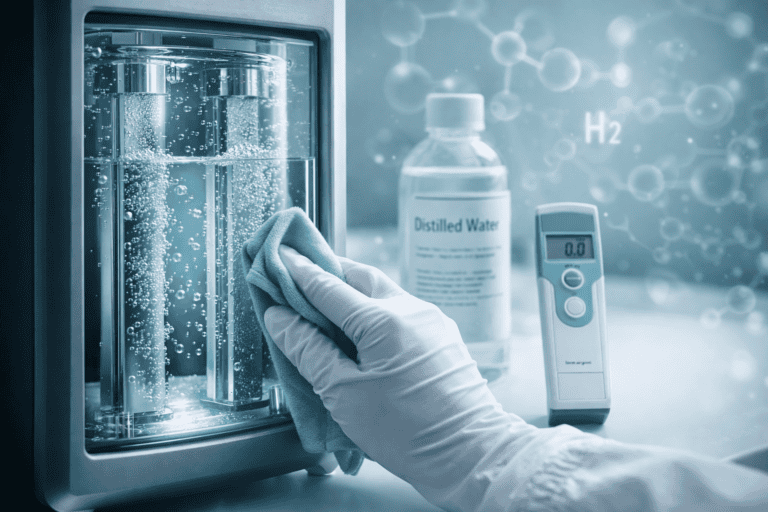
The elegance of PEM electrolysis carries a critical requirement: the input water must be pure. Tap water, mineral water, or even filtered water containing dissolved solids will contaminate the membrane, degrade electrode surfaces, and compromise both hydrogen purity and system longevity.
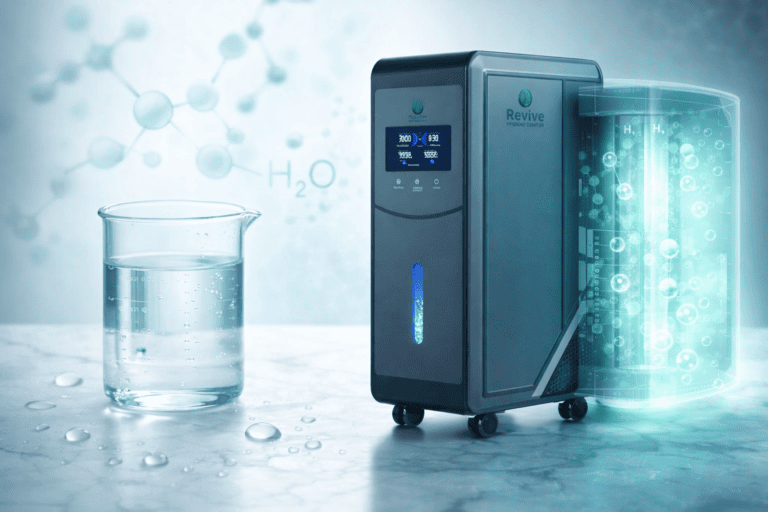
Distilled water—free from minerals, chlorine, and organic contaminants—is the only appropriate input for professional hydrogen generators. The electrolysis process splits water molecules (H₂O) into hydrogen (H₂) and oxygen (O₂); any impurities present will interfere with this reaction and potentially introduce harmful substances into your inhalation stream.
Beyond water quality, regular maintenance practices are non-negotiable. Systems incorporating UV-C water disinfection help prevent microbial growth in the water reservoir, but users must still follow manufacturer protocols for cleaning, descaling (if applicable), and component inspection. Neglecting these practices doesn’t just reduce performance—it can introduce safety risks.
Critical Hydrogen Inhalation Tips for System Care
- Use only distilled water: Never substitute with tap, spring, filtered, or reverse osmosis water unless explicitly approved by your device manufacturer.
- Empty the reservoir after extended non-use: Standing water, even distilled, can develop bacterial growth over days or weeks of inactivity.
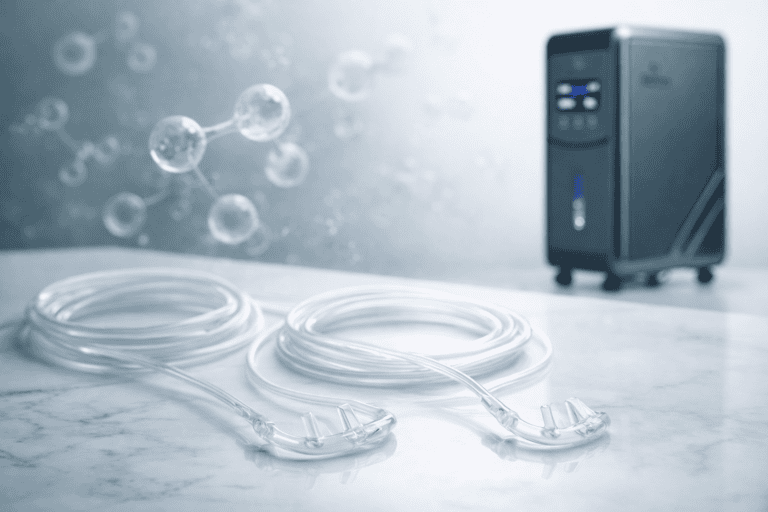
- Inspect nasal cannulas regularly: Replace cannulas according to manufacturer recommendations to maintain hygiene and optimal flow delivery.
- Monitor performance indicators: Declining hydrogen output or unusual sounds may indicate maintenance needs before complete system failure occurs.
Mistake #5: Expecting Immediate, Dramatic Results Without Understanding the Biochemical Timeline
Molecular hydrogen operates at the subcellular level, influencing gene expression, modulating inflammatory cascades, and supporting mitochondrial function—processes that unfold over days and weeks, not minutes and hours. Users who discontinue their practice after several days due to absence of immediate, dramatic changes fundamentally misunderstand the mechanism of action.
Acute benefits—such as post-exercise recovery support or temporary reduction in oxidative stress markers—can manifest relatively quickly. However, the more profound adaptations in cellular resilience, mitochondrial biogenesis, and systemic inflammatory balance require sustained exposure over weeks to months. This is cellular remodeling, not pharmaceutical symptom suppression.
Research protocols typically evaluate outcomes at 4-week, 8-week, or 12-week intervals for good reason: meaningful biological adaptation requires time. Setting realistic expectations and committing to consistent practice for at least 30–60 days before evaluation is essential for fair assessment of hydrogen’s role in your wellness protocol.
The Path Forward: Evidence-Based Implementation
Avoiding these five critical mistakes transforms molecular hydrogen inhalation from a disappointing experiment into a scientifically grounded pillar of your longevity and cellular health strategy. The technology is sophisticated, the biochemistry is elegant, but the practical implementation must be precise.
Success requires professional-grade equipment capable of delivering pure, high-volume hydrogen; consistent daily practice aligned with your circadian rhythm and recovery needs; meticulous attention to water quality and system maintenance; and patience to allow your cellular machinery the time it needs to adapt and respond.
When implemented correctly, hydrogen inhalation tips like these enable you to harness one of the most selective and sophisticated antioxidant mechanisms available, supporting your mitochondria in their continuous work of energy production, cellular repair, and homeostatic maintenance.
Bring This Technology Home
For practitioners and wellness-focused individuals committed to professional-grade hydrogen technology, the Revive Hydrogen Intelligent High-Flow Hydrogen Generator represents a scientifically rigorous solution designed specifically to avoid the pitfalls outlined above.
Manufactured to CE and RoHS standards within an ISO 9001-certified quality management system, these systems utilize PEM electrolysis with platinum-coated titanium electrodes and DuPont N117 membrane technology to produce 99.992% pure molecular hydrogen—verified by independent third-party laboratory testing. This level of purity eliminates the contamination concerns that plague consumer-grade devices.
Available in three output configurations—HYD-1500 (up to 1000 ml/min H₂), HYD-1800 (up to 1200 ml/min H₂), and HYD-3000 (up to 2000 ml/min H₂)—these generators deliver the high-volume, pure hydrogen output necessary for comprehensive systemic saturation. Dual-user capability allows shared sessions up to approximately 1000 ml/min H₂ per user, making these systems suitable for both home and clinical environments.
Integrated features including programmable session timers (30–480 minutes), UV-C water disinfection, and continuous operation capability up to 8 hours address the consistency and maintenance requirements essential for long-term success. Four nasal cannulas are included with each unit, and all systems are backed by a 3-year limited warranty covering defects in materials and workmanship.
Based in Dry Ridge, Kentucky, USA, Revive Hydrogen operates exclusively online, delivering professional-grade hydrogen technology directly to practitioners and informed consumers who understand that cellular optimization requires uncompromising equipment quality. Explore the complete technical specifications and select the configuration that aligns with your wellness objectives at the link above.