
Why Water Purity Matters for Hydrogen Generation
When investing in a professional-grade hydrogen generator, the quality of water you introduce directly determines the purity of molecular hydrogen (H₂) output, the longevity of internal components, and ultimately, the cellular benefits you receive. While the phrases “distilled water” and “purified water” are often used interchangeably, they represent fundamentally different processes—and only one is appropriate for sophisticated PEM (Proton Exchange Membrane) electrolysis systems. Understanding this distinction is critical for anyone seeking optimal oxidative stress mitigation and mitochondrial support through hydrogen inhalation therapy.
The science is clear: using distilled water for hydrogen generator applications isn’t just a recommendation—it’s a requirement for maintaining electrode integrity, membrane performance, and 99.992% hydrogen purity over thousands of hours of operation.
Distilled Water vs. Purified Water: The Chemical Difference
What Is Purified Water?
Purified water is an umbrella term describing any water that has undergone filtration, reverse osmosis, deionization, or carbon treatment to remove contaminants. While purified water eliminates many impurities—including chlorine, sediment, and certain dissolved solids—it does not guarantee the complete absence of minerals, trace ions, or volatile organic compounds. Purified water typically achieves a total dissolved solids (TDS) reading between 10 and 50 parts per million, which, while acceptable for drinking, is unacceptable for precision electrolysis.
Reverse osmosis systems, the most common household purification method, remove up to 95–99% of dissolved salts and contaminants. However, that remaining 1–5% contains calcium, magnesium, sodium, and other ionic species that, over time, deposit on platinum-coated titanium electrodes and degrade proton-exchange membranes—the heart of any high-output hydrogen generator.
What Is Distilled Water?
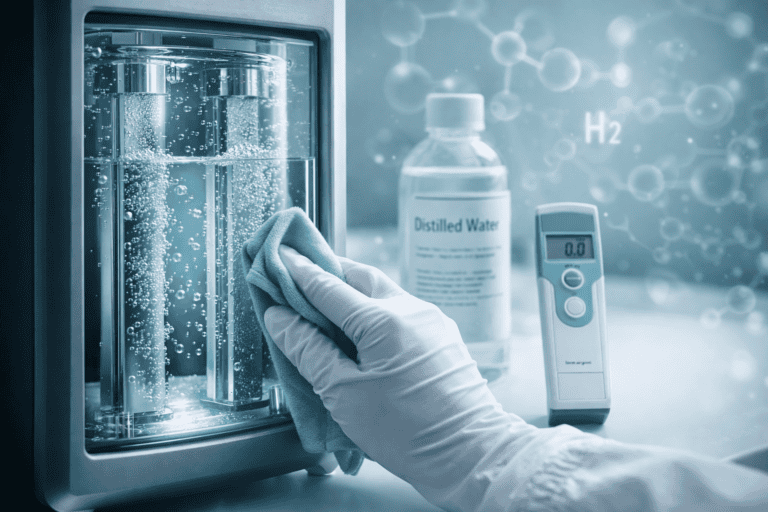
Distilled water is produced through a fundamentally different process: steam distillation. Water is boiled, converting it to vapor. This vapor rises, leaving behind virtually all dissolved solids, minerals, organic compounds, and microorganisms. The steam is then condensed back into liquid form in a sterile chamber, yielding water with a TDS reading at or near 0 ppm—essentially pure H₂O at the molecular level.
This absolute purity is non-negotiable for PEM electrolysis. When distilled water is subjected to a controlled electrical current between platinum-coated electrodes, the process splits H₂O molecules cleanly into molecular hydrogen and oxygen with no competing ions to interfere, corrode, or contaminate. The result: 99.992% pure hydrogen gas, verified by third-party laboratory analysis, suitable for direct inhalation and systemic delivery to tissues.
Why PEM Hydrogen Generators Require Distilled Water
Electrode and Membrane Integrity
Professional hydrogen generators utilize platinum-coated titanium electrodes and DuPont N117 proton-exchange membranes—precision-engineered components designed to facilitate ion transfer while blocking gas crossover. Introducing even trace minerals creates a cascade of problems:
- Scaling and fouling: Calcium and magnesium precipitate onto electrode surfaces, creating insulating layers that reduce current efficiency and hydrogen output.
- Membrane degradation: Ionic contaminants penetrate membrane pores, compromising selective permeability and allowing gas mixing—a safety and purity issue.
- Corrosion: Chlorides and sulfates accelerate electrochemical corrosion of titanium substrates, shortening component lifespan.
- Microbial biofilm: Purified water retains organic carbon sources that support bacterial colonization inside reservoirs and tubing, even with UV-C disinfection cycles.
In contrast, distilled water for hydrogen generator use ensures that the only chemical reaction occurring is the splitting of H₂O into H₂ and O₂—nothing more. This preserves the electrochemical environment necessary for multi-year, maintenance-free operation.
Hydrogen Purity and Cellular Efficacy
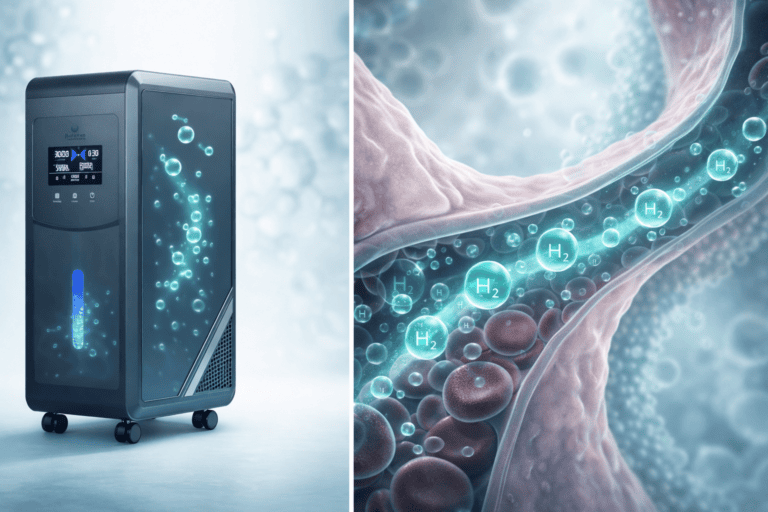
Molecular hydrogen functions as a selective antioxidant, neutralizing the most cytotoxic reactive oxygen species—specifically hydroxyl radicals (•OH) and peroxynitrite (ONOO⁻)—while preserving beneficial signaling molecules like hydrogen peroxide (H₂O₂) and nitric oxide (NO). This selectivity is what distinguishes H₂ from broad-spectrum antioxidants that can inadvertently disrupt redox homeostasis.
However, this therapeutic precision depends entirely on hydrogen purity. Contaminants introduced via impure water—trace ozone, chlorine gas, or nitrogen oxides—can generate secondary reactive species that counteract H₂’s protective effects at the mitochondrial level. When you inhale hydrogen produced from distilled water through a high-output generator, you’re delivering nothing but molecular hydrogen to tissues, enabling:
- Efficient diffusion across cellular membranes and blood-brain barrier penetration
- Selective neutralization of hydroxyl radicals in the mitochondrial matrix
- Activation of Nrf2 signaling pathways, upregulating endogenous antioxidant enzyme expression
- Modulation of inflammatory cytokines and support for homeostatic immune balance
Practical Considerations: Sourcing and Storing Distilled Water
Distilled water is widely available at grocery stores, pharmacies, and online retailers, typically sold in one-gallon jugs for $1–2 USD. For hydrogen generator users, this represents a negligible recurring cost—most systems consume 200–400 ml per hour of operation, meaning a single gallon supports 10–15 hours of use.
Storage is equally straightforward. Keep distilled water in its original sealed container, away from direct sunlight and potential contaminants. Once opened, use within 1–2 weeks and always ensure the generator’s water reservoir is emptied and dried between extended periods of non-use. Some advanced systems incorporate UV-C disinfection to maintain sterility, but prevention begins with water quality.
Never substitute tap water, spring water, alkaline water, or standard filtered water in a PEM hydrogen generator. These contain dissolved minerals and additives that will immediately compromise performance and void warranties covering defects in materials and workmanship.
High-Output Hydrogen Inhalation: The Gold Standard for Systemic Delivery
While hydrogen-infused water has gained attention in wellness communities, inhalation via nasal cannula delivers exponentially higher hydrogen concentrations to tissues compared to drinking. The gastrointestinal tract absorbs a limited quantity of dissolved H₂, and much of it dissipates before reaching systemic circulation.
Professional-grade hydrogen generators produce continuous flows of 1000–2000 ml/min of pure molecular hydrogen, providing passive, systemic exposure that achieves therapeutic tissue saturation within minutes. This method is favored in clinical research settings and by practitioners focused on mitochondrial optimization, exercise recovery, and oxidative stress mitigation in aging populations.
Achieving these outcomes requires more than a hydrogen generator—it requires the right hydrogen generator, engineered with medical-grade materials, validated purity standards, and designed around the non-negotiable requirement for distilled water.
Bring This Technology Home
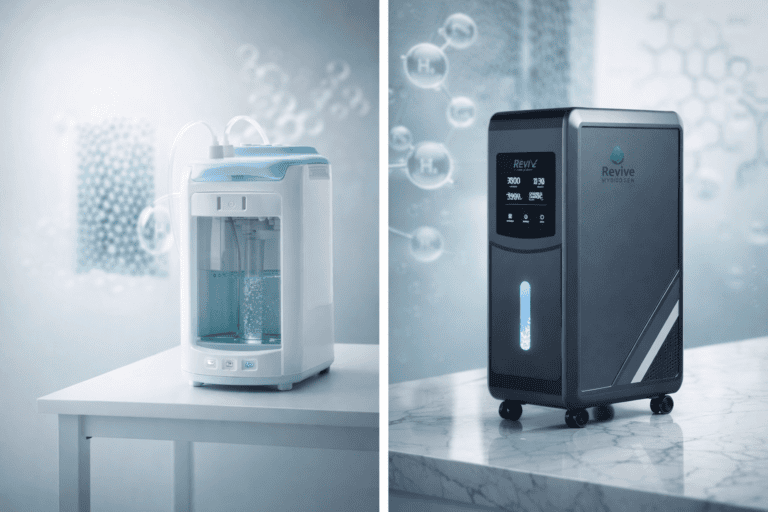
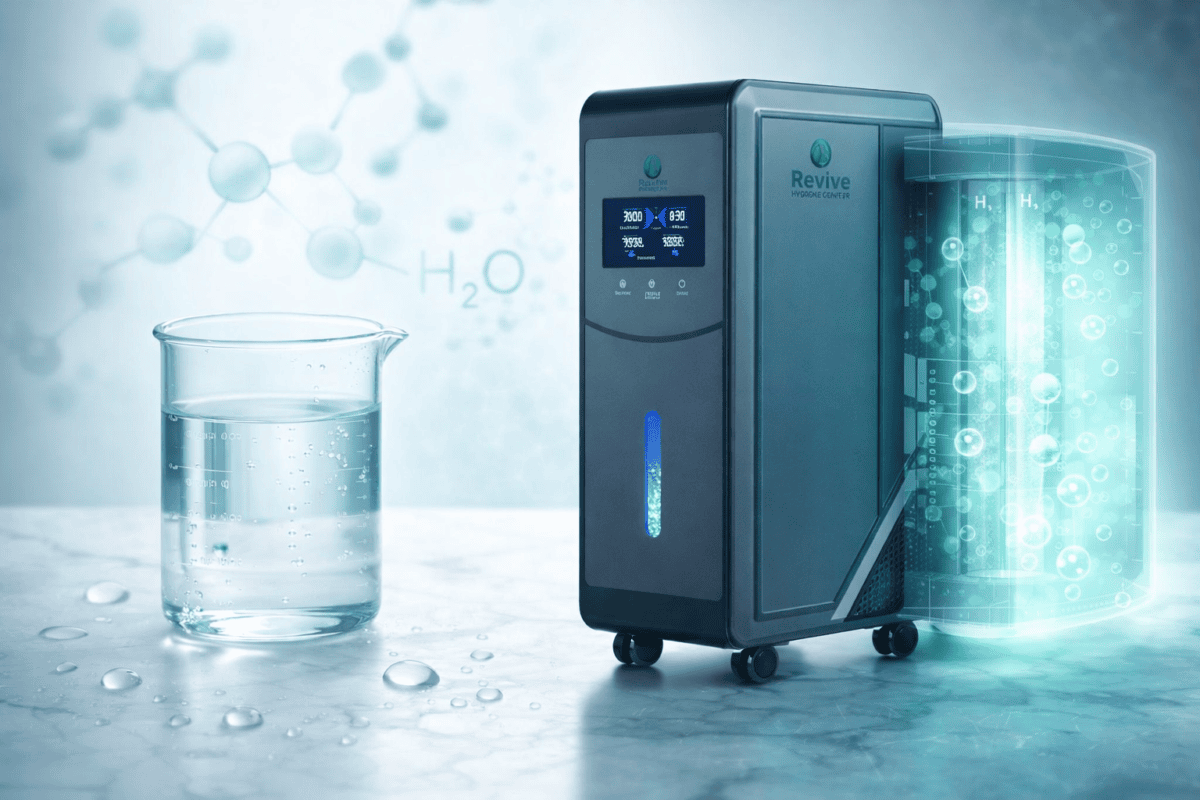
For those committed to evidence-based cellular wellness and longevity support, Revive Hydrogen offers the Intelligent High-Flow Hydrogen Generator—a professional-grade system engineered specifically for distilled water use and designed to deliver research-relevant hydrogen concentrations in a home or clinical setting.
Built around PEM electrolysis with platinum-coated titanium electrodes and a DuPont N117 membrane, the system produces hydrogen at 99.992% purity, independently verified by accredited third-party laboratories. Available in three output configurations—HYD-1500, HYD-1800, and HYD-3000—the units deliver continuous flows up to 2000 ml/min of pure molecular hydrogen and 1000 ml/min of oxygen, with dual-user capability for shared sessions.
Manufactured to CE and RoHS standards under an ISO 9001-certified quality management system, each unit includes integrated UV-C water disinfection, programmable session timers, and up to eight hours of continuous operation. Four nasal cannulas are included, and each system is backed by a three-year limited warranty covering defects in materials and workmanship.
Molecular hydrogen research continues to expand across disciplines—from mitochondrial bioenergetics to inflammatory modulation and neuroprotection. The Revive Hydrogen Generator provides the technical foundation to explore these pathways safely and effectively, provided you honor the single most important operational requirement: always use distilled water.
Explore the full hydrogen generator lineup and technical specifications at Revive Hydrogen, and ensure every inhalation session delivers the purity, performance, and precision your cells deserve.