
The Selective Advantage: Why Molecular Hydrogen Rewrites the Antioxidant Playbook
For decades, the wellness industry has championed antioxidants as indispensable defenders against oxidative stress. Vitamins C and E, polyphenols, and glutathione have dominated the conversation. Yet emerging research reveals a fundamental limitation: most traditional antioxidants operate with a broad, indiscriminate approach that can inadvertently disrupt beneficial cellular signaling. Enter molecular hydrogen (H₂), a gaseous molecule that challenges conventional antioxidant paradigms through an entirely different mechanism—selective neutralization of only the most damaging reactive species while preserving those critical for homeostatic balance.
Understanding why the molecular hydrogen antioxidant model differs from traditional approaches requires examining cellular oxidative dynamics at the biochemical level, exploring how selectivity translates to superior cellular protection, and recognizing that achieving therapeutic tissue saturation demands delivery methods far beyond simple supplementation.
The Problem with Non-Selective Antioxidants
Traditional antioxidants function through electron donation, neutralizing reactive oxygen species (ROS) indiscriminately. While this sounds beneficial in theory, it creates a significant paradox: not all ROS are harmful. Cells intentionally generate specific reactive species like hydrogen peroxide (H₂O₂) and superoxide (O₂⁻) as essential signaling molecules that regulate gene expression, immune responses, mitochondrial biogenesis, and cellular adaptation to stress.
When broad-spectrum antioxidants suppress these beneficial signaling molecules alongside toxic radicals, they can inadvertently compromise:
- Mitochondrial hormesis — the adaptive stress response that strengthens cellular resilience
- Immune surveillance mechanisms — white blood cells use controlled oxidative bursts to neutralize pathogens
- Cellular communication pathways — redox-sensitive transcription factors require precise ROS gradients
- Exercise adaptation signals — post-workout ROS trigger beneficial muscular and cardiovascular adaptations
This explains why large-scale clinical trials of high-dose vitamin E and beta-carotene supplementation have yielded disappointing or even paradoxical results. Flooding the system with non-selective antioxidants can blunt the very adaptive mechanisms that promote long-term cellular health and metabolic optimization.
Molecular Hydrogen’s Selective Neutralization Mechanism
The molecular hydrogen antioxidant approach operates through an entirely different paradigm. Due to its unique chemical properties—extremely small molecular size, electrical neutrality, and specific reactivity profile—H₂ selectively targets only the most cytotoxic oxidative species while ignoring beneficial signaling molecules.
Precision Targeting of Hydroxyl Radicals and Peroxynitrite
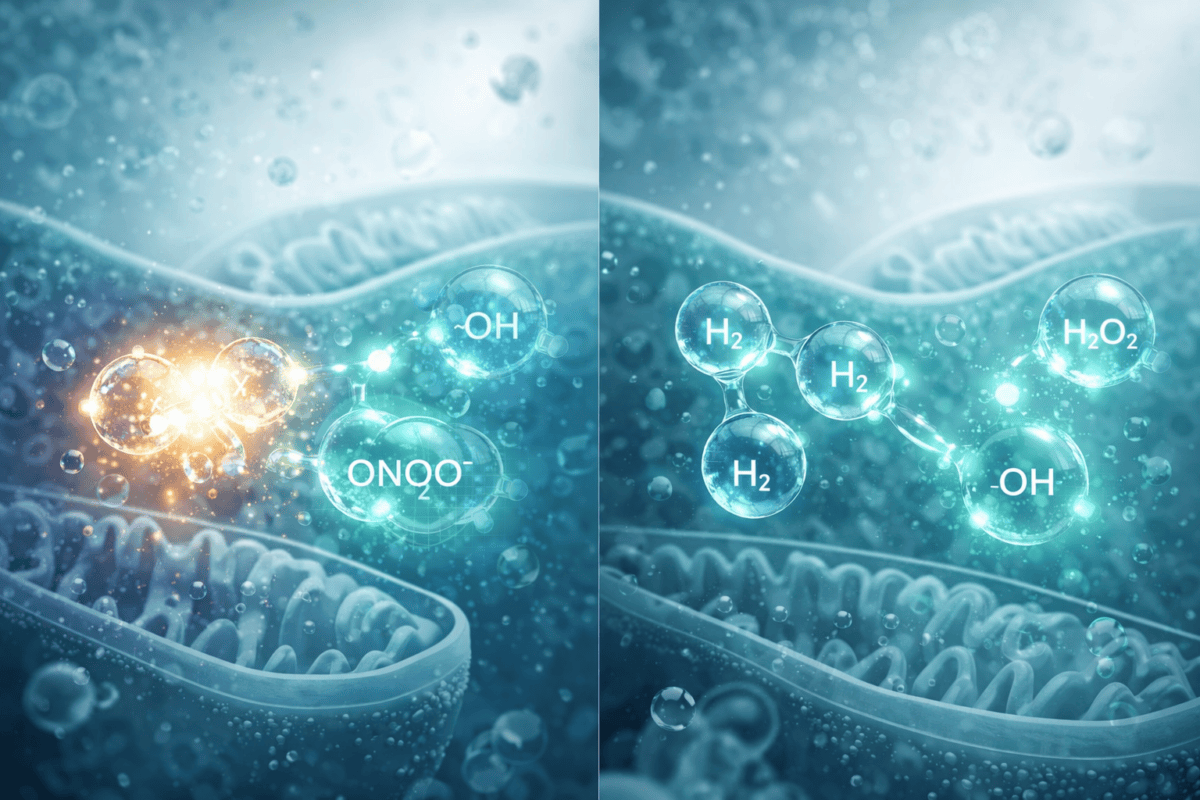
Research demonstrates that molecular hydrogen preferentially reacts with hydroxyl radicals (•OH) and peroxynitrite (ONOO⁻), the two most reactive and damaging oxidative species in biological systems. Hydroxyl radicals are so reactive they damage virtually any biomolecule they encounter—DNA, proteins, lipid membranes—within nanoseconds of formation. Peroxynitrite, formed when superoxide combines with nitric oxide, causes protein nitration and mitochondrial dysfunction.
Critically, H₂ does not significantly react with superoxide, hydrogen peroxide, or nitric oxide—molecules that serve essential physiological signaling functions. This selectivity allows molecular hydrogen to provide oxidative protection without disrupting normal cellular redox regulation, a fundamental advantage over traditional antioxidant strategies.
Beyond Direct Scavenging: Cytoprotective Gene Expression
The benefits of molecular hydrogen extend beyond direct radical neutralization. H₂ modulates cellular signaling pathways that upregulate endogenous antioxidant systems—the body’s own internal defense mechanisms. Specifically, molecular hydrogen activates the Nrf2 pathway, a master regulator of cellular defense that increases expression of:
- Glutathione peroxidase and glutathione reductase
- Superoxide dismutase (SOD)
- Catalase
- Heme oxygenase-1 (HO-1)
This dual mechanism—selective scavenging plus endogenous antioxidant upregulation—creates a synergistic effect that traditional exogenous antioxidants cannot replicate. Rather than simply flooding the system with electron donors, molecular hydrogen optimizes the cell’s intrinsic capacity to maintain redox homeostasis.
Bioavailability and Delivery: Why Inhalation Surpasses Oral Supplementation
A critical distinction separating molecular hydrogen from traditional antioxidants involves bioavailability and tissue saturation. Most antioxidant supplements face absorption barriers, hepatic first-pass metabolism, limited cellular penetration, and concentration gradients that restrict their delivery to target tissues.
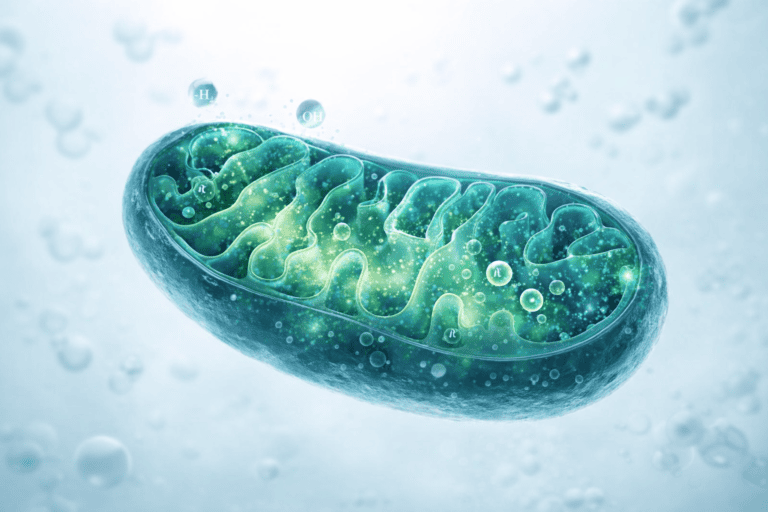
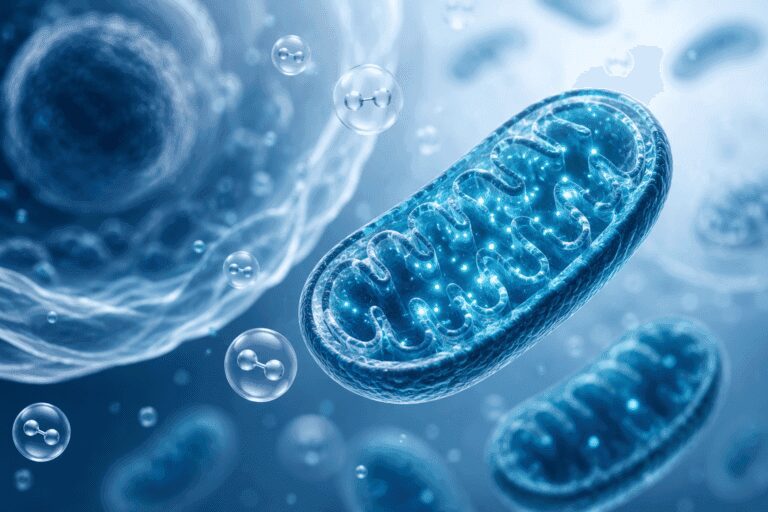
Molecular hydrogen’s unique physical properties enable it to rapidly diffuse across biological membranes, including the blood-brain barrier and mitochondrial membranes, reaching subcellular compartments inaccessible to larger antioxidant molecules. However, achieving therapeutically relevant tissue concentrations requires delivery methods that substantially exceed what hydrogen-infused water can provide.
Professional-Grade Inhalation for Systemic Saturation
While hydrogen water offers convenience for daily wellness routines, published research consistently employs high-concentration inhalation protocols to achieve measurable biological effects. Drinking hydrogen water delivers micrograms of H₂; inhalation via high-output generators delivers milligrams—a difference of three orders of magnitude.
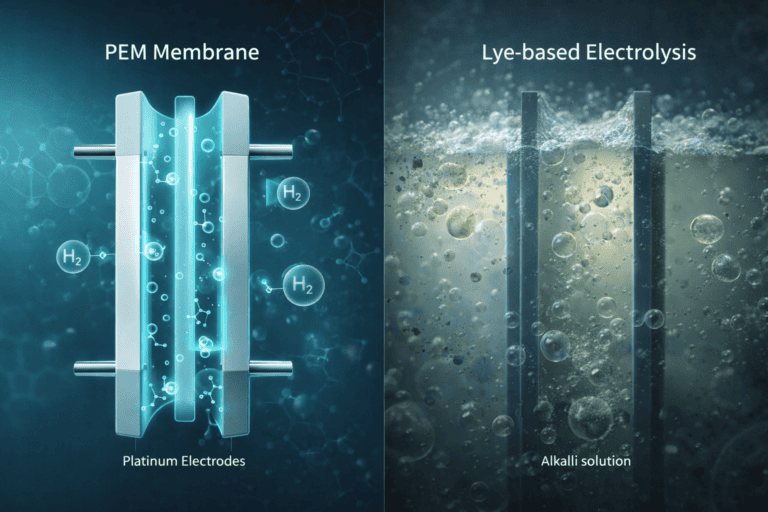
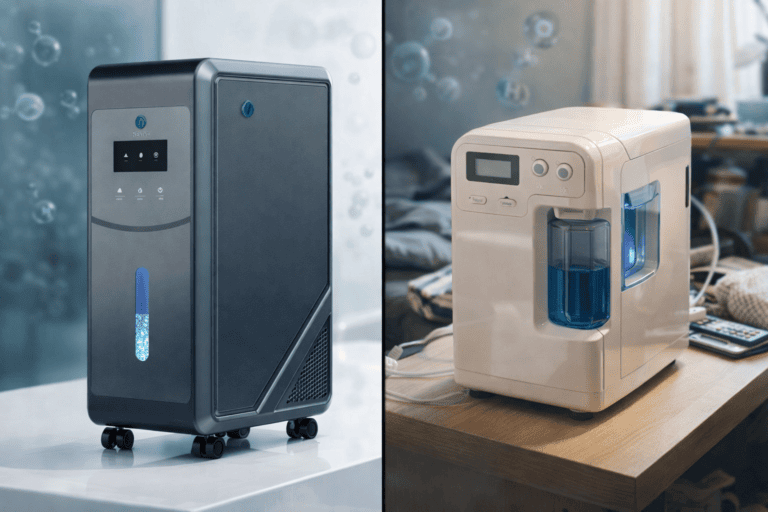
Professional-grade hydrogen generators utilizing PEM (Proton Exchange Membrane) electrolysis technology produce pure molecular hydrogen at flow rates sufficient to saturate systemic circulation, enabling passive diffusion into tissues, organs, and cellular compartments throughout the body. This systemic approach supports whole-body oxidative stress mitigation rather than localized gastrointestinal exposure.
For individuals seeking evidence-based cellular optimization—athletes pursuing recovery enhancement, wellness practitioners exploring mitochondrial support strategies, or longevity-focused individuals implementing comprehensive oxidative defense protocols—inhalation represents the delivery method most closely aligned with published research parameters.
The Molecular Hydrogen Antioxidant Paradigm: Evidence-Based Cellular Optimization
The distinction between molecular hydrogen and traditional antioxidants extends beyond mechanism to practical application. Rather than megadosing individual nutrients in hopes of overwhelming oxidative stress, the H₂ approach leverages the body’s intrinsic wisdom—selectively removing the most damaging radicals while preserving beneficial oxidative signaling, then amplifying endogenous antioxidant capacity through cytoprotective gene activation.
This represents not merely an incremental improvement in antioxidant therapy but a fundamental paradigm shift toward precision cellular wellness. As research continues to elucidate molecular hydrogen’s multi-faceted cytoprotective mechanisms, the limitations of broad-spectrum antioxidant supplementation become increasingly apparent.
For those committed to evidence-based cellular health optimization, understanding these mechanistic distinctions transforms molecular hydrogen from another wellness trend into a sophisticated tool for supporting the body’s complex redox regulation systems. The question becomes not whether antioxidants matter, but which antioxidant approach aligns with human biochemistry’s elegant complexity.
Bring This Technology Home
Translating molecular hydrogen research into practical application requires technology capable of delivering therapeutic concentrations. Revive Hydrogen offers professional-grade hydrogen generators engineered specifically for high-output home and clinical use, designed to meet the standards employed in published research protocols.
The Intelligent High-Flow Hydrogen Generator line features PEM electrolysis technology with platinum-coated titanium electrodes and DuPont N117 membranes, producing 99.992% pure molecular hydrogen verified by independent third-party laboratory analysis. Available in three output tiers—HYD-1500, HYD-1800, and HYD-3000—these systems deliver up to 2000 ml/min of pure H₂ for comprehensive systemic saturation via nasal cannula.
Manufactured to CE and RoHS standards under ISO 9001-certified quality management systems and backed by a comprehensive three-year limited warranty, these generators represent the intersection of research-grade specifications and accessible home wellness technology. For practitioners, researchers, and individuals seeking to implement molecular hydrogen protocols aligned with published scientific literature, professional-grade inhalation technology provides the delivery method most consistent with evidence-based cellular optimization strategies.
Explore the science behind selective antioxidant support and discover how high-purity hydrogen technology differs from conventional wellness approaches at the Revive Hydrogen Science Hub.