

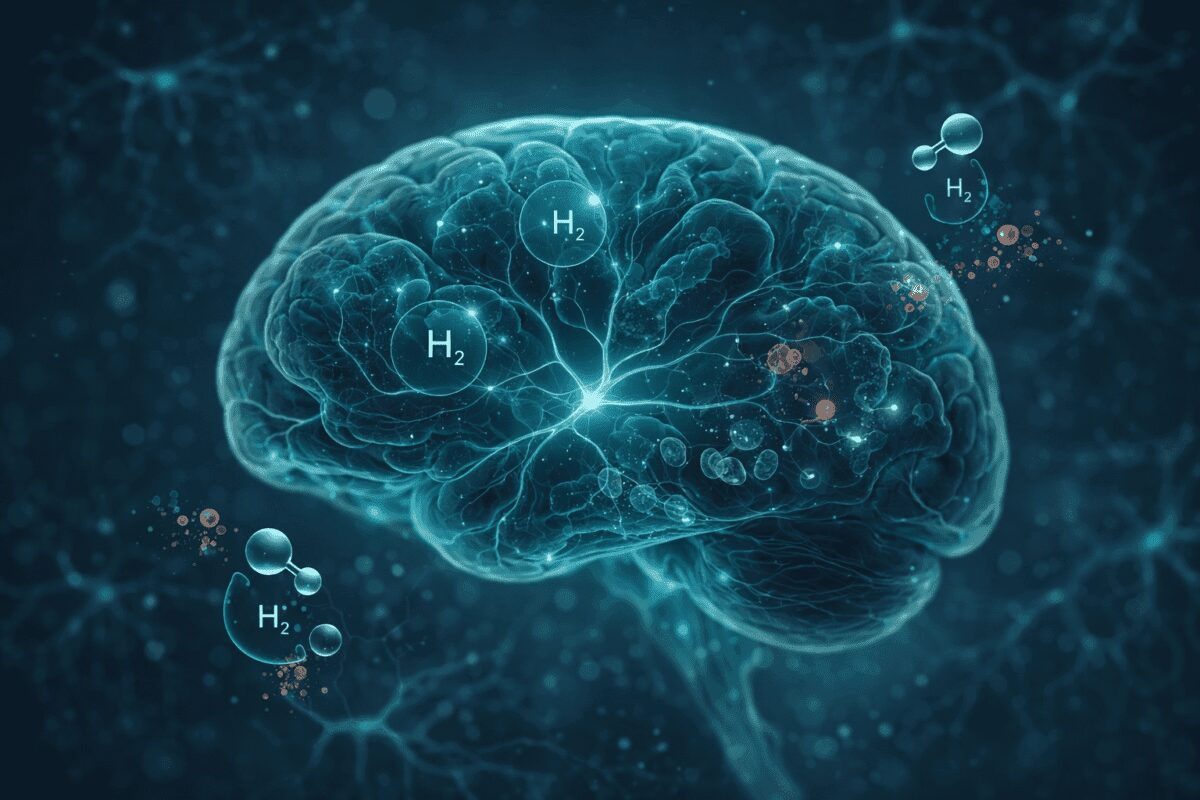
Your Brain Under Siege: The Hidden Cost of Oxidative Stress
Every second, your brain consumes roughly 20% of your body’s total oxygen supply — making it, by far, the most metabolically demanding organ in the human body. That extraordinary energy demand comes with an equally extraordinary cost: the continuous generation of reactive oxygen species (ROS) that, left unchecked, silently erode neuronal integrity, impair mitochondrial function, and accelerate cognitive decline. Emerging research into molecular hydrogen benefits suggests that H2 — the smallest, most membrane-permeable molecule in existence — may represent one of the most elegant and targeted neuroprotective tools available in modern wellness science. This is not speculative biology. It is a rapidly growing body of peer-reviewed evidence pointing toward a simple molecule with profound implications for brain health, focus, and long-term cognitive resilience.
The Selective Antioxidant Advantage: Why Molecular Hydrogen Is Different
The antioxidant conversation has long been dominated by vitamins C and E, polyphenols, and glutathione — broad-spectrum compounds that, while valuable, neutralize reactive oxygen species indiscriminately. This is where molecular hydrogen distinguishes itself in a fundamental and clinically significant way.
H2 functions as a selective antioxidant. Rather than sweeping through your cellular environment and eliminating every ROS molecule it encounters, molecular hydrogen specifically targets the most cytotoxic free radicals: the hydroxyl radical (•OH) and peroxynitrite (ONOO⁻). These two species are the primary drivers of oxidative neuronal damage. The hydroxyl radical, in particular, is so chemically aggressive that it reacts with virtually any biological molecule it contacts — lipids, proteins, DNA — at near-diffusion-limited rates. No enzymatic defense exists to neutralize it directly. Peroxynitrite similarly induces nitrosative stress, destabilizing mitochondrial membranes and triggering neuroinflammatory cascades that underpin conditions ranging from cognitive fog to more serious neurodegenerative pathology.
Crucially, H2 leaves beneficial ROS molecules intact. Hydrogen peroxide (H₂O₂), for example, serves as an essential intracellular signaling molecule — mediating immune responses, regulating vascular tone, and activating cytoprotective pathways like Nrf2. A broad-spectrum antioxidant that eliminates H₂O₂ disrupts this homeostatic balance. Molecular hydrogen does not. It converts •OH into water — producing zero toxic byproducts — and selectively quenches ONOO⁻, all without interfering with the body’s own redox signaling architecture. This precision is not merely a biochemical curiosity. It is the foundation of H2’s therapeutic relevance.
Neuroprotection at the Cellular Level: What the Research Reveals
The brain’s vulnerability to oxidative stress is structural as much as metabolic. Neuronal membranes are rich in polyunsaturated fatty acids — prime targets for lipid peroxidation initiated by hydroxyl radicals. Mitochondria within neurons operate under high ROS load, and their dysfunction is now considered a central mechanism in cognitive aging, neuroinflammation, and conditions like Alzheimer’s and Parkinson’s disease.
Preclinical and translational research has documented several compelling mechanisms through which molecular hydrogen supports neurological wellness:
- Mitochondrial optimization: H2 has been shown to preserve mitochondrial membrane potential and reduce mitochondrial ROS production, supporting sustained ATP synthesis in energy-intensive neurons.
- Oxidative stress mitigation in hippocampal tissue: Studies in animal models demonstrate reduced oxidative markers and improved spatial memory performance following H2 administration — the hippocampus being the primary seat of memory consolidation.
- Neuroinflammation attenuation: H2 modulates NF-κB signaling pathways, reducing the expression of pro-inflammatory cytokines such as TNF-α and IL-6 that contribute to neuroglial activation and synaptic degradation.
- Nrf2 pathway upregulation: Molecular hydrogen has been observed to activate the Nrf2 antioxidant response element — stimulating endogenous production of glutathione and other protective enzymes, effectively amplifying the body’s own defense systems.
- Dopaminergic neuroprotection: In models of Parkinson’s-like neurodegeneration, H2 administration preserved dopaminergic neurons in the substantia nigra and attenuated motor and cognitive deficits.
- Blood-brain barrier integrity: Early research suggests H2 may help maintain the structural integrity of the blood-brain barrier under oxidative challenge — a critical factor in preventing neuroinflammatory infiltration.
It is important to frame these findings appropriately. The majority of robust mechanistic data originates from cell culture and animal studies, with a growing cohort of human pilot trials exploring H2 inhalation for cognitive wellness and neurological recovery. The science is genuinely promising, and the safety profile of molecular hydrogen is exceptionally well-established — but H2 therapy should be understood as a sophisticated wellness and longevity tool, not a replacement for clinical treatment.
Focus, Mental Clarity, and the Mitochondrial Connection
Beyond neuroprotection in the context of disease, there is a compelling argument for molecular hydrogen’s role in everyday cognitive performance. Mental clarity, sustained focus, and processing speed are all downstream functions of neuronal health — and neuronal health is inextricably linked to mitochondrial efficiency and oxidative load.
Chronic low-grade oxidative stress — exacerbated by poor sleep, environmental toxins, high cognitive demand, and metabolic dysfunction — does not cause dramatic neurological events. It silently degrades synaptic efficiency, reduces neurotransmitter turnover, and impairs the precision of neural signal propagation. The result is the familiar modern experience: brain fog, attentional drift, diminished working memory, and a general sense of cognitive dullness that no amount of caffeine fully resolves.
By systematically reducing •OH and ONOO⁻ burden within neural tissue, molecular hydrogen creates conditions more conducive to mitochondrial optimization — the sustained, efficient energy production that underlies sharp, responsive cognition. When neurons are less occupied managing oxidative damage, more metabolic resources are available for the electrochemical signaling that constitutes thought, memory retrieval, and executive function.
Why Inhalation Is the Superior Delivery Method for Neurological Targets
Not all molecular hydrogen delivery is created equal. Hydrogen-enriched water — while offering a meaningful and accessible entry point — is limited by dissolved concentration ceilings and the inherently variable absorption dynamics of the gastrointestinal tract. A single glass of hydrogen water typically delivers between 0.5 and 1.6 ppm of dissolved H2, a dose that enters portal circulation and is largely metabolized before achieving meaningful systemic tissue saturation.
Achieving therapeutic tissue saturation — particularly in a target organ as demanding and anatomically isolated as the brain — requires a delivery method capable of sustaining elevated H2 concentrations in arterial blood over a meaningful time window. This is where professional-grade hydrogen inhalation demonstrates a clear pharmacokinetic advantage. When H2 gas is inhaled at therapeutic concentrations, it enters the pulmonary circulation directly, saturating hemoglobin-independent dissolved plasma H2 levels and distributing systemically with remarkable speed. Its exceptionally small molecular size — the smallest molecule in existence — enables rapid diffusion across the blood-brain barrier and deep penetration into mitochondria-dense neuronal tissue.
High-output inhalation generators capable of producing consistent, clinically relevant H2 concentrations (typically 2–4% H2 by volume, well within the established safety threshold of 4.6%) are not a luxury feature — they are a technical requirement for achieving the tissue-level concentrations documented in the most significant research. Passive inhalation sessions of 30–60 minutes deliver a systemic, whole-body oxidative stress mitigation effect that hydrogen water alone cannot replicate. For those pursuing neurological wellness, cognitive optimization, or cellular longevity, inhalation represents the most direct, efficient, and evidence-aligned path to meaningful H2 exposure.
Related reading: Hydrogen and Cognitive Function · Molecular Hydrogen Benefits for Mental Clarity
New to hydrogen inhalation? Download our free Beginner’s Guide to Hydrogen Inhalation for a plain-language primer on what H₂ is, how inhalation works, and how to choose a generator.
Bring This Technology Home
The science of molecular hydrogen and neuroprotection is no longer confined to research institutions and clinical trials. Professional-grade inhalation technology is now accessible for home use — and the standard for that technology is defined by the Revive Hydrogen Generator. Engineered for consistent, high-output H2 production at therapeutic concentrations, it delivers the same caliber of molecular hydrogen exposure pursued in leading wellness clinics and longevity protocols worldwide. Whether your goal is sharper daily focus, mitigation of age-related cognitive decline, or deep cellular recovery, Revive Hydrogen provides the infrastructure to make evidence-based H2 therapy a seamless, sustainable part of your wellness regimen. Your brain operates at the frontier of your biology — give it the protection it demands.
